What Are the 10 Best Solution Pumps for Industrial Use?
Industrial pumping is rarely a background task. A poorly matched pump can waste energy, destabilize flow, and shorten seal life. In chemical processing, small flow changes may affect blending, cooling, and product consistency. “Solution pump” describes a range of equipment, not one universal design. Small details matter.
The U.S. Department of Energy’s 2006 Improving Pumping System Performance: A Sourcebook for Industry reports that pumping systems account for nearly 20% of global electricity demand. It also notes that pumps can consume 25–50% of the energy used in some industrial operations. These are broad benchmarks, not a current audit of every plant. Still, they show why efficiency and correct sizing matter. A pump may look efficient on paper yet waste power when throttled or operated far from its best-efficiency point. That gap is real.
This guide examines ten industrial solution pump options, including centrifugal, diaphragm, peristaltic, gear, and progressive cavity designs. It compares their typical strengths, operating limits, and suitability for different fluids and duties. We also consider materials, flow range, pressure, maintenance needs, and control methods. No single model suits every process. Selection should begin with the fluid’s properties and the system’s actual operating conditions, then be checked against manufacturer data and qualified engineering advice. The shortlist is a starting point, not a substitute for site-specific testing.
Define Industrial Solution-Pump Needs: Flow, Head, Viscosity, and Chemistry
Industrial solution-pump selection starts with the actual duty point, not the largest flow number on a process sheet. Record normal, minimum, and peak flow, then calculate total dynamic head from elevation, pipe friction, and equipment losses. A pump running far from its best-efficiency point can waste energy and wear faster. The U.S. Department of Energy’s Improving Pumping System Performance guide reports that pumping systems can use 25–50% of the energy in some industrial plant operations. That makes accurate sizing an operating-cost decision, too.
Viscosity changes the picture. A liquid thicker than water can reduce flow and efficiency, so confirm performance using the fluid’s operating temperature and viscosity—not a water-only curve. Chemistry matters just as much. Check concentration, temperature, and cleaning conditions against the wetted materials, seals, and elastomers. Corrosion or swelling may appear slowly, then become an expensive surprise. I would still verify these assumptions with plant measurements; process data is not always as tidy as a specification sheet.
Tips: Measure flow and pressure during real production, including startup and cleaning. Note any solids or entrained air. Share the fluid’s safety data and temperature range with the pump specialist, and ask for a corrected performance curve. Keep a little operating margin, but avoid oversizing “just in case.” Too much margin can mean throttling, extra energy use, and unstable control.
What Are the 10 Best Solution Pumps for Industrial Use?
Compare representative flow and head duty points for common industrial pump types.
These values are illustrative screening points, not guaranteed operating limits or a ranking. Actual flow and head depend on the pump design and system conditions. Check viscosity at operating temperature, required flow and head, and chemical compatibility of all wetted materials before selecting a pump.
Compare 10 Designs: Centrifugal, Diaphragm, Gear, Screw, and Peristaltic Pumps
What Are the 10 Best Solution Pumps for Industrial Use?
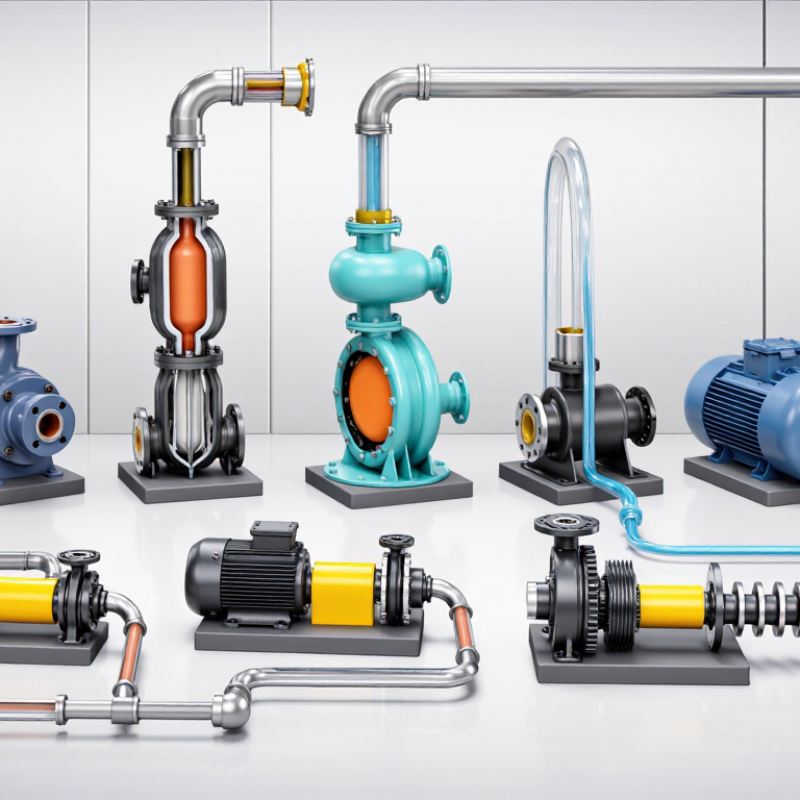
The best pump depends on the liquid, required flow, pressure, and cleaning routine. An end-suction centrifugal pump suits clean, low-viscosity solutions and steady transfer. Multistage centrifugal designs provide higher pressure, while self-priming models can handle suction lines that are not flooded. They are not ideal for every viscous or shear-sensitive fluid. Check the pump curve and suction conditions before choosing.
Diaphragm designs offer controlled dosing: air-operated models tolerate intermittent service, while mechanically driven versions support repeatable metering. External gear pumps move viscous liquids at a steady rate; internal gear pumps can handle thicker fluids more gently. Twin-screw pumps combine high throughput with broad viscosity handling, and progressive-cavity pumps deliver smooth flow through a rotor and stator. Peristaltic pumps move liquid through a replaceable tube, limiting contact with internal pump parts. Small details matter. Tube life can be a weak point.
Compare seal materials, fluid compatibility, solids, temperature, and maintenance access—not just capacity. A quick selection chart can miss these trade-offs; field conditions rarely match a perfect test setup. A short trial with the actual solution may reveal unexpected wear or flow variation.
Match Pump Capacity: From 1 mL/min Metering to 1,000+ m³/h Transfer
Industrial solution pumping spans a striking range. At about 1 mL/min, a metering pump may need fine stroke control, stable back pressure, and tubing or wetted parts compatible with the fluid. A small flow can still be demanding. Viscosity, temperature, and trapped air can shift delivery, so verify actual output under operating conditions rather than relying only on a catalogue figure.
At 1,000+ m³/h, centrifugal or axial-flow designs are often considered for large transfer duties. The right choice depends on head, pipe losses, solids, and available suction conditions—not capacity alone. A pump moving clean water across a short line faces a different duty from one handling a viscous process liquid through a long, narrow network. Check the system curve and motor load, and allow for startup and control needs. Bigger is not always safer. Oversizing can cause inefficient operation, while undersizing may leave the process short of flow. There is no perfect selection from a flow number alone; site measurements are sometimes incomplete, so assumptions should be recorded and reviewed.
Check Design Standards: API 675 Metering Pumps and ISO 5199 Centrifugal Pumps
API 675 and ISO 5199 describe different pump duties, so compare the service before comparing specifications. API 675 covers controlled-volume metering pumps, often used to inject additives or treatment chemicals at a measured rate. Check the required flow range, discharge pressure, fluid viscosity, and turndown. A stroke adjustment alone may not confirm actual delivery. Verify performance under operating conditions, and consider pulsation control where pipework or instruments are sensitive.
ISO 5199 sets technical requirements for Class II centrifugal pumps, commonly selected for continuous transfer duties. Review its provisions alongside the pump datasheet, including materials, mechanical design, inspection, and testing. Then match the pump to the liquid’s temperature, solids content, and operating point. Standards help structure procurement; they do not prove that a particular pump fits every process. A neat datasheet can still miss a difficult startup condition. That deserves a second look. Confirm the applicable standard edition and project requirements with the supplier and engineering team before approval.
Rank the 10 Options by Chemical Compatibility, Reliability, Efficiency, and Cost
What Are the 10 Best Solution Pumps for Industrial Use?
Rank the 10 Options by Chemical Compatibility, Reliability, Efficiency, and Cost
This practical ranking compares pump types for common industrial fluids. Actual performance depends on fluid properties, operating conditions, and wetted materials. At rank one, peristaltic pumps isolate fluid inside replaceable tubing, helping prevent contamination. Tubing wear can raise maintenance costs. Diaphragm metering pumps rank second for accurate, low-flow chemical dosing. Their seals and diaphragms still require careful material selection. Magnetic-drive centrifugal pumps take rank three, combining good efficiency with reduced leak risk. Fourth are lined centrifugal pumps, which handle many corrosive liquids but may cost more upfront. Progressive cavity pumps rank fifth for viscous fluids, although elastomer compatibility needs checking.
At rank six, gear pumps move viscous liquids steadily, but particles can damage close clearances. Air-operated double-diaphragm pumps rank seventh for flexible transfer; compressed-air use can reduce efficiency. Eighth are sealless canned-motor centrifugal pumps, valued for containment but suited to specific duties. Standard mechanical-seal centrifugal pumps rank ninth: often efficient and economical, yet seal wear can become a weak point. Piston or plunger pumps rank tenth for high-pressure service, with more seal maintenance. This order is a starting point, not a universal verdict. I would change it for abrasive fluids or unusually high temperatures.
Tips: Check the chemical’s concentration and temperature against every wetted component. Confirm flow, pressure, viscosity, and solids content with the supplier. A compatibility chart helps, but a small trial may reveal details the chart misses.