
Choosing 201 Stainless Steel Sheets for global sourcing requires more than comparing quotations. Buyers must examine chemistry, thickness tolerance, surface finish, production capability, and delivery consistency. A bright 2B sheet may look excellent under warehouse lighting, yet its performance depends on forming conditions, humidity, and exposure to salts.
Materials-selection expert Michael F. Ashby has stated, “Materials selection is a process of elimination.” This principle fits 201 Stainless Steel Sheets closely. Their manganese-based composition can reduce nickel dependence and support competitive pricing. They also offer useful strength, formability, and an attractive surface for kitchen equipment, decorative panels, furniture, and general fabrication.
Cost matters.
However, 201 stainless steel is not a universal substitute for 304. Its lower nickel content can make corrosion resistance less predictable in coastal, acidic, or chloride-rich environments. Global buyers should request mill certificates, independent test reports, sample approvals, and clear inspection criteria. They should also confirm whether the supplier follows recognized standards, such as ASTM or EN requirements, for the intended application.
The practical lesson is simple but easy to overlook: sourcing decisions must match real service conditions. A sheet that performs well indoors may stain near a seawater terminal. A low-price offer may also hide inconsistent flatness or delayed shipment. These risks do not make 201 Stainless Steel Sheets a poor choice. They make careful qualification essential. When suppliers provide traceable documentation, stable quality, and honest technical guidance, 201 can deliver a balanced combination of value and performance. The choice is not flawless. It should be tested, questioned, and reviewed before large-scale purchasing.
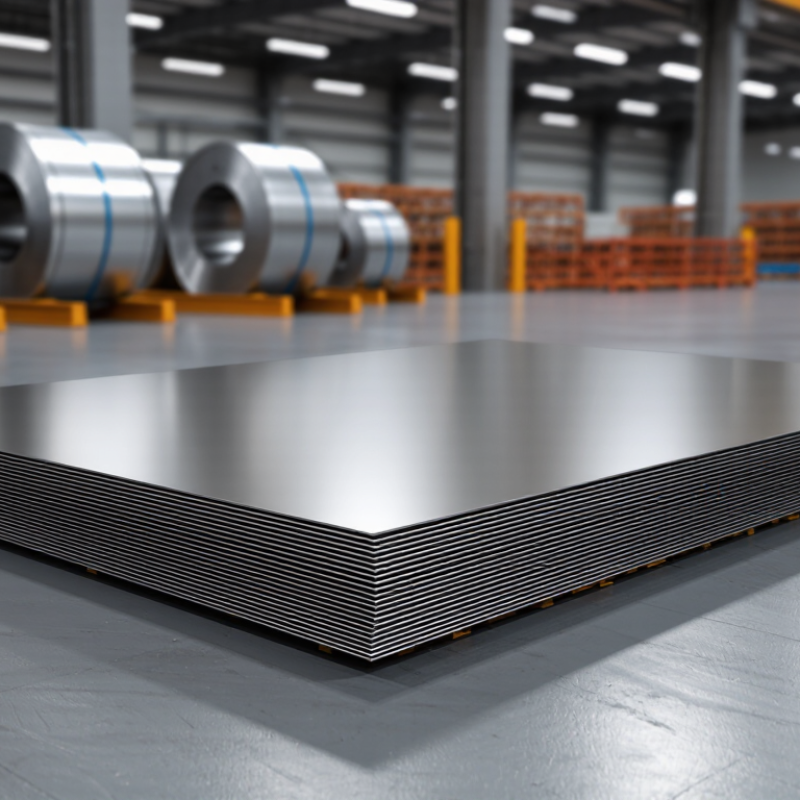
201 stainless steel is an austenitic stainless grade designed to reduce nickel use. Its chemistry typically includes 16–18% chromium, 3.5–5.5% nickel, and 5.5–7.5% manganese, according to ASTM A240/A240M composition requirements. Nitrogen may also support austenite formation and strength. The result is a sheet with useful corrosion resistance, good formability, and a lower nickel exposure than many 300-series grades.
Manufacturing begins with scrap and alloying materials melted in an electric arc furnace. Refining then controls carbon, sulfur, oxygen, and nitrogen. Many mills use argon-oxygen decarburization before continuous casting turns liquid steel into slabs. The slabs are reheated and hot-rolled into thinner coils. Annealing restores ductility, while pickling removes heat-scale residue. Cold rolling can produce tighter thickness tolerances and a brighter surface. These steps matter during global sourcing. Small process differences can change hardness, flatness, and surface appearance.
World Stainless reported approximately 58.4 million tonnes of crude stainless steel production in 2023 in its Stainless Steel in Figures 2024 report. That scale supports broad availability, but it does not guarantee identical performance. A practical buyer should verify the mill test certificate, thickness tolerance, surface finish, and corrosion requirements. 201 is not a universal substitute for 304. It can discolor faster in chloride-rich or humid environments. The trade-off is easy to miss. Cost savings may disappear after forming, cleaning, or replacement problems. Sampling remains essential.
Why Choose 201 Stainless Steel Sheets for Global Sourcing?
Key Properties and Performance of 201 Stainless Steel Sheets
201 stainless steel sheets are a practical option when buyers need strength, formability, and controlled material costs. Their austenitic structure contains chromium, nickel, manganese, and nitrogen. This composition supports good toughness and useful resistance to everyday atmospheric exposure.
The sheets perform well in kitchen equipment, decorative panels, furniture parts, and indoor fabrication. They can be stamped, bent, and formed with suitable tooling. Cold working increases their strength. It may also create slight magnetism. That detail sometimes surprises purchasers.
Surface condition matters. A clean 2B finish suits many fabricated parts, while brushed surfaces require tighter visual inspection. In production, I would check thickness, flatness, edge quality, and forming marks before approving a shipment. Mill certificates and positive material identification add confidence. Small variations can become expensive during large-volume processing.
201 is not a universal replacement for 304. Its corrosion resistance is generally lower, especially in coastal air, chloride exposure, and aggressive chemical environments. That assumption needs checking. Welding procedures, cleaning practices, and the final service location can change performance significantly. Global buyers should compare the required standard, tolerance, finish, and test documents before placing an order. A lower purchase price helps only when the sheet matches the real working conditions.
| Category | Property or Dimension | Typical Data or Requirement | Global Sourcing Relevance |
|---|---|---|---|
| Material Identity | Stainless Steel Grade | AISI 201 / UNS S20100 | A widely recognized austenitic stainless steel grade for general-purpose sheet applications. |
| Chemical Composition | Chromium (Cr) | 16.0–18.0% by mass | Provides the passive chromium-oxide layer responsible for basic stainless corrosion resistance. |
| Chemical Composition | Nickel (Ni) | 3.5–5.5% by mass | Lower nickel content than 304 stainless steel can support a more cost-sensitive purchasing strategy. |
| Chemical Composition | Manganese (Mn) | 5.5–7.5% by mass | Manganese helps stabilize the austenitic structure while partially replacing nickel. |
| Chemical Composition | Carbon (C) | Maximum 0.15% | Suitable for common formed-sheet applications when welding and corrosion conditions are properly controlled. |
| Chemical Composition | Silicon (Si) | Maximum 1.00% | Controlled silicon content supports standard stainless steel processing and fabrication. |
| Chemical Composition | Phosphorus (P) and Sulfur (S) | P: maximum 0.060%; S: maximum 0.030% | Composition limits help maintain material consistency across international supply channels. |
| Mechanical Performance | Tensile Strength | Minimum 515 MPa in annealed condition | Provides adequate strength for enclosures, trim, kitchenware, light equipment, and general fabrication. |
| Mechanical Performance | Yield Strength | Minimum 205 MPa in annealed condition | Useful for evaluating forming loads and allowable design stress in non-critical applications. |
| Mechanical Performance | Elongation | Minimum 40% in 50 mm, annealed condition | Indicates good ductility for bending, pressing, stamping, and other sheet-forming operations. |
| Mechanical Performance | Hardness | Maximum 95 HRB in annealed condition | Supports cutting, forming, and general shop fabrication without requiring excessive processing force. |
| Physical Properties | Density | Approximately 7.86 g/cm³ | Allows accurate weight, freight, packaging, and landed-cost calculations for international orders. |
| Physical Properties | Elastic Modulus | Approximately 197 GPa | Useful for evaluating stiffness and deflection in fabricated sheet components. |
| Physical Properties | Melting Range | Approximately 1,400–1,450°C | Relevant to heat exposure assessment and material-processing planning. |
| Corrosion Performance | General Atmospheric Resistance | Good in mild indoor and non-aggressive environments | Appropriate for many interior, decorative, and lightly exposed applications when regular maintenance is possible. |
| Corrosion Performance | Resistance to Chlorides and Marine Exposure | Limited compared with 304 and 316 grades | Not the preferred choice for seawater, coastal splash zones, high-chloride processing, or severe outdoor exposure. |
| Fabrication | Cold Forming | Generally suitable for bending, stamping, and moderate drawing | Supports a broad range of standard sheet-metal manufacturing processes. |
| Fabrication | Welding Consideration | Weldable with suitable procedures; corrosion performance may be affected in welded areas | Purchasers should specify welding method, heat input, joint design, and post-weld cleaning requirements. |
| Surface and Supply | Common Surface Finishes | 2B, BA, No. 4, and brushed finishes, subject to mill availability | Multiple finish options simplify sourcing for functional, decorative, and consumer-facing products. |
| Surface and Supply | Typical Thickness Availability | Commonly supplied from thin sheet to heavier plate-like gauges; exact range depends on the mill | Thickness, width, length, tolerance, and finish should be confirmed in the purchase specification. |
| Standards | Common Product Standard | ASTM A240 / ASME SA240 for stainless steel plate, sheet, and strip | Using an internationally recognized specification improves inspection, documentation, and cross-border acceptance. |
| Quality Control | Recommended Purchasing Documents | Mill test certificate, chemical analysis, mechanical test results, dimensional report, and surface inspection record | Document control helps verify grade, batch traceability, dimensions, and compliance before shipment. |
| Best-Fit Applications | Typical Uses | Indoor architectural trim, kitchen equipment, cabinets, appliances, light enclosures, decorative panels, and general fabricated parts | Offers a practical balance of formability, appearance, strength, and material cost for non-severe service conditions. |
| Selection Guidance | When to Consider an Alternative Grade | Use higher-alloy grades when chloride exposure, severe corrosion, high-temperature service, or critical weld performance is expected | Correct grade selection reduces premature failure, replacement costs, and supply-chain risk. |
Why 201 Stainless Steel Sheets Suit Global Sourcing
201 stainless steel sheets suit global sourcing because they balance cost, availability, and practical performance. Their lower nickel content can reduce exposure to nickel price swings. This matters when buyers compare quotations across several regions. The International Stainless Steel Forum reported about 58.4 million tonnes of stainless steel production in 2023. That scale supports wider supply networks and more flexible purchasing options.
Grade 201 typically contains chromium, manganese, and less nickel than 300-series grades. It offers useful strength, formability, and corrosion resistance for indoor equipment, kitchen components, decorative panels, and light industrial applications. However, it is not a universal substitute. Chloride-rich locations, coastal exposure, and aggressive chemicals may require a more corrosion-resistant grade. A cheaper quote can become expensive after staining, replacement, or rejected inspections. I have found that many sourcing problems begin with unclear specifications, not material price.
Tips: Request the mill test certificate, thickness tolerance, surface finish, and applicable standard. Check chemical composition independently when the project is critical. Ask for sample sheets before approving bulk production. The ISSF and ASTM guidance can help buyers compare grades and testing requirements. Still, standards are not identical in every market. Confirm local acceptance rules before shipment. That extra step can prevent a costly misunderstanding.
201 stainless steel sheets are widely selected for practical, cost-sensitive applications. Their manganese-based chemistry reduces nickel dependence compared with 304 stainless steel. This can support more stable purchasing when nickel prices fluctuate. World Stainless reported global stainless crude steel production of approximately 58.4 million tonnes in 2023, reflecting strong demand across construction, manufacturing, and consumer goods. However, production volume does not make every grade suitable for every environment.
In commercial markets, 201 sheets appear in kitchen sinks, food-service counters, storage cabinets, appliance panels, shelving, and decorative wall cladding. Industrial users also specify them for light-duty enclosures, elevator interiors, ventilation trim, and equipment covers. Their smooth surface supports easier cleaning, while good forming performance helps create bent corners and shallow stamped parts. Yet 201 is not a universal substitute for 304. Chloride exposure, coastal air, and frequent chemical washing can increase staining risk. The World Stainless technical guidance repeatedly emphasizes matching stainless grades to service conditions, not purchasing on price alone.
Tips: Check ASTM A240 requirements, thickness tolerance, surface finish, and actual chemical composition before ordering. Request corrosion testing for humid or salt-exposed projects. Small trials matter. In my experience, a cheaper sheet can become expensive after polishing, replacement, or customer complaints. Global buyers should also confirm annealing, passivation, packaging, and inspection records, because surface damage may begin during transport rather than production.
Why Choose 201 Stainless Steel Sheets for Global Sourcing?
Supplier evaluation should begin with evidence, not a polished quotation. The International Stainless Steel Forum reported global stainless steel crude production of about 58.4 million tonnes in 2023. That scale hides major differences in chemistry, rolling practice, and inspection discipline. For 201 sheets, request the exact grade designation, heat number, mill test certificate, and chemical analysis. Verify chromium, nickel, manganese, carbon, thickness, and surface finish through independent testing when the order matters. ASTM A240 can define useful requirements, but a certificate alone is not proof.
Quality must survive handling and production. Check flatness with a straightedge, measure thickness at several points, and inspect scratches under consistent lighting. Ask for sample sheets before approving a full container. I have seen attractive samples fail because edge damage was concealed by protective film. That risk is easy to underestimate. A supplier’s audit should cover calibration records, traceability, corrective actions, and packing photos.
Total purchasing cost is wider than the sheet price. Include inland transport, ocean freight, insurance, duties, inspection fees, cutting loss, storage, and rejection risk. The World Steel Association recorded approximately 1.88 billion tonnes of global crude steel production in 2024, showing how competitive the supply base is. Yet large capacity does not guarantee dependable delivery. Compare landed cost per usable kilogram, not quoted cost per kilogram. Add a realistic contingency for port delays and rework. My own purchasing models would still be imperfect, especially when nickel and freight prices move quickly, so assumptions should be reviewed before every contract.
201 stainless steel can reduce nickel exposure in purchasing decisions while providing useful strength and formability for general sheet applications. Supplier evaluation should combine certified material quality, production consistency, logistics performance, and total landed cost.
Reference values: ASTM A240/A240M minimum mechanical requirements for UNS S20100 stainless steel sheet in the annealed condition. Confirm the applicable standard edition, heat treatment, thickness range, dimensional tolerances, surface finish, and mill test certificate before purchase.
Check production capability, traceability, inspection procedures, export experience, and delivery reliability.
Request chemical analysis, mechanical test results, surface inspection records, dimensional reports, and heat-number traceability.
Compare material price, processing, packaging, freight, duties, inspection, payment terms, inventory, and the cost of nonconforming material.
We are here to help you with all your queries and concerns, just write to us using the below form and we will get back to you as soon as we can.