Choosing a dependable dash cam supplier requires more than comparing pixels and wholesale prices. In 2026, buyers need practical evidence, stable production, and responsive support. The Great-will wholesale dash cam manufacturer should demonstrate experience across daily driving, fleet monitoring, and aftermarket distribution. Its products should capture clear road details, license plates, and traffic signals in changing light.
A professional evaluation begins with hardware performance. Check 4K recording quality, lens angles, GPS accuracy, microphone clarity, and night footage. Examine how the camera performs after hours inside a hot parked vehicle. A reliable manufacturer should explain heat management, storage compatibility, firmware updates, and power protection clearly. Sample testing matters. A product sheet cannot replace footage from real roads.
Manufacturing credibility also depends on process control. Look for documented inspections, traceable components, stable packaging, and consistent sample-to-batch quality. Independent testing and applicable market documentation should be reviewed before large orders. After-sales service matters, too. Clear warranty terms and practical troubleshooting reduce pressure on distributors.
No dash cam is perfect. Weak lighting still creates difficult footage. Installation errors can affect performance. Even careful testing may miss unusual cases. That honest limitation deserves attention. Buyers should request samples, test them in their target market, and compare results with customer expectations. This approach helps identify a Great-will wholesale dash cam manufacturer that offers useful technology, dependable cooperation, and measurable long-term value.
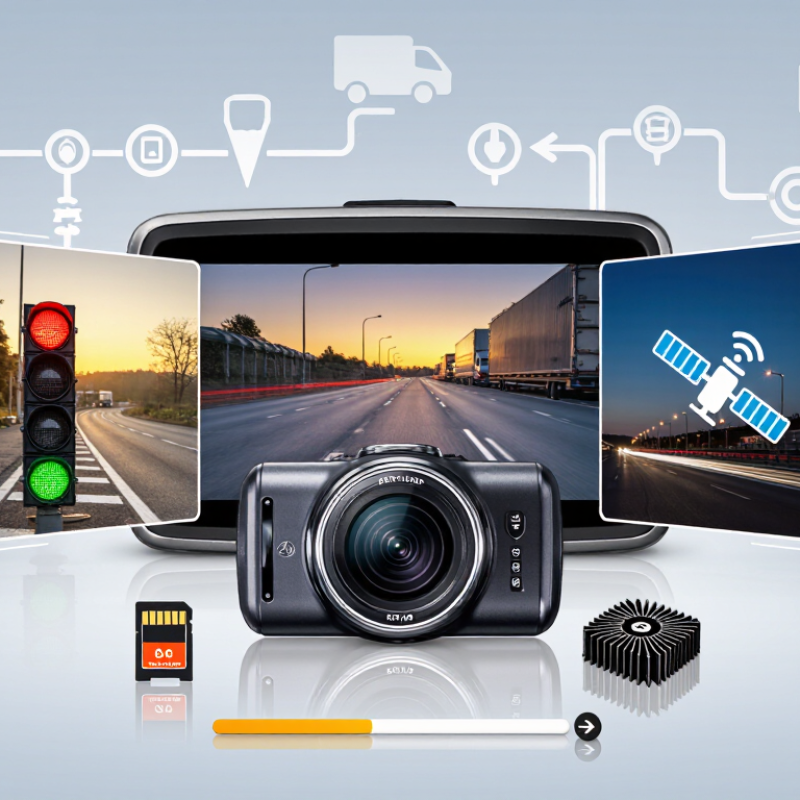
The 2026 wholesale dash cam market is becoming more technical and service-focused. Recent reports from IMARC Group estimate the global dash cam market could exceed USD 8 billion by 2032. Forecasts vary, however, because researchers define products differently.
A reliable manufacturer should offer more than a camera and a carton. Buyers need stable 2K or 4K recording, clear night images, loop recording, parking monitoring, and heat-resistant components. In practical testing, a camera should start quickly after ignition and preserve footage during sudden braking. Wholesale partners also need firmware updates, sample testing, packaging control, and responsive technical support. A low price may look attractive, but inconsistent memory-card performance can create costly returns. This is where many evaluations become imperfect.
Tips: Ask for three working samples. Test them in daylight, tunnels, and parked vehicles. Check video files, app stability, power cables, and operating temperatures. Request written quality standards and batch inspection records. SGS and TÜV reports can support verification, but they do not replace hands-on testing. Product claims should match measurable specifications. Sometimes, they do not.
A professional wholesale dash cam manufacturer should build around dependable core products, not flashy specifications alone. The main range usually includes single-channel, dual-channel, and cabin-view models. These systems support private drivers, delivery teams, and commercial fleets with different recording needs.
Image quality depends on more than resolution. A 4K front camera can capture clearer road details, while HDR helps balance bright sunlight and dark tunnels. A wide-angle rear camera improves coverage during lane changes and reversing. Night performance still requires careful sensor tuning. No camera performs perfectly in heavy rain.
Storage stability matters. High-endurance memory support reduces recording interruptions during continuous use. Loop recording automatically replaces older files when storage becomes full. A G-sensor can lock footage after sudden impact. Parking monitoring adds protection when the vehicle is unattended, but it needs suitable power management.
Useful technical features include GPS tracking, Wi-Fi transfer, mobile viewing, and built-in microphones. These functions save time during evidence checks and fleet reviews. However, extra features can increase heat, power use, and production costs. A reliable manufacturer tests thermal performance, vibration resistance, cable durability, and firmware stability before wholesale delivery. Field testing is essential. Factory results alone may miss practical problems. Clear manuals, responsive technical support, and consistent quality control also help distributors serve customers with confidence.
| Product Category | Typical Camera Configuration | Video Resolution | Image Sensor Class | Frame Rate | Viewing Angle | Key Recording Features | Storage Support | Connectivity and Positioning | Power and Operating Details | Recommended Wholesale Application |
|---|---|---|---|---|---|---|---|---|---|---|
| Single-Channel Front Dash Cam | One forward-facing camera | 1920 × 1080 Full HD | 1/2.9-inch CMOS class | 30 frames per second | Approximately 130° diagonal | Loop recording, automatic emergency file protection, motion detection, built-in microphone, date and time stamp | microSD card, commonly up to 128 GB; Class 10 or higher recommended | Optional Wi-Fi; GPS available on selected configurations | 12 V vehicle power input through a USB power adapter; typical operating range about −20°C to 70°C | Entry-level retail programs, fleet installation, rental vehicles and general commuting |
| Front 2K Dash Cam | One forward-facing camera with enhanced detail capture | 2560 × 1440 Quad HD | High-sensitivity CMOS class | 30 frames per second | Approximately 140° diagonal | High dynamic range, wide dynamic exposure control, loop recording, impact-triggered locking, parking surveillance support | microSD card, commonly up to 128 GB or 256 GB depending on firmware and file system | Dual-band or 2.4 GHz Wi-Fi options; GPS logger available | Vehicle input typically supports 5 V USB output from an adapter; optional hardwire kit for parking mode | Mainstream consumer products requiring clearer license-plate and road-detail capture |
| Front 4K Dash Cam | One forward-facing ultra-high-definition camera | 3840 × 2160 Ultra HD | High-resolution CMOS class, often using a larger optical format than entry-level models | 24 to 30 frames per second | Approximately 135° to 160° diagonal | HDR or WDR, electronic image stabilization on selected models, loop recording, event protection, voice recording and exposure adjustment | High-endurance microSD card, commonly 128 GB or 256 GB; high bit rate requires suitable card performance | 2.4 GHz Wi-Fi commonly available; GPS and smartphone preview available on selected configurations | Higher processing and storage demand; stable 5 V vehicle power supply and adequate thermal design are recommended | Premium retail channels, automotive accessory distributors and detail-focused driving users |
| Dual-Channel Front and Rear Dash Cam | Front camera plus rear cabin or rear-window camera | Front 2K or Full HD; rear Full HD commonly used | Separate CMOS sensors for front and rear channels | Up to 30 frames per second per channel, depending on processing capacity | Front approximately 140°; rear approximately 120° to 140° | Synchronized front/rear recording, HDR on the primary channel, collision file locking, loop recording and optional parking monitoring | microSD card, commonly up to 128 GB or 256 GB; capacity depends on dual-channel bit rate | Wi-Fi and GPS options; rear camera usually connects by a dedicated video cable | Requires a multi-camera power and signal harness; hardwire kit recommended for extended parking monitoring | Family vehicles, ride-hailing vehicles, commercial cars and insurance-related video documentation |
| Three-Channel Interior Monitoring Dash Cam | Front road camera, rear camera and interior cabin camera | Front 2K or 4K; rear and interior commonly Full HD | Multiple CMOS sensors with infrared support for cabin monitoring | Typically 24 to 30 frames per second, subject to simultaneous recording mode | Front approximately 140°; rear and cabin approximately 120° to 150° | Infrared cabin recording, synchronized three-channel capture, HDR on selected channels, event locking and audio recording | High-endurance microSD card, commonly 128 GB or 256 GB; larger capacity may be needed for continuous multi-channel recording | Wi-Fi, GPS and smartphone playback available on selected configurations | Stable vehicle power is essential; low-voltage protection is recommended when using parking mode | Taxi fleets, ride-hailing operators, delivery vehicles and professional passenger transport |
| Commercial Fleet Dash Cam | Front-facing camera with optional cabin, rear or side cameras | Full HD to 2K, depending on fleet specification | Low-light CMOS sensor with software-based exposure and image enhancement | 25 to 30 frames per second | Approximately 120° to 150° per camera | Continuous loop recording, driver-event tagging, tamper alerts, ignition detection, impact sensing and optional driver-facing monitoring | Removable microSD storage or internal eMMC storage, depending on system architecture | GNSS positioning; optional 4G LTE, Wi-Fi and cloud upload functions | Designed for 12 V or 24 V vehicle systems; low-voltage cutoff and ignition control are important for fleet deployment | Logistics companies, service fleets, buses, trucks and vehicle management programs |
A reliable wholesale dash cam manufacturer builds quality into every production stage. Engineers begin with documented specifications for image sensors, lenses, processors, batteries, and mounting systems. Each component should pass incoming inspection before assembly starts. Small defects can become serious failures on a hot dashboard.
Manufacturing standards need practical verification. A disciplined factory follows a controlled quality system and keeps traceable production records. It tests electrical safety, electromagnetic performance, material restrictions, and regional compliance requirements. Samples undergo thermal cycling, vibration checks, button testing, and continuous recording trials. The lens must stay aligned after repeated handling. The memory card interface must remain stable during long recordings.
Quality control is not limited to the final inspection. Technicians should review solder joints, cable connections, firmware behavior, and night footage under controlled lighting. Batch testing can reveal overheating, frozen screens, or inconsistent video files. These details matter to wholesale buyers because returns damage both margins and trust.
No factory is perfect. Test plans can miss unusual vehicle conditions, and early field feedback may expose weaknesses. A responsible manufacturer investigates complaints, updates corrective actions, and records the results. This habit shows real expertise. Reliable production comes from repeatable standards, honest reporting, and improvements that continue after shipment.
Wholesale dash cam programs need more than a low unit price. An experienced manufacturer should provide stable production, clear inspection records, and responsive communication. Wholesale services can include sample approval, trial orders, carton planning, and repeat purchasing. Each shipment should be checked for video clarity, night performance, storage stability, and mounting strength. Small details matter.
Customization helps distributors match local driving habits and customer expectations. Buyers may request private packaging, logo placement, user manuals, cable lengths, storage options, or adjusted camera angles. Some projects require dual cameras, parking monitoring, or stronger adhesive mounts. Technical teams should confirm compatibility before production begins. A sample can look excellent. Real vehicles may expose limitations.
Global distribution requires practical coordination. Export cartons need protective inserts, readable labels, and moisture-resistant packing. Documentation should match destination requirements and shipping arrangements. Regional power adapters, language settings, and firmware behavior also deserve review. Experienced support teams can help with inspection photos, production updates, and replacement planning. Still, no factory process is flawless. A rushed sample may hide heat or vibration issues. Buyers should test units in real vehicles before placing large orders. This extra step feels slower, but it can prevent costly rework.
In 2026, evaluating a dash cam supplier requires more than comparing unit prices. Request factory audit records, production photos, and recent quality reports. A reliable supplier should explain its sensor source, lens options, storage limits, and firmware process clearly. Vague answers deserve caution.
Order samples before discussing large-volume production. Test footage at noon, under streetlights, and on an unlit road. Check license-plate clarity, exposure changes, audio quality, and parking-mode response. Inspect the power cable, adhesive mount, buttons, and heat resistance after several hours. Small parts often reveal manufacturing discipline.
Ask for a written inspection plan covering image testing, battery safety, packaging, and batch traceability. Confirm available certifications for your target markets, then verify the documents independently. Review warranty terms, replacement procedures, software updates, and response times. A capable supplier should provide measurable service commitments, not friendly promises alone.
Pricing can still mislead. A cheaper camera may use weaker memory components or inconsistent lenses. I would compare total ownership cost, including defective units, support, and shipping delays. No evaluation is perfect. Sample performance may not represent every production batch. That is why a pilot order, random inspection, and regular feedback remain necessary. Test the supplier, not just the camera.
We are here to help you with all your queries and concerns, just write to us using the below form and we will get back to you as soon as we can.