

-

97 Auto Road, County of Vermilion River, AB T0B 0L0
-

-

97 Auto Road, County of Vermilion River, AB T0B 0L0

Choosing the best Rubber Automatic Cutting machine in 2026 starts with the material, not the brochure. A soft foam sheet, a dense rubber block, and a reinforced gasket behave differently under a blade. That matters. The International Federation of Robotics reported 4,281,585 industrial robots operating worldwide at the end of 2023 in its World Robotics 2024 report. This figure covers industrial robots broadly, not rubber-cutting machines, but it shows how automation is becoming part of modern production.
A useful principle commonly attributed to Toyota production-system pioneer Taiichi Ohno is, “Where there is no standard, there can be no kaizen.” For machine buyers, that means documenting today’s process before comparing cutting speed, accuracy, and software. A machine that cuts quickly may still waste material if its feed system slips or its settings are difficult to repeat. Look closely at sample cuts: inspect the edges, measure the dimensions, and check how the machine handles corners and thicker sections. Small details count.
This guide examines those practical choices, including blade type, working area, control systems, maintenance, and supplier support. It also considers what specifications may leave out. A polished demonstration is not the same as a reliable production shift. Ask for a test using your own rubber and representative designs. Then compare results against your actual tolerances and daily volume. No machine fits every workshop perfectly. A careful choice can reduce rework, but only when the equipment matches the material, operators, and production goals.
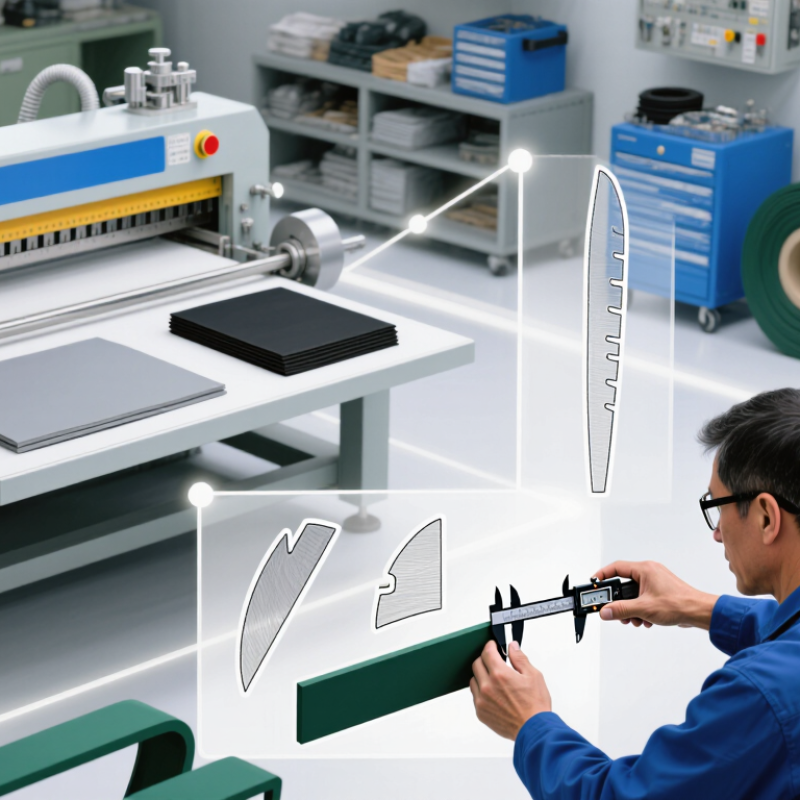
2026 How to Choose the Best Rubber Automatic Cutting Machine
Understand How Rubber Automatic Cutting Machines Work
A rubber automatic cutting machine typically feeds sheet or rolled material toward a cutting station. Guides keep the rubber aligned, while sensors track its position and length. A controller then sets the feed distance and triggers a blade, die, or other cutting tool. The machine repeats this cycle to produce consistent pieces. The rubber itself affects the result: soft, stretchy sheets may shift or compress, while harder compounds can require more cutting force. Small changes matter.
Tips: Test your actual rubber, not just a sample with similar thickness. Check cut edges for tearing, compression, and uneven lengths. Keep guides clean, and confirm that guards and emergency stops work before operation. Record settings that produce reliable cuts.
When comparing machines, consider material width, thickness, hardness, and the shapes you need to cut. Ask how the feed system handles curled or tacky rubber, and whether operators can adjust cycle settings safely. A quick demonstration with your material can reveal slipping or rough edges that specifications may not show. I have seen neat samples hide setup problems. So inspect a full production run, too. A machine that cuts accurately at first may drift if feeding and maintenance are overlooked.
| Selection Factor | How the Machine Works or Available Options | What to Check Before Choosing |
|---|---|---|
| Cutting workflow | A digital pattern is prepared in CAD or nesting software, sent to the machine controller, and followed by the cutting head. The workpiece is positioned, held in place, cut, and unloaded. | Confirm which file formats, pattern-editing tools, and operator steps are supported. |
| Rubber material and product | Rubber may be supplied as sheet, roll, gasket stock, or foam. Natural rubber, synthetic rubber, and rubber composites can behave differently during cutting. | Test the actual compound, hardness, reinforcement, surface, and finished-part geometry—not just a similar-looking sample. |
| Cutting technology | Oscillating or drag knives cut by moving a blade through the material; rotary knives use a rotating blade; die cutters press a shaped tool through the stock. Waterjet systems cut with a high-pressure water stream. | Match the method to material thickness, edge quality, part shape, production volume, tooling cost, and any restrictions on water or debris. |
| Material thickness and cutting depth | Maximum thickness depends on the cutting method, blade or tool, machine configuration, and material properties. Compressed or layered stock may cut differently from a single sheet. | Request a test cut at the thickest intended material and verify that the cut passes through without excessive edge distortion. |
| Workholding and feeding | A vacuum table can hold suitable sheet material flat. Roll-fed systems advance continuous stock, while clamps or other fixtures can secure parts that are not suitable for vacuum hold-down. | Check whether the material is porous, textured, or flexible, and whether the machine can prevent slipping, stretching, or wrinkling. |
| Cutting area and nesting | The usable table or feed width limits the size and layout of jobs. Nesting software arranges parts on the sheet or roll to reduce unused material. | Measure the largest stock and part, then allow for margins, clamps, loading space, and required material grain or orientation. |
| Accuracy and repeatability | Positioning performance is influenced by the drive system, calibration, tool condition, material movement, and cutting parameters. Accuracy specifications are machine- and application-dependent. | Ask for measured results on your rubber and part design, and distinguish machine positioning specifications from finished-part tolerances. |
| Production speed and automation | Cycle time includes loading, cutting, tool changes, unloading, and inspection. Automatic feeding and nesting can reduce manual handling, but do not guarantee a particular output rate. | Run a timed trial using representative parts, including setup and handling time, before estimating daily capacity. |
| Tooling and maintenance | Blades and dies wear and require inspection or replacement. Cutting quality can also depend on tool alignment, table condition, cleaning, and preventive maintenance. | Compare tool availability and cost, changeover time, maintenance requirements, and access to technical support and training. |
| Safety and workspace | Automated cutters may use moving heads, sharp tools, or high-pressure systems. Required guarding and operating procedures depend on the machine design and cutting method. | Review guarding, emergency stops, operator training, electrical requirements, and any ventilation or waste-handling needs specified for the process. |
| Best-fit decision | A knife-based CNC system can suit flexible sheet parts and changing designs; a die cutter can suit repeat runs with a fixed shape; other methods may suit specific material or edge requirements. | Choose only after comparing sample-cut quality, total operating cost, achievable output, material waste, and fit with the production workflow. |
Note: Performance depends on the rubber compound, stock condition, tooling, machine configuration, and operating settings. Confirm application-specific specifications with a representative production test.