2026 Top Electric High Lift Pallet Truck Manufacturers?
Choosing the right Electric High Lift Pallet Truck in 2026 requires more than comparing prices and lifting heights. Warehouses need equipment that performs reliably between narrow racking, loading bays, and uneven floor sections. A truck may look impressive in a brochure, yet its real value appears during repeated shifts, cold storage work, and frequent pallet changes.
This guide examines leading manufacturers through practical and verifiable criteria. These include lifting capacity, maximum height, battery performance, steering control, safety systems, service coverage, and spare-parts availability. It also considers operator feedback, published technical data, warranty terms, and compliance documentation. Such evidence helps separate experienced manufacturers from companies relying mainly on attractive marketing language.
Small details matter. A comfortable tiller can reduce fatigue during a long shift. Clear battery indicators can prevent unexpected downtime. Stable forks matter when raising a 1,200-kilogram pallet several meters above the floor. Still, no ranking is perfect. Warehouse layouts, pallet conditions, maintenance habits, and operator training can change the final result. Some manufacturers publish limited long-term performance data, which deserves careful attention.
The following overview highlights manufacturers that show credible engineering capability and dependable market support. It does not treat a famous brand as automatically suitable for every operation. Instead, it encourages buyers to compare tested specifications with actual working conditions. A site visit, product demonstration, and service discussion may reveal more than a polished catalog. This practical approach supports safer purchasing decisions and helps businesses identify the best Electric High Lift Pallet Truck for their 2026 requirements.
What Are Electric High-Lift Pallet Trucks?
2026 Top Electric High Lift Pallet Truck Manufacturers?
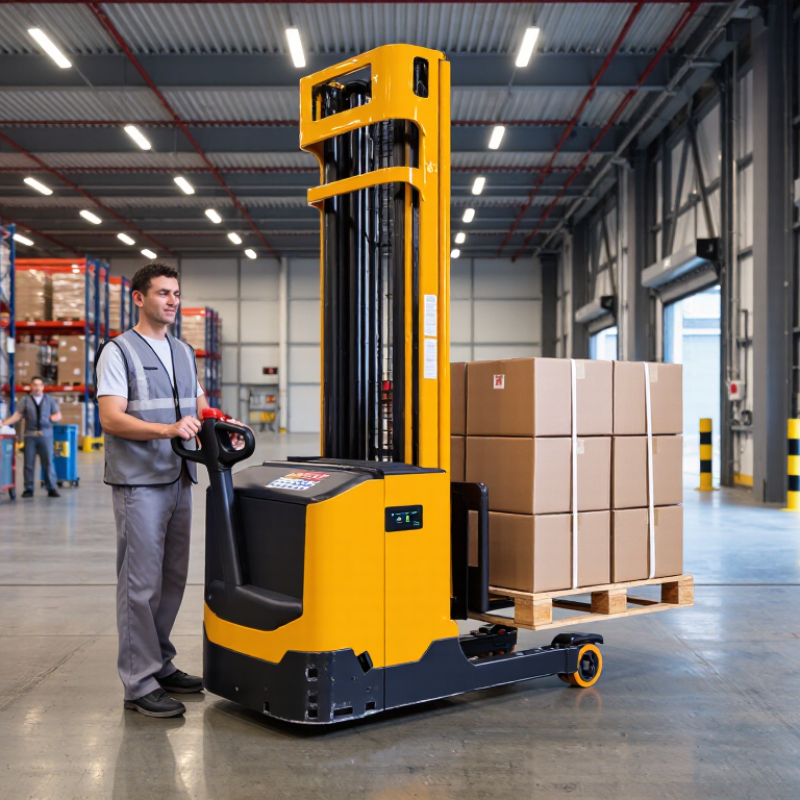
Electric high-lift pallet trucks are pedestrian-operated warehouse vehicles with powered forks. An electric motor drives a hydraulic or electric lifting system. The forks raise pallets above floor level, often to a comfortable picking height. They are different from standard pallet jacks, which mainly move loads horizontally. They are also not automatically forklifts. Many models cannot safely handle high-rack stacking.
This distinction matters. A raised pallet can reduce repeated bending near a packing bench. It can also create a serious stability risk when the load center shifts. OSHA estimates that powered industrial trucks cause about 35,000 serious injuries annually in the United States. Its guidance stresses operator training, load stability, visibility, and floor conditions. These points should influence equipment selection more than lifting height alone.
Industry data supports careful evaluation. MHI’s 2024 Annual Industry Report found that 55% of supply-chain professionals considered workforce shortages a major challenge. Electric high-lift trucks may reduce physical strain, but they do not remove training needs. Battery capacity, charging access, turning radius, mast visibility, and rated capacity require practical testing. A 1,000-kilogram rating may fall sharply at extended lift heights. That detail is often missed.
In real warehouses, the best equipment leaves clear sightlines around a loaded pallet. Controls should remain usable with gloves. Emergency lowering must be simple. Noise levels also matter in enclosed aisles. Some purchasing decisions still focus too heavily on price. That is understandable, but incomplete. A safer assessment compares total operating cost, maintenance records, ergonomic fit, and verified performance under actual warehouse conditions.
Key Features and Applications of High-Lift Pallet Trucks
High-lift pallet trucks combine pallet movement with controlled load elevation. Their lifting height commonly ranges from 800 to 1,500 millimeters, depending on the design and working purpose. This feature helps operators position goods at comfortable heights during order preparation, inspection, and light assembly work.
Useful models include adjustable forks, proportional lifting controls, emergency stop buttons, and automatic braking. Protective rails can improve safety when workers handle goods beside raised pallets. Battery indicators also matter. A clear display prevents unexpected downtime during busy shifts. Some units use compact turning circles for narrow aisles, while others provide stronger stability for heavier loads. Capacity should always be checked at the actual load center, not only by the headline rating.
These trucks suit warehouses, retail back rooms, food distribution areas, and small production lines. They can reduce repeated bending when cartons move from pallets to worktables. Smooth floors are important because uneven surfaces may affect stability and steering. Cold or damp environments also require suitable electrical protection and maintenance routines. A common mistake is choosing maximum lift height without checking aisle clearance. That decision can create awkward handling and reduce productivity. Field inspections often reveal another issue: operators use fast lifting settings near people or shelving. Training helps, but controls alone cannot remove every risk. A short trial with real pallets is usually more reliable than relying only on a specification sheet.
How to Evaluate Manufacturers in 2026
Evaluating electric high lift pallet truck manufacturers in 2026 requires more than comparing catalog prices. Check how each manufacturer tests lifting stability, braking, steering, and load control under realistic warehouse conditions. Ask for test data using your actual pallet dimensions, load centers, floor gradients, and working hours. A truck lifting 1,500 kilograms on paper may behave differently near its maximum height.
Battery engineering deserves close attention. Compare lithium battery life, charging time, thermal protection, and replacement costs. Request clear information about controller diagnostics and software updates.
A practical supplier should explain maintenance intervals, spare-parts availability, operator training, and response times. Visit a production or service facility if possible. Look at assembly quality, cable protection, weld consistency, and emergency controls. Small details matter.
Reliability claims should be supported by field references, failure-rate records, and warranty terms written in plain language. Ask whether performance data comes from independent testing or internal trials. That difference is easy to overlook. Total cost should include energy use, tires, batteries, downtime, and technician labor, not only the purchase price. No scorecard is perfect. I would leave room for real operator feedback after a short pilot, because a quiet motor cannot fix poor visibility or awkward controls. Request documented compliance with applicable safety requirements and traceable quality procedures before approving a long-term purchase.
Leading Electric High-Lift Pallet Truck Manufacturers
Leading Electric High-Lift Pallet Truck Manufacturers
Electric high-lift pallet truck manufacturers are responding to tighter warehouse space and rising labor costs. Grand View Research valued the global electric forklift market at approximately USD 55.8 billion in 2023. It forecasts a 13% compound annual growth rate from 2024 to 2030. This figure covers several truck types, not only high-lift pallet equipment. That distinction matters.
Leading manufacturers now focus on compact dimensions, programmable lift heights, and lithium-ion battery systems. A 1.2-ton truck may look similar across suppliers, yet control quality differs sharply. Operators notice this near shelving, where a few centimeters affect pallet stability. Buyers should inspect rated capacity at maximum lift, turning radius, charging time, and service access. TÜV-certified testing, ISO 3691-1 alignment, and documented battery protection add useful evidence.
Reliability remains harder to measure. The 2024 MHI Annual Industry Report identifies labor availability and operational efficiency as continuing material-handling concerns. Manufacturers with field-service records, traceable spare parts, and operator training deserve closer attention. Ask for duty-cycle data, not attractive brochure claims. Real warehouses are dusty, uneven, and frequently rushed. A laboratory result may not survive that floor.
Some buyers still overvalue initial price. That is understandable, but incomplete. Energy use, downtime, wheel replacement, and charging infrastructure can reshape total cost. Forecasts also contain uncertainty. Productive hours vary by shift design, temperature, and operator behavior. A careful comparison should include local service capability and independent performance checks. Perfect data is rare. Better questions are not.
2026 Leading Electric High-Lift Pallet Truck Manufacturers: Capacity Benchmarks
Representative maximum rated-load ranges commonly published for electric high-lift pallet-truck configurations. Actual capacity depends on lift height, load center, mast design, battery specification, and attachments; the figures are industry benchmarks rather than company-specific data.
Reference basis: representative specifications appearing across publicly available electric pallet-truck and walkie-stacker product datasheets. Capacity is shown in kilograms.
How to Choose the Right Manufacturer and Model
2026 Top Electric High Lift Pallet Truck Manufacturers?
Choosing the right manufacturer starts with your warehouse, not a supplier ranking. Measure aisle width, floor condition, load dimensions, lift height, and daily operating hours. A 1,200-kilogram truck may not carry 1,200 kilograms at maximum lift. Check the residual-capacity chart carefully.
The 2024 MHI Annual Industry Report identifies labor shortages as a major supply-chain challenge, affecting equipment selection and uptime planning. Choose a manufacturer offering simple controls, operator training, diagnostic access, and documented service response times. Battery technology also matters. Compare lithium-ion charging speed, battery replacement cost, warranty coverage, and charging-room requirements. Ask for total cost over five years, not only the purchase price.
Model testing should happen in your real operating space. Load the truck with your heaviest pallet. Turn inside the narrowest aisle. Test ramp movement, mast visibility, braking, and emergency lowering. Safety features must support, not replace, trained operators. OSHA’s powered industrial truck rules require formal training, practical operation, and performance evaluation at least every three years.
Request references from similar warehouses. Review failure records and parts availability. A glossy specification sheet is not enough. Some manufacturers publish impressive lift figures without explaining reduced capacity at height. That deserves skepticism. MHI’s 2024 report also shows continuing investment in connected supply-chain technologies, so ask whether fleet data exports work with your existing systems. Cheap sensors can still create expensive confusion.