

-

97 Auto Road, County of Vermilion River, AB T0B 0L0
-

-

97 Auto Road, County of Vermilion River, AB T0B 0L0

Choosing among the 2026 Top Flue Gas Desulfurization Equipment Suppliers requires more than comparing product brochures. Plant operators must examine sulfur content, boiler load, gas temperature, water availability, limestone quality, and gypsum handling. These details shape real performance.
Richard K. Srivastava, a recognized flue gas treatment researcher and former U.S. EPA scientist, has stated, “FGD selection must reflect fuel, site, water, waste, and compliance conditions.” That principle remains practical. A reliable supplier should explain absorber design, reagent consumption, pressure drop, corrosion protection, maintenance access, and verified sulfur dioxide removal results. Numbers matter.
So do field conditions.
This article outline will assess leading Flue Gas Desulfurization Equipment suppliers through technical capability, operating experience, project references, service coverage, and lifecycle cost. It will consider wet limestone systems, seawater FGD, dry sorbent injection, spray-dry absorbers, and hybrid solutions. Each option has trade-offs. Wet systems may deliver strong removal efficiency but require more water, pumps, and wastewater management. Dry systems can simplify operation, yet their sorbent costs and residue handling deserve closer review.
Some supplier claims look impressive. They still need evidence.
The evaluation will also examine commissioning support, spare-parts availability, digital monitoring, and performance guarantees. These factors become critical when a scrubber faces unstable fuel quality, fluctuating loads, or limited maintenance staffing. The ranking will not treat the largest company as automatically superior. A smaller specialist may provide faster engineering support or better retrofit knowledge. That possibility is easy to overlook.
Real projects are rarely perfect. Cost estimates change, operating data may be incomplete, and regional regulations differ. A careful buyer should verify every major claim before selecting a partner.
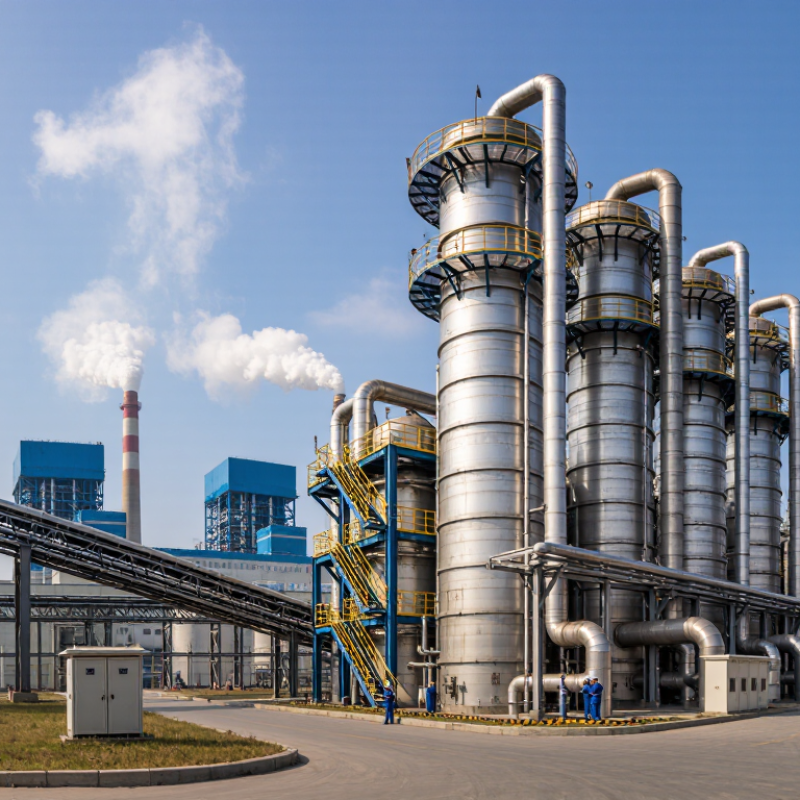
Flue gas desulfurization equipment removes sulfur dioxide from exhaust gases before they enter the atmosphere. It is commonly installed in power plants, cement facilities, metal processing sites, and industrial boilers. The system usually includes an absorber, circulating pumps, reagent storage, slurry piping, mist eliminators, and control instruments. Wet scrubbers use limestone or lime slurry to capture sulfur compounds. Dry and semi-dry systems use powdered or atomized reagents with less wastewater. Selection depends on fuel sulfur content, gas temperature, moisture limits, and available space.
Tips: Check the complete process, not only the absorber. Ask suppliers for removal-efficiency data, corrosion-control details, inspection records, and expected maintenance intervals. Request site references with similar gas volume and operating conditions. Small design differences matter.
Experienced engineers also examine pressure drop, pump redundancy, dust loading, and by-product handling. A reliable supplier should explain how the equipment performs during startup, load changes, and reagent variation. Materials must resist abrasion and chemical corrosion, especially around slurry tanks and spray headers. Control systems should provide clear alarms and stable measurements. The choice is rarely perfect. A lower purchase price may create higher energy or maintenance costs later. Supplier comparisons should include lifecycle cost, operator training, spare-parts access, and technical support. This practical review helps identify equipment that fits the actual emission source, rather than a generic catalog specification.
| Equipment Type | Desulfurization Principle | Typical SO₂ Removal Efficiency | Primary Reagent or Medium | Main By-Product | Typical Water Demand | Common Applications | Key Selection Considerations |
|---|---|---|---|---|---|---|---|
| Wet Limestone–Gypsum FGD | Flue gas contacts a limestone slurry in an absorber. Sulfur dioxide is oxidized and converted into calcium sulfate dihydrate. | 90%–99%+ | Ground limestone and process water | Commercial-grade or utility-grade gypsum, wastewater, and dewatered solids | Medium to high; water is used for slurry preparation, washing, and mist elimination | Large coal-fired power plants, industrial boilers, steel plants, and major combustion facilities | High removal requirements, limestone availability, gypsum handling, corrosion resistance, and wastewater treatment |
| Wet Lime FGD | A lime slurry reacts with sulfur dioxide to form calcium-based sulfite and sulfate compounds. | 90%–99% | Hydrated lime or quicklime slurry | Calcium sulfite, calcium sulfate, and filter cake | Medium to high | Industrial boilers, waste-to-energy plants, chemical facilities, and sites requiring fast reagent reactivity | Higher reagent reactivity than limestone, reagent cost, lime storage, scaling control, and solids disposal |
| Seawater FGD | Natural seawater alkalinity absorbs and neutralizes sulfur dioxide, followed by controlled aeration before discharge. | 90%–98% | Seawater; no added limestone is normally required | Oxidized sulfate salts dissolved in treated seawater | High seawater flow; low fresh-water demand | Coastal power stations and marine industrial facilities | Seawater alkalinity, marine discharge regulations, intake capacity, temperature rise, and environmental monitoring |
| Spray Dry Absorber | An atomized lime slurry is sprayed into hot flue gas. Water evaporates while the reagent reacts with sulfur dioxide. | 80%–95% | Hydrated lime slurry | Dry calcium sulfite and calcium sulfate solids | Low to medium; most injected water evaporates in the absorber | Medium-sized boilers, waste-to-energy plants, and facilities with limited wastewater infrastructure | Inlet sulfur concentration, lime quality, atomizer performance, outlet temperature, and particulate collection |
| Circulating Fluidized Bed FGD | Dry hydrated lime circulates with recirculated solids in a fluidized reactor, increasing gas–solid contact time. | 90%–98% | Hydrated lime, with optional humidification water | Dry calcium sulfite, calcium sulfate, and unreacted sorbent | Low; water may be used for temperature control and humidification | Coal-fired boilers, industrial furnaces, waste incinerators, and retrofit projects | Gas velocity, solids circulation, sorbent utilization, reactor height, pressure drop, and dust collection |
| Dry Sorbent Injection | Powdered alkaline sorbent is injected directly into the furnace, duct, or upstream gas-treatment system. | 40%–90%, depending on reagent, temperature, residence time, and sulfur concentration | Hydrated lime, sodium bicarbonate, trona, or other alkaline sorbents | Dry reacted sorbent mixed with fly ash or other collected particulate | Very low; normally no process water is required | Small and medium boilers, peak-load units, industrial process heaters, and quick retrofit applications | Injection location, reagent-to-sulfur ratio, gas temperature, residence time, ash chemistry, and storage capacity |
| Dual-Alkali FGD | A soluble alkaline solution absorbs sulfur dioxide, while a separate calcium-based process regenerates the scrubbing liquor. | 90%–99% | Sodium-based or magnesium-enhanced absorbent with lime or limestone regeneration | Gypsum, calcium sulfite, or calcium sulfate solids | Medium to high | High-sulfur fuels, industrial boilers, refineries, and facilities needing reduced scaling risk | Absorbent regeneration, chemical balance, wastewater quality, corrosion control, and process complexity |
| Magnesium-Enhanced Lime FGD | Magnesium compounds improve lime slurry absorption and reduce the risk of sulfite scaling in the absorber. | 90%–99% | Lime or limestone with magnesium-enhanced absorbent | Calcium sulfite, calcium sulfate, and magnesium salts | Medium to high | High-sulfur industrial boilers and retrofit installations with scaling concerns | Magnesium concentration, reagent recovery, solids oxidation, wastewater chemistry, and corrosion-resistant materials |