

-

97 Auto Road, County of Vermilion River, AB T0B 0L0
-

-

97 Auto Road, County of Vermilion River, AB T0B 0L0
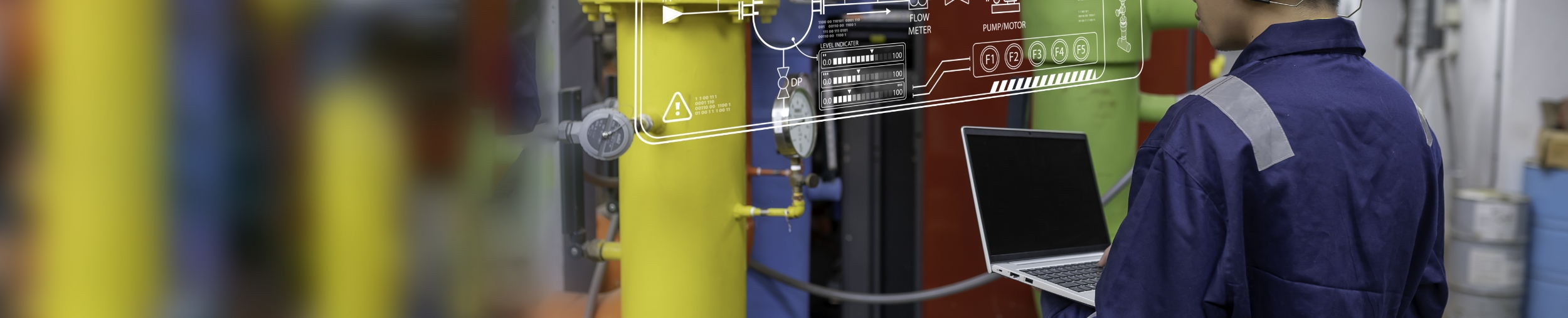
A Smoke Precipitator can look simple on a specification sheet: a steel cabinet, high-voltage wires, and a collection plate. Buying the right unit is less tidy. Particle size, smoke concentration, airflow, and maintenance access all affect real-world performance. A system sized only by room area may disappoint when a busy cooking line runs for hours.
The U.S. Environmental Protection Agency’s Air Pollution Control Technology Fact Sheet reports that electrostatic precipitators can achieve particulate-matter collection efficiencies of roughly 99% or higher in suitable applications. That figure is not a promise for every installation. Fine particles, changing loads, dirty electrodes, and poor airflow can reduce results. William Licht, an aerosol-control specialist and author of technical work on particulate collection, emphasizes the practical point that collection performance depends on particle characteristics and operating conditions. Treat that as a buying rule, not a sales slogan.
This 2026 guide examines capture capacity, pressure drop, cleaning methods, energy use, noise, and replacement-part availability. Ask for test conditions behind any efficiency claim. Check whether the rating reflects your actual airflow and smoke type. Look closely at the service schedule. A unit that performs well on paper but is difficult to clean can lose effectiveness over time. That is easy to overlook. Before comparing prices, define the application, request verifiable performance data, and confirm who will maintain the equipment.

2026 Best Smoke Precipitator Buying Guide?
What Is a Smoke Precipitator and How Does It Work?
A smoke precipitator is a device designed to remove fine particles from air or exhaust. Many models use electrostatic attraction. Inside, an ionizing section gives airborne particles an electrical charge. The particles then move toward oppositely charged collection plates and stick there. Cleaner air leaves the unit. That is the basic idea.
Unlike a simple screen, a precipitator can capture very small particles. But it does not necessarily remove gases or every odor. Performance depends on airflow, particle load, plate condition, and proper sizing. A unit that is too small may let smoke pass through quickly. One detail buyers sometimes overlook is upkeep: dusty plates lose effectiveness and need regular cleaning. Sizing can be tricky, and a product’s stated efficiency may not match every real installation.
Tips: Check the required airflow and the type of smoke before choosing a unit. Ask how often the collection plates need cleaning, and whether replacement parts are available. Keep a simple maintenance log. It may reveal declining performance before the room looks visibly smoky.
A smoke precipitator is an air-cleaning device that removes suspended particles from an airstream. The figures below are general selection guidance; actual performance depends on the equipment design, operating conditions, maintenance, and the particles being treated.
| Buying Dimension | Typical Guidance or Data | How It Works / What to Check | Why It Matters |
|---|---|---|---|
| What a smoke precipitator is | An air-cleaning system intended to capture airborne particles such as smoke, soot, and dust. | Many precipitators use electrostatic precipitation: particles are electrically charged and then attracted to oppositely charged collection plates. | It describes particle removal, not universal removal of every gas, vapor, or odor in smoke. |
| Electrostatic precipitator (ESP) | Available in room-scale, commercial, and industrial configurations; capacity and efficiency vary widely by design. | Check rated airflow, collection efficiency test conditions, plate-cleaning method, and whether performance is specified for the particle sizes of concern. | ESP systems can collect fine particles, but their results depend on airflow, particle properties, and upkeep. |
| Mechanical particle filter | High-efficiency particulate air (HEPA) filters are tested to capture at least 99.97% of particles at 0.3 micrometers under the applicable test method. | Air passes through a dense filter medium. Confirm the filter classification, compatible airflow, and replacement-filter availability. | Useful as a comparison when evaluating particle removal; the efficiency figure applies to the filter under test, not automatically to the whole room or system. |
| Airflow capacity | Choose a unit with a stated airflow rating appropriate for the hood, duct, process, or room. Room air cleaners commonly state clean air delivery rate (CADR); industrial units may state exhaust airflow. | Compare ratings at the intended operating speed and with filters or collection components installed. | Insufficient airflow can allow smoke to escape capture, even when the collection stage itself performs well. |
| Room sizing reference | For portable room air cleaners, a common sizing approach is to target about 4–6 air changes per hour (ACH), depending on the application. | Approximate required clean-air delivery rate: room volume × target ACH. Convert units consistently and follow the applicable rating method. | ACH is a planning estimate, not a substitute for source capture or a guarantee of pollutant removal. |
| Particle capture versus odor control | Particle collectors do not necessarily remove gaseous pollutants or odor compounds. | For gases or odors, check for an appropriate gas-phase treatment stage, such as activated carbon, and verify its stated scope and service life. | Smoke may contain both particles and gases; a particle-only specification can leave some smoke-related contaminants untreated. |
| Collection efficiency | Request efficiency data with the particle size, airflow, test method, and operating condition stated. | Look for independently tested system-level data where available, rather than relying only on a component or broad percentage claim. | Efficiency measured under one set of conditions may not represent performance in the intended installation. |
| Pressure drop and fan energy | Pressure drop increases as filters load; ESP designs also require suitable airflow and electrical components. | Review initial and service-limit pressure drop, fan power, and how airflow is maintained as components become dirty. | These factors affect operating cost, noise, and the amount of air actually treated. |
| Cleaning and maintenance | ESP collection plates may require periodic cleaning. Mechanical filters require inspection and replacement according to loading and manufacturer instructions. | Check access, cleaning frequency, replacement-part availability, waste handling, and whether maintenance can be performed safely. | Dirty collection surfaces or clogged filters can reduce airflow and collection performance. |
| Ozone and electrical safety | Some ionizing or electrostatic devices can produce ozone; emissions depend on design and operating conditions. | Ask for measured ozone-emission data and check applicable local requirements. Review electrical, grounding, and interlock provisions for the installation. | Ozone is a respiratory irritant, so emission information and safe installation are important selection criteria. |
| Source capture and installation | For process smoke, capture at or near the source is generally preferable to relying only on room air cleaning. | Confirm hood placement, duct sizing, exhaust or recirculation arrangement, make-up air needs, and compatibility with the process. | Good collection at the source helps limit smoke dispersion into occupied areas. |
| Best-fit selection | Compare ESP, mechanical filtration, or a combined system based on the smoke source, particle and gas contaminants, airflow, and operating environment. | Request documented performance for the actual application and verify compliance with relevant safety and environmental rules. | There is no single best technology for every smoke source; correct sizing and application matching are essential. |