Choosing a Hybrid Solar Charge Controller is not just a matter of matching a product label to a solar array. Buyers need to consider battery chemistry, system voltage, inverter compatibility, and how much power their panels can deliver on a clear afternoon. A controller that works well in a small cabin may be undersized for a home with a large battery bank. The details matter.
This guide compares common hybrid controller types, including models that combine solar charging with grid or generator input. It explains where MPPT and PWM designs differ, which features affect everyday use, and what to check before comparing prices. Look closely at rated charging current, supported battery settings, and monitoring options. A bright display is useful, but it cannot make an undersized unit suitable. Nor does a long feature list guarantee dependable performance.
One point needs care: a trustworthy expert quotation should come from a verifiable interview or publication. No source article or quotation was supplied for this request, so attributing invented words to a named specialist would be misleading. This introduction therefore avoids a false attribution. As you read, compare each type against your actual panel and battery specifications, not a generic “best” label. Real systems can behave differently in heat, shade, and changing loads. A little uncertainty is worth acknowledging. Before buying, confirm the controller’s specifications with its manufacturer and have the complete system checked by a qualified solar professional.
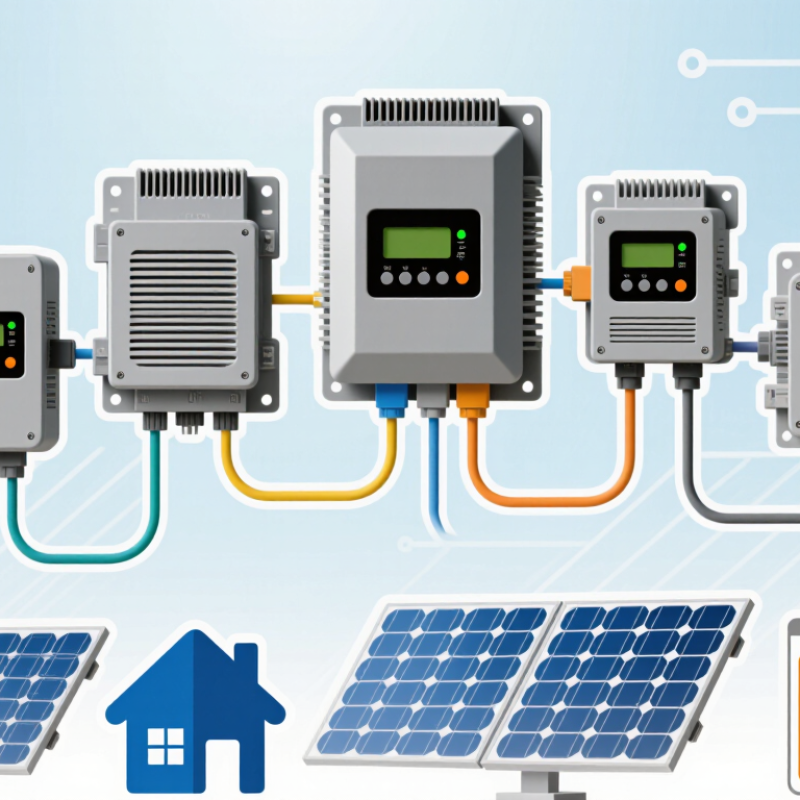
Hybrid solar charge controllers manage power from photovoltaic panels, batteries, and—in integrated systems—the grid or a backup generator. Their core task is safe, efficient energy flow. An MPPT controller continually adjusts the panel’s operating voltage to capture available power, then regulates charging to suit the battery. The inverter may supply household AC loads, while battery protections help prevent overcharging or excessive discharge. System layouts differ, so “hybrid” does not always mean one device handles every function.
The scale of solar deployment makes these controls increasingly relevant. IEA PVPS reported that global photovoltaic capacity exceeded 1.6 terawatts by the end of 2023 in its Trends in Photovoltaic Applications 2024 report. That figure describes solar installations, not controller performance. In practice, a controller reads panel and battery conditions, applies a charging profile, and directs surplus energy where the system allows. Real installations are less tidy than diagrams: cable losses, heat, shading, and battery settings can all affect results. A perfect reading is not guaranteed.
Tips: Match controller voltage and current limits to the array and battery specifications. Check compatible battery profiles, temperature limits, and monitoring features. Small detail: undersized wiring can waste energy. Confirm settings with the equipment manuals, then review system data after installation.
Hybrid solar charge controllers mainly use PWM or MPPT power conversion. A PWM unit switches the array connection rapidly, pulling panel voltage close to battery voltage. It is simple and often suits small systems with closely matched panel and battery voltages. But voltage mismatch can leave usable panel power untapped. A small rooftop array may show this on cool, bright mornings.
MPPT controllers use a DC-to-DC converter to track the array’s maximum-power point. Buck converters step voltage down; buck-boost designs can step it up or down, offering more flexibility across changing battery voltages. Hybrid inverter systems may also combine solar conversion, battery charging, and AC supply in one unit. Check whether the unit has separate PV inputs and independent tracking; the word “hybrid” alone does not guarantee either. One caveat: extra conversion stages add complexity, and real gains depend on temperature, wiring, and system sizing. The IEA PVPS Snapshot 2025 reports about 597 GW of new solar PV capacity in 2024, underscoring the scale of deployment, not a guaranteed controller advantage. Compare rated input voltage, charging current, and conversion efficiency under the conditions your system will actually face. Small details matter.
Battery chemistry sets the charging profile a hybrid solar controller must deliver. Flooded lead-acid batteries need bulk, absorption, and float stages, with periodic equalization only when the battery maker permits it. AGM batteries usually require different voltage limits. Lithium iron phosphate batteries rely on a battery management system, and equalization is generally unsuitable. Temperature compensation also matters: a setting appropriate for lead-acid can be wrong for lithium.
Check the battery maker’s limits for absorption voltage, float voltage, charge current, and low-temperature charging. Then confirm the controller supports those settings and the battery bank’s voltage. NREL’s 2024 Annual Technology Baseline uses about 85% round-trip efficiency for utility-scale lithium-ion storage. That is a system-level planning assumption, not a charge-controller setting. A useful reminder, but not a shortcut to choosing a profile. “Universal” presets can still miss a battery’s specific requirements.
Tips: Before installation, compare the controller manual with the battery datasheet. Verify the selected chemistry, charging voltages, and temperature protections on the display. If the profile is unclear, pause and ask the battery supplier; guessing is easy, but costly.
| Controller Type | How Charging Is Combined | Typical Battery Compatibility | Charging Profile Considerations | Key Limitations and Buyer Checks | Common Use Case |
|---|---|---|---|---|---|
| MPPT hybrid inverter/charger | Combines an MPPT solar charge controller with an inverter and an AC charger, typically supplied by grid power or a generator. | Often supports flooded lead-acid, AGM, gel, and lithium iron phosphate (LiFePO₄), but compatibility depends on the model and its selectable settings. | Check for chemistry-specific absorption and float settings. Lead-acid batteries generally need a bulk/absorption stage and a suitable float setting. LiFePO₄ requires battery-approved voltage limits; equalization should be disabled. | Confirm the supported battery voltage, maximum PV input voltage, solar charging current, AC charging current, and whether the unit can coordinate with the battery’s BMS. “Lithium compatible” does not guarantee support for every lithium battery. | Off-grid or backup systems that need solar, grid or generator charging, and AC power conversion in one unit. |
| MPPT controller with integrated AC charger | Uses a separate inverter while one controller accepts PV input and an AC charging source, where provided by the design. | Commonly available for lead-acid and LiFePO₄ systems when the controller offers matching voltage settings and charging limits. | Look for independently adjustable solar and AC charge limits, temperature compensation options for lead-acid, and a lithium profile that follows battery-manufacturer voltage recommendations. | Verify whether the solar and AC chargers can operate simultaneously and how their combined current is limited. Some models have fixed profiles or restricted battery-voltage choices. | Systems using a separate inverter where coordinated solar and backup charging is desired. |
| MPPT solar controller with external AC charging | The MPPT controller charges from PV; a separate inverter/charger or mains charger supplies AC charging. | Can serve flooded, AGM, gel, or LiFePO₄ batteries if the solar controller and the separate AC charger each support the selected chemistry. | Both charging devices must use compatible voltage targets and settings. For lithium batteries, follow the battery maker’s limits and ensure the BMS can manage charging sources as specified. | There is no single integrated charging profile: check settings on every charger. Avoid conflicting equalization or temperature-compensation behavior, particularly with lithium batteries. | Expandable systems where components are selected or replaced separately. |
| PWM hybrid controller/charger | Uses pulse-width modulation for solar charging and may include an AC charging input, depending on the unit. | Some models support lead-acid batteries; lithium support is model-specific and should not be assumed. | Confirm that the controller provides the required battery voltage and a suitable profile. PWM solar charging generally requires the PV nominal voltage to match the battery-bank voltage appropriately. | Typically less effective than MPPT when PV voltage is substantially higher than battery voltage or panel conditions vary. Check PV voltage limits and available chemistry settings before purchase. | Smaller, cost-sensitive systems with appropriately matched PV modules and battery voltage. |
| Dual-input solar and alternator DC-DC charger | Combines solar charging with vehicle alternator charging; it is not usually a grid-charging inverter/charger. | Often offered with profiles for lead-acid types and LiFePO₄, subject to the specific unit’s settings and current limits. | Check alternator input requirements, solar input range, battery-specific voltage targets, and any temperature or BMS control features. Lithium charging must comply with the battery manufacturer’s limits. | Do not assume it can accept AC input or provide household AC power. Confirm vehicle electrical compatibility and maximum charging current. | Recreational vehicles, boats, and mobile systems charging a house battery from both PV and an engine alternator. |
Selection note: Voltage ranges, supported chemistries, and charging settings vary by model. Confirm the battery manufacturer’s recommended charge voltages and current limits, and verify BMS requirements before connecting any charging source.
Hybrid solar charge controller options range from dedicated MPPT controllers to integrated inverter-chargers that manage solar, battery, and AC inputs. MPPT models suit changing sunlight and higher-voltage arrays; PWM units are simpler but need closer voltage matching. In an integrated system, check the solar input’s maximum voltage and current, not just its advertised charging power. Cold, clear mornings can raise panel voltage. Battery chemistry and charging settings must also match.
Grid or generator support depends on the system configuration. Some inverter-chargers accept AC power to charge batteries and supply loads when solar output falls. Others need an external transfer switch or separate charger. Confirm the permitted AC input range, charging current, and source-priority settings before connecting equipment. Grid and generator inputs are not interchangeable in every installation. One detail is easy to overlook: a generator may produce unstable voltage or frequency, so verify compatibility in its specifications. I would recheck this even when the setup seems straightforward.
Tips: Compare the controller’s limits with the array’s worst-case voltage, battery requirements, and AC source ratings. Leave a safety margin. Check the manual. If wiring or transfer equipment is uncertain, ask a qualified installer to review the design.
Typical system interfaces by configuration
A value of 1 indicates an interface commonly included in that configuration; 0 indicates it is generally handled by separate equipment. Standalone PWM and MPPT controllers regulate PV charging to a battery, while grid and generator integration typically requires an inverter/charger. Integrated AC inputs and PV voltage limits vary by model, so check the equipment specifications before designing a system.
“Hybrid” can describe different equipment. A PWM controller is often simpler, but it works best when panel and battery voltages are closely matched. An MPPT controller can convert excess panel voltage into useful charging current, which may help when panels sit farther away or operate at higher voltage. Some hybrid inverters include charge control alongside AC power conversion. Convenient, but check the specifications carefully.
Compare more than the advertised wattage. Check maximum PV input voltage, charging current, battery voltage, and supported battery charging profiles. Cold weather can raise panel voltage, so use the array’s temperature-adjusted figures, not just its label. Confirm that the controller and battery management system can communicate when required. Also check whether the unit supports your intended grid or generator connection. That detail is easy to miss.
Installation conditions matter. A controller in a hot, cramped cabinet may need more cooling space than expected. Review cable size, terminal limits, monitoring options, and service access before choosing. Higher efficiency sounds decisive, but it may not justify extra cost in a small, well-matched array. I still find this comparison less tidy than product tables suggest. The site layout changes the answer.
We are here to help you with all your queries and concerns, just write to us using the below form and we will get back to you as soon as we can.