5 Tips to Understand RCCB Meaning

Understanding Rccb Meaning starts with a simple question: what does this device actually protect against? An RCCB, or residual current circuit breaker, monitors the current flowing through live and neutral conductors. When some current leaks elsewhere, such as through damaged insulation or a faulty appliance, the imbalance can trigger a rapid disconnection. That response may reduce the risk of electric shock and electrical fires. It is not a magic shield.

A familiar example is a kettle with a damaged cable. If current escapes its intended path, an RCCB may detect the difference and disconnect the circuit. Its exact performance depends on the device rating, installation, and condition. Important detail. An RCCB generally does not provide overload or short-circuit protection by itself, so suitable overcurrent protection is also needed. The right arrangement depends on the circuit and local electrical requirements.

These five tips will explain how an RCCB works, what its ratings mean, and how to distinguish it from related devices. They will also cover testing and common selection questions. A test button can help check basic operation, but it does not confirm that the whole installation is safe. Small distinction, big consequence. Terminology and product specifications can vary, so check the manufacturer’s instructions and ask a qualified electrician when unsure. Even clear labels can be misread. Understanding the basics helps you ask better questions, though it cannot replace professional inspection.
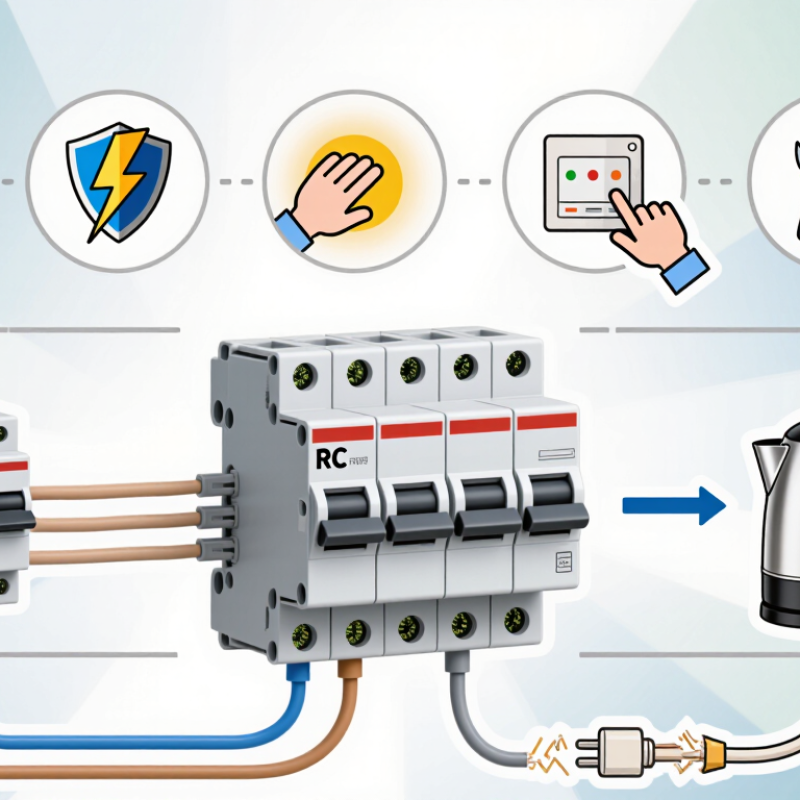
5 Tips to Understand RCCB Meaning

Define RCCB: A Residual Current Circuit Breaker Under IEC 61008-1

RCCB means Residual Current Circuit Breaker. Under IEC 61008-1, an RCCB detects residual current and disconnects a circuit. It compares current flowing through the live and neutral conductors. If some current escapes through an unintended path, the difference may trigger a trip. That matters. An RCCB does not include integral overcurrent protection, so a separate fuse or circuit breaker is generally needed. It cannot detect every electrical danger or compensate for damaged wiring.

Tip: Read the device markings before choosing or checking an RCCB. The rated residual operating current, often shown in milliamps, describes its sensitivity to leakage current. Also check its rated current and pole configuration against the circuit design. A small label can hold important details. Similar-looking devices may serve different purposes.

Tip: Use the test button as directed by the manufacturer and applicable guidance. A successful test checks the device’s operating mechanism, not the entire electrical installation. If the RCCB trips repeatedly, do not keep resetting it without finding the cause. The fault may be intermittent, which can make diagnosis less straightforward. Have a qualified electrician assess the circuit.

5 Tips to Understand RCCB Meaning

RCCB means Residual Current Circuit-Breaker. Under IEC 61008-1, it provides protection against residual current but does not include integral overcurrent protection.

For a general-type RCCB, the IEC 61008-1 maximum operating times shown are 300 ms at 1 × IΔn, 150 ms at 2 × IΔn, and 40 ms at 5 × IΔn. IΔn is the rated residual operating current; actual operating times may be shorter.

Understand Its Operation: Detecting Leakage Through Line-Neutral Current Imbalance

An RCCB, or residual current circuit breaker, compares the current flowing through the line conductor with the current returning through neutral. In a healthy circuit, those currents should be nearly equal. The device passes both conductors through a sensing core, which detects any difference. A difference means some current may be taking another path, such as through a damaged cable or a person touching a faulty appliance.

That imbalance can be tiny. If it reaches the RCCB’s specified trip level, the mechanism opens the circuit, often before the fault becomes more dangerous. A familiar example is a damp appliance with damaged insulation: some current may leak to earth instead of returning through neutral. The RCCB does not usually protect against overloads or short circuits; those need separate overcurrent protection.

That detail is easy to miss. Nor does an RCCB make unsafe wiring safe. Its response depends on correct installation, suitable ratings, and periodic testing with the built-in test button. Read the device markings and instructions, and ask a qualified electrician if its operation is unclear.

One caveat: real faults do not always behave as neatly as textbook diagrams suggest.

Read the Ratings: Common IΔn Values Include 10, 30, 100 and 300 mA

An RCCB’s IΔn rating is its rated residual operating current, not the normal current it can carry. Common ratings include 10, 30, 100 and 300 mA. Smaller values respond to lower leakage, but they can also trip more readily when several appliances share a circuit. A 10 mA device may suit a carefully assessed, high-sensitivity circuit; it is not automatically the best choice everywhere. Numbers matter.

IEC 60364-4-41:2017 specifies additional protection by an RCD rated at no more than 30 mA for certain circuits. That makes 30 mA a widely recognized benchmark, but it does not replace correct earthing or circuit design. Ratings of 100 or 300 mA are often selected for upstream protection or fire-risk strategies, with coordination considered across connected devices. IEC 61008-1 sets product requirements for RCCBs; check the device’s markings and technical documentation rather than relying on the number alone. In practice, unwanted trips can be frustrating. Leakage from several filters or long cable runs may add up, so the designer should assess the installation and local requirements before choosing a rating.

Distinguish RCCBs from RCBOs: RCCBs Do Not Provide Overcurrent Protection

RCCB meaning becomes clearer when you separate earth-leakage protection from overcurrent protection. An RCCB monitors the current flowing through live and neutral conductors. If some current escapes to earth, the imbalance can make it disconnect the circuit. A damaged appliance cord might trigger this response. That is its job.

But an RCCB does not detect overloads or short circuits as its intended protective function. A circuit drawing too much current may heat its wires without creating an earth-leakage imbalance. The RCCB might not trip. This is an important limitation, not a minor detail. An MCB or fuse is normally used alongside it to protect against overcurrent, with selection and coordination suited to the installation.

An RCBO combines residual-current and overcurrent protection in one device. That can make circuit protection easier to organize, but the device still needs correct ratings and installation. Labels can be confusing, and I would not identify a device from its shape alone. Check its markings and the circuit diagram. If you are unsure, have a qualified electrician verify the setup; a small misreading can leave wiring unprotected.

5 Tips to Understand RCCB Meaning — Distinguish RCCBs from RCBOs: RCCBs Do Not Provide Overcurrent Protection

Tip What to understand RCCB RCBO Practical check
1. Read the name Both devices respond to residual current, which can occur when current leaving on the live conductor does not return through the neutral conductor. Residual current protection only. Residual current protection combined with overcurrent protection. Check the device marking and manufacturer’s documentation; appearance alone may not identify its protective functions.
2. Separate the protections Overcurrent includes overload current and short-circuit current. Residual current protection addresses a different electrical condition. Does not provide overload or short-circuit protection. It must be used with suitable overcurrent protection in the installation. Provides residual current protection and overcurrent protection for the circuit, subject to its ratings and installation requirements. Confirm that appropriate overcurrent protection is provided and coordinated with the device and circuit.
3. Know what the ratings mean Rated current and rated residual operating current describe different characteristics. Its rated current indicates the current it is designed to carry under specified conditions; its residual-current rating indicates a separate operating characteristic. Also has ratings for its overcurrent function, as well as residual-current characteristics. Do not interpret an RCCB’s rated current as overload protection. Select ratings according to the circuit design and applicable requirements.
4. Consider circuit coverage A residual-current device can serve one or more circuits, depending on the design. One RCCB may protect several downstream circuits when correctly designed with suitable overcurrent protection. Leakage on one circuit can affect the shared device. An RCBO is commonly used to provide residual-current and overcurrent protection for an individual circuit. Consider how many circuits will be disconnected by a trip and how faults will be located.
5. Use the test button correctly The test button checks the device’s tripping mechanism by creating a test condition specified by the manufacturer. Testing does not add overcurrent protection and does not replace required inspection or verification. Testing does not replace inspection or verification of either protective function. Follow the manufacturer’s instructions and local rules. Have selection, installation, and testing carried out by a qualified person.

Know the 30 mA Role: IEC 60364 Uses It for Additional Protection in Specific Circuits

5 Tips to Understand RCCB Meaning

A 30 mA RCCB is intended to reduce shock risk by detecting leakage current and disconnecting a circuit. IEC 60364-4-41:2017, clause 411.3.3, specifies additional RCD protection rated at no more than 30 mA for certain socket outlets up to 32 A and outdoor mobile equipment circuits up to 32 A. National wiring rules may define the exact scope, so check the local requirements before specifying protection. A useful detail: 30 mA is the device’s residual operating-current rating, not a promise that every shock will be harmless.

IEC 60479-1:2018 explains how the effects of electric current depend on both current and exposure time. That is why rapid disconnection matters. In practice, an RCCB compares current flowing out and returning; a difference can trigger the trip. A crucial distinction: an RCCB alone does not provide overload or short-circuit protection, so suitable overcurrent protection is also needed. Still, 30 mA is not a magic shield. Damaged wiring, poor earthing, or bypassed protection can leave hazards, and devices should be tested and inspected as their instructions require.

Our dedicated sales and support staff are here to help you identify the ideal pump solution for your needs.

Contact Us