7 Tips for Choosing the Best Oil for Gear?

Choosing the right oil for gear can protect expensive machinery and prevent avoidable downtime. However, the best choice is rarely the most expensive product on the shelf. It depends on gear design, operating speed, load, temperature, and manufacturer requirements. A small industrial gearbox may need a different lubricant than a heavily loaded differential or agricultural drive.

This guide presents seven practical tips for selecting oil for gear with greater confidence. It explains how to read viscosity grades, compare base oils, and understand pressure-resistant additives. It also considers seal compatibility, moisture exposure, contamination risks, and service intervals. These details matter when gears run beneath a hot housing, beside dust, or through long shifts.

Reliable decisions should begin with the equipment manual and technical data sheet. Manufacturer recommendations provide a safer starting point than guesswork. Look for documented performance standards, clearly stated viscosity, and traceable product information. If the gearbox already shows noise, leaks, or metal particles, changing oil alone may not solve the problem. Inspection may be necessary.

Real workshop conditions can be messier than laboratory tests. A lubricant that performs well in one machine may fail in another because of heat, alignment, or contamination. That possibility deserves attention. Even experienced technicians can choose incorrectly when they overlook a small detail, such as an incompatible seal material. These seven tips offer a careful framework, but condition monitoring and professional advice remain valuable when operating conditions are unusual.

7 Tips for Choosing the Best Oil for Gear?

Understand Gear Types, Loads, Speeds, and Operating Conditions

7 Tips for Choosing the Best Oil for Gear

Understand Gear Types, Loads, Speeds, and Operating Conditions

Gear oil is not chosen by viscosity alone. Helical, bevel, worm, and planetary gears create different sliding and rolling stresses. Check the gear maker’s operating envelope, then compare it with the machine’s actual duty. A heavily loaded, slow reducer needs a stronger oil film than a fast, lightly loaded gearbox. Slow speed matters. So does shock loading. The U.S. Department of Energy reports that motor-driven systems consume more than 70% of industrial electricity in the United States. Proper lubrication cannot correct poor alignment, but it can reduce avoidable friction and heat.

Temperature changes viscosity quickly. Measure sump temperature after stable production, not immediately after startup. ISO viscosity grades improve comparison, while ISO 12925-1 supports lubricant classification for industrial gear applications. Dust, water, and washdown exposure may require oxidation resistance, demulsibility, or better sealing. A clean sight glass helps. It does not prove healthy oil. The AGMA 9005-F16 standard also emphasizes matching lubricant properties with gear design and operating conditions.

Inspect tooth patterns, drain a small sample, and record noise, temperature, and metal debris. Laboratory reports can reveal wear metals and water before failure becomes obvious. A common mistake is topping up oil without checking compatibility. That shortcut may weaken additives. I would not trust a universal recommendation. Recheck the choice after seasonal temperature changes, load increases, or seal repairs. The first choice can be wrong.

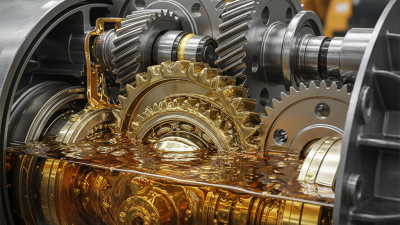
Match Oil Viscosity to Temperature and Gearbox Requirements

Choosing the best gear oil starts with temperature, not habit. A lubricant that works in a warm factory may become sluggish during a cold startup. ISO 3448 classifies industrial oils by kinematic viscosity, measured under ASTM D445 procedures. Match the oil’s ISO viscosity grade to the gearbox manual, operating speed, and ambient range. Check both extremes. Cold flow matters as much as high-temperature film strength.

AGMA 9005-F16 links gear lubricant selection with load, speed, temperature, and gearbox design. Helical and bevel gears often need different viscosity choices than worm gears. Higher loads may require stronger films, but thicker oil can increase churning losses. A 2023 U.S. Department of Energy efficiency guide notes that friction and lubrication strongly affect industrial drive-system energy use. The exact penalty varies. Real machines rarely behave like charts.

Record the sump temperature after several hours, not immediately after startup. A gearbox running near 80°C needs a different review than one operating at 45°C. Confirm the oil’s viscosity index, oxidation resistance, and compatibility with seals. Check contamination, too; ISO 4406 cleanliness codes can reveal particles before damage becomes visible. I once trusted a “heavier is safer” assumption. It was not. The gearbox ran hotter, and inspection found foaming near the sight glass. Recheck the manual, measure actual conditions, and leave room for uncertainty. Temperature changes seasonally. Maintenance records should change with it.

7 Tips for Choosing the Best Oil for Gear? - Match Oil Viscosity to Temperature and Gearbox Requirements

Tip Selection Dimension Practical Guidance Typical Data or Requirement Why It Matters
1 Match viscosity to ambient and operating temperature Choose an oil that remains pumpable during cold starts while maintaining a protective film at the highest operating temperature. ISO VG 68–150: commonly used for lighter loads or cooler conditions
ISO VG 220–320: commonly used for higher loads, slower speeds, or warmer conditions
Oil that is too thin may increase wear; oil that is too thick can raise churning losses, temperature, and starting torque.
2 Use the correct ISO VG grade Treat ISO VG as the nominal kinematic-viscosity grade measured at 40 °C, not as a direct operating-temperature rating.
ISO VGNominal viscosity at 40 °C
6868 cSt
100100 cSt
150150 cSt
220220 cSt
320320 cSt
The gearbox manual or lubrication chart should take priority over a general viscosity table.
3 Consider gear type, speed, and load Select viscosity based on tooth loading, sliding, rotational speed, reduction ratio, and duty cycle. Helical, bevel, and planetary gears: often require anti-wear or EP protection under load
Worm gears: require careful compatibility review, especially with bronze components
High-speed gears: generally favor lower viscosity to limit heat and churning
The same viscosity is not suitable for every gearbox design or operating speed.
4 Verify additive and material compatibility Check whether the oil contains EP additives and whether those additives are approved for the gear, bearing, seal, and housing materials. Bronze or other yellow-metal worm-wheel components may require an oil specifically approved for yellow-metal compatibility. Avoid assuming every EP formulation is suitable. An unsuitable additive package can promote corrosion, staining, seal damage, or loss of component life.
5 Check the required performance specification Use the specification stated by the equipment manufacturer rather than selecting oil by viscosity alone. Look for documented requirements such as industrial gear-oil performance tests, anti-wear properties, micropitting protection, oxidation resistance, and corrosion protection. Two oils with the same ISO VG grade can provide different levels of load carrying, oxidation stability, and protection.
6 Evaluate base oil and temperature stability Choose a mineral or synthetic formulation according to temperature range, relubrication interval, oxidation exposure, and environmental conditions. Synthetic fluids may offer better low-temperature flow, oxidation resistance, and service life, but compatibility and mixing restrictions must be checked first. Thermal breakdown and oxidation can produce sludge, varnish, acidity, and reduced lubrication performance.
7 Confirm maintenance, cleanliness, and oil-change requirements Use the specified fill level, filtration practice, sampling interval, and drain interval. Do not mix different oil types without compatibility confirmation. Inspect for water, particles, foam, discoloration, abnormal odor, and metal debris. Replace oil when analysis or the maintenance schedule indicates degradation. Contamination and overfilling can cause foaming, heat generation, leakage, and accelerated wear even when the viscosity is correct.
Important: Operating-temperature ranges and viscosity recommendations are general selection guidance only. Always follow the gearbox manufacturer’s approved oil grade, performance specification, fill level, and change interval.

Check Additives, Base Oils, and Compatibility with Materials

7 Tips for Choosing the Best Oil for Gear

Check Additives, Base Oils, and Compatibility with Materials

Choosing gear oil starts with the operating conditions, not the container. In maintenance inspections, I check load, speed, temperature, moisture, and service intervals. A slow gearbox under heavy pressure may need extreme-pressure additives. However, excessive additive strength can harm certain yellow metals. Read the technical data carefully. Do not rely on viscosity alone.

Examine the base oil next. Mineral oils can suit moderate temperatures and simpler equipment. Synthetic base oils often provide better oxidation resistance and flow during cold starts. They may also expose seal weaknesses. That detail is easy to miss. Confirm the required viscosity at both starting and operating temperatures. A thinner oil is not automatically more efficient. Film strength can fall under high loads.

Compatibility deserves a physical check. Verify the oil against steel, bronze, elastomers, coatings, filters, and breathers. Anti-wear, rust-control, anti-foam, and demulsifying additives each serve different conditions. Never mix products without confirmation from qualified technical personnel. Small samples can reveal separation, swelling, or unusual deposits before a full change. I once trusted a familiar viscosity grade and overlooked a seal material. The gearbox ran, but the seal softened. That mistake still influences my inspection routine. Keep the oil clean, sample it consistently, and record temperature, noise, and leakage changes.

Compare Manufacturer Standards, Service Life, and Maintenance Needs

7 Tips for Choosing the Best Oil for Gear

Choosing gear oil starts with the machine, not the container. Check the equipment manual for required performance standards, viscosity, and operating temperature.

Tip one: match the stated manufacturer standard exactly. A cheaper substitute may reduce protection. Tip two: consider load, speed, and shock conditions. Heavy loads need stable films that resist pressure. Tip three: check temperature changes. Oil that works in a cool workshop may thin excessively near a hot gearbox. Small details matter.

Service life deserves equal attention. Tip four: compare the oil’s expected drain interval with your production schedule. Longer life can reduce downtime, but only when contamination stays controlled.

Tip five: review compatibility with seals, coatings, and existing oil. Mixing fluids can create deposits or weaken protection. I once saw clean-looking oil fail early because moisture entered through a damaged breather. It looked harmless.

Maintenance needs should influence the final choice. Tip six: choose an oil that supports practical sampling and inspection. Test viscosity, water content, and wear particles at suitable intervals.

Tip seven: record operating hours, temperature, top-ups, and filter changes. Clear records reveal gradual problems. Keep the area clean. Use sealed transfer equipment. Avoid opening containers beside dust or wash water. Oil color alone is not reliable. Even experienced technicians can misjudge it. Review the results with a qualified maintenance professional, especially after unusual noise, heat, or vibration appears.

Evaluate Oil Quality, Cost, Availability, and Application Method

7 Tips for Choosing the Best Oil for Gear

Tip 1: Match viscosity to the gear’s load, speed, and operating temperature. Thick oil protects heavily loaded teeth, but may increase churning losses.

Tip 2: Check oil quality through viscosity stability, oxidation resistance, and anti-wear performance. A technical data sheet matters more than attractive packaging.

Tip 3: Confirm compatibility with seals, bearings, and existing lubricant. Mixing oils can create sludge or reduce protection.

Tip 4: Compare total cost, not only the purchase price. A cheaper oil may require more frequent changes, create higher friction, or increase downtime.

I once focused too heavily on price and underestimated cleaning labor. That mistake was expensive.

Tip 5: Examine local availability before selecting a specialized formulation. Reliable supply supports planned maintenance, especially when equipment operates continuously.

Keep a small, clearly labeled reserve nearby.

Tip 6: Choose an application method that delivers the correct volume. Manual filling, drip systems, and circulating systems each suit different gear designs. Overfilling can raise temperature and cause leakage.

Tip 7: Record the oil type, fill level, temperature, and change interval. Inspect the drained oil for metal particles, cloudiness, or a burnt smell. These clues reveal problems early, though visual checks alone are imperfect. When conditions change, review the choice with equipment manuals and qualified maintenance personnel.

Our dedicated sales and support staff are here to help you identify the ideal pump solution for your needs.

Contact Us