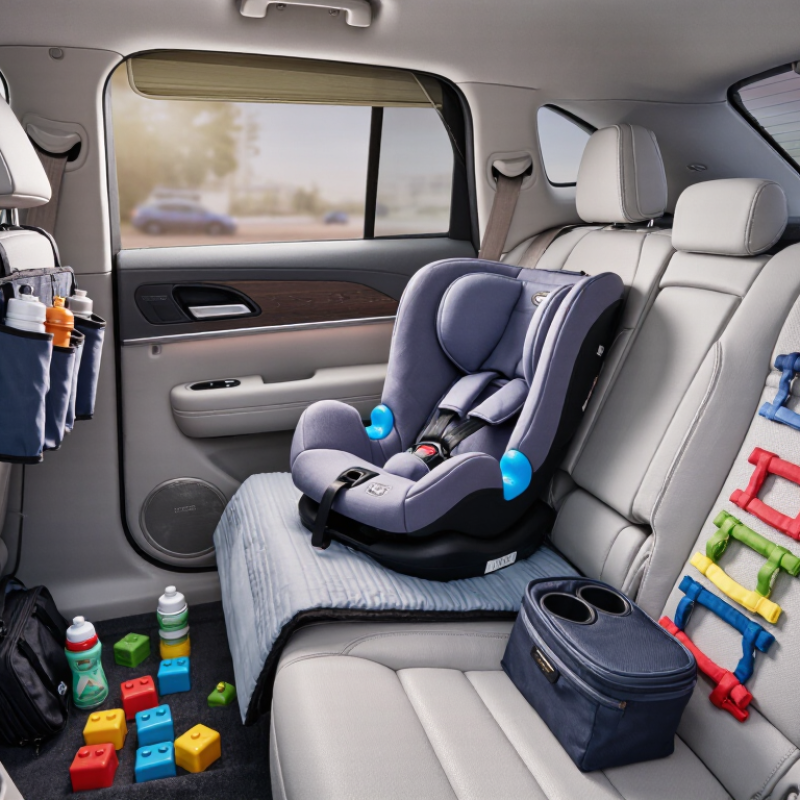
| 1 | Vehicle Seat Protector Mat | Helps reduce marks, dirt, and minor compression on the vehicle seat beneath a child restraint. | Non-slip lower surface, firm but flexible padding, raised edges, and easy-clean surface. Avoid thick padding under the restraint base. | Most vehicles with bench or bucket seats; check dimensions around the restraint base and vehicle seat contours. | Must not interfere with the restraint’s belt path, ISOFIX/LATCH connectors, support leg, or top tether. Use only when permitted by the car-seat manufacturer. | Easy | Prioritize a thin, compression-resistant design and clear instructions stating that the child restraint must sit firmly on the vehicle seat. |
| 2 | Child Car Seat Cover | Protects the child seat from dust, spills, and light wear during storage or transport. | Breathable fabric, soft seams, washable construction, elastic edging, and openings for approved harness or tether components when required. | Specific seat shapes or universal storage use; measure seat height, width, and depth before purchase. | Remove any storage cover before driving unless it is specifically designed and approved for use while occupied. Never cover harness webbing or alter restraint routing. | Easy | Choose washable materials and distinguish between a storage cover and a crash-use seat cover. Avoid aftermarket replacement covers without manufacturer approval. |
| 3 | Back-Seat Kick Mat | Protects the back of the front vehicle seat from footwear, food, and liquid stains. | Water-resistant fabric, reinforced attachment straps, rounded edges, and pockets that do not become hard impact points. | Vehicles with front-seat headrests; verify strap length and whether the mat obstructs seat-mounted airbags or seat adjustment. | Do not install over seat-mounted airbag deployment areas. Keep pockets flat and prevent loose objects from becoming projectiles. | Easy | Look for adjustable straps, non-toxic materials, and compatibility information for vehicles with integrated headrests or rear entertainment systems. |
| 4 | Seat-Belt Installation Lock-Off Aid | Helps maintain correct tension when a child restraint is installed with the vehicle seat belt. | Only use a lock-off supplied with or approved for the specific child restraint; components should be durable, smooth, and clearly marked. | Seat-belt-installed child restraints that expressly support a lock-off accessory. | Do not use a generic clamp unless the child-restraint manufacturer permits it. The belt must follow the correct belt path and remain locked according to the vehicle and restraint instructions. | Moderate | Confirm approval for the exact restraint model and local market. A lock-off does not replace correct routing, tightening, or vehicle belt-locking procedures. |
| 5 | ISOFIX or LATCH Guide Cups | Guide connectors toward vehicle anchorage points and reduce difficulty locating recessed anchors. | Rigid, smooth, heat-resistant polymer with a shape that matches the vehicle anchor opening. | Vehicles equipped with ISOFIX, LATCH, or compatible lower anchors; connector geometry varies by vehicle and restraint. | Use only when supplied or approved by the child-restraint manufacturer. The guide must not remain incorrectly positioned between the connector and anchorage. | Easy | Check the vehicle manual and restraint manual because ISOFIX and LATCH terminology, anchor limits, and installation requirements differ by market. |
| 6 | Top-Tether Strap Adjuster or Extension | Provides additional reach or adjustment for an approved top-tether installation. | High-strength webbing, corrosion-resistant hardware, clear adjustment markings, and manufacturer-specified load capability. | Forward-facing child restraints and vehicles with approved top-tether anchorage points. | Only use an extension or adjuster approved for the exact child restraint and vehicle arrangement. Never attach to luggage hooks or an unapproved anchor. | Moderate | Verify anchor location, routing, and regional requirements. A tether accessory must not substitute for a required lower-anchor or seat-belt installation. |
| 7 | Harness Buckle and Chest-Clip Cover | Improves comfort and helps reduce contact with clothing or skin around the harness area. | Soft, breathable, washable fabric with a slim profile and secure attachment that does not obstruct the buckle or chest clip. | Harness-equipped infant, convertible, and booster seats, subject to manufacturer approval. | It must not change harness tightness, raise the chest clip, block the buckle release, or add padding behind the child. Remove if it affects the harness fit. | Easy | Choose low-bulk designs and confirm that the accessory is approved for use with the restraint rather than only marketed as universal. |
| 8 | Sunshade for Side or Rear Windows | Reduces direct sunlight and glare for passengers in the rear seating area. | Mesh fabric, secure suction cups or static-cling film, unobstructed visibility, and quick-removal design. | Most side windows; dimensions and attachment methods vary by window shape and tinting. | Do not obstruct the driver’s view, emergency visibility, or side-airbag deployment zones. Secure loose parts and follow local window-tint regulations. | Easy | For international distribution, offer several sizes and clearly state whether the product is suitable for fixed, sliding, or curved windows. |
| 9 | Child Seat Installation Mat and Kneeling Pad | Provides a clean, more comfortable surface for caregivers during seat installation and inspection. | Foldable, water-resistant foam or fabric, non-slip underside, reinforced seams, and compact storage size. | Universal use during installation of infant carriers, convertible seats, and boosters. | The pad is for the installer’s knees and must be removed before driving if it sits beneath or around the child restraint. It must not be used as a base unless approved. | Easy | Useful for professional fitting services and families who frequently move restraints between vehicles; select a material that resists moisture and cleaning chemicals. |
| 10 | Installation Check Mirror | Allows a driver to monitor a rear-facing child without turning around. | Shatter-resistant construction, secure headrest straps, adjustable angle, and a low-profile frame. | Vehicles with a visible rear headrest and a rear-facing child restraint; test clearance before use. | It must be tightly secured, must not detach during sudden braking, and must not obstruct the driver’s rear view. Do not use if it contacts the child or restraint. | Moderate | Use only when the driver retains adequate visibility. Check whether the vehicle has active headrests, unusual seat geometry, or restricted rear visibility. |