Choosing the best Circular knitting machine in China is not a matter of picking the fastest model. The right choice depends on fabric type, gauge, output targets, yarn, and the factory’s available floor space. Small details matter: needle wear, fabric take-down tension, and how quickly operators can change a cylinder. A low purchase price can look attractive. Maintenance costs may tell a different story.
The scale of textile production makes these decisions important. Textile Exchange’s Materials Market Report 2024 estimates that global fiber production reached 124 million tonnes in 2023 and could grow to 160 million tonnes by 2030. That figure describes the wider fiber market, not demand for knitting machines specifically. Still, it signals pressure on mills to manage capacity, material use, and production quality. ITMF’s International Textile Machinery Shipment Statistics offers another useful industry reference, tracking machinery shipments across textile equipment categories, including circular knitting.
A careful comparison should examine machine configuration, supported yarns, fabric samples, energy use, service access, and spare-part availability. Ask suppliers for test results under conditions close to your own production line. Then check those claims with references from working mills. Brochures are helpful, but they cannot show every stoppage or repair delay. No single model suits every factory. Even a strong shortlist may need revision after a production trial.
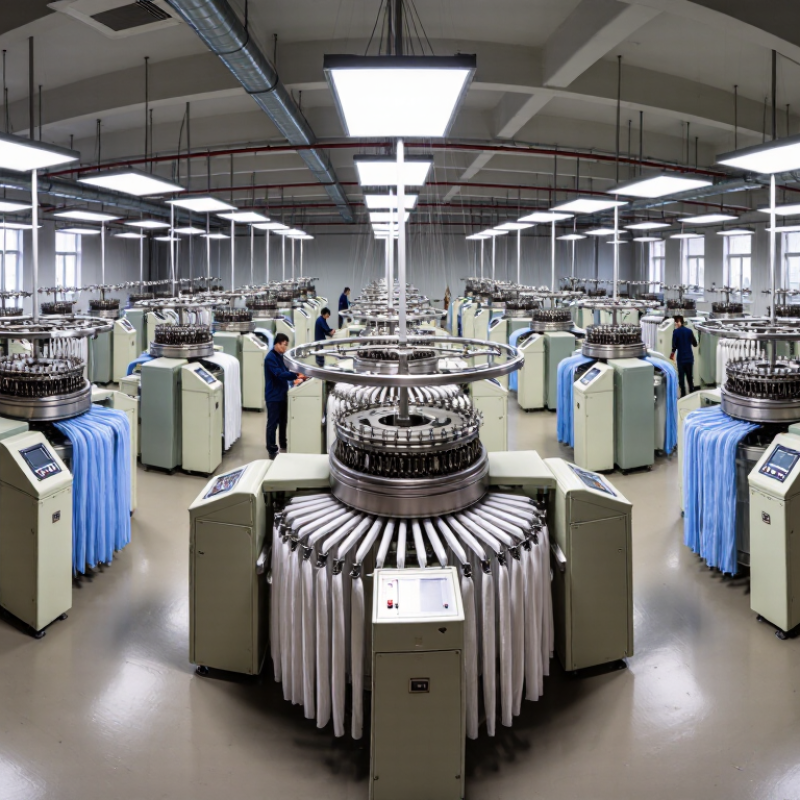
A circular knitting machine forms fabric in continuous courses, using needles arranged around a cylinder. Yarn feeders deliver yarn as the needles rise, catch it, and pull new loops through existing ones. The result is usually a tube, though some machines can open the fabric during production. Single-jersey machines generally use a cylinder; double-knit machines use a cylinder and dial. Cam tracks guide needle movement, while machine diameter and gauge help determine fabric width and stitch density. In practical terms, a fine-gauge setup may produce a smooth, lightweight surface, while a coarser one can make a more textured fabric. Small adjustments matter.
The Textile Exchange Materials Market Report 2024 estimates that global fiber production reached 124 million tonnes in 2023. This scale makes efficient, consistent fabric production important, but the figure does not predict how a specific machine will perform. Output also depends on yarn quality, feeder settings, needle condition, and operator skill. When evaluating a machine made in China, buyers should check its gauge, working diameter, compatible yarn range, and access to spare parts. Ask for a sample knitted at the intended speed. Then inspect stitch uniformity and fabric edges. A high feeder count can raise output, but it cannot fix poor loop formation. A setup can still disappoint. Real production trials reveal more than a specification sheet, though even a short trial may miss wear that appears later.
A circular knitting machine uses needles arranged around a cylinder to produce knitted fabric in a tube. The chart shows how cylinder diameter determines the tube’s theoretical circumference, calculated as π × diameter.
These are example dimensions and geometry-based calculations, not a ranking of machines. The best machine depends on the required fabric, yarn, gauge, production needs, and finished tube size.
Circular knitting machines are best classified by fabric structure, needle arrangement, and production purpose. Single-jersey machines use one needle bed and commonly produce lightweight T-shirts, while rib and interlock machines use two beds for thicker, stretchier fabrics. Within each group, gauge describes needle density; diameter affects fabric width, and feeder count influences output.
Gauge matters.
Electronic jacquard models add pattern control, while basic machines suit simpler structures. ITMF’s 46th International Textile Machinery Shipment Statistics reported that global shipments of large circular knitting machines fell 16% in 2023 compared with 2022. This is shipment data, not a measure of machine quality or factory demand in every region. For buyers, it helps distinguish market movement from technical suitability.
In practice, compare the intended yarn, fabric weight, pattern complexity, and target production speed before choosing a class. A fine-gauge single-jersey setup may create smooth apparel fabric, but it will not replace a double-jersey machine for stable interlock.
Not always.
One detail is easy to overlook: the same nominal gauge can behave differently with yarn choice and machine setup. Ask for a sample knitted on the proposed configuration, then inspect its width, loops, and surface after finishing.
A high-quality circular knitting machine produces even loops across the fabric, not just during a brief showroom test. Check the needle cylinder for smooth rotation and listen for unusual knocking or scraping. Stable yarn feeding matters too: inconsistent tension can create visible stripes, loose stitches, or fabric defects. Ask to inspect a sample made at the intended speed and with the yarn you plan to use. A clean swatch tells you more than a polished brochure.
Tips: Run the machine for at least 30 minutes under load. Check fabric width, stitch consistency, vibration, and temperature. Confirm that operators can adjust feeders and tension without guesswork. Ask how often needles and sinkers need replacement, and whether common parts are readily available. Small practical details count.
Controls should be clear, with useful alarms and accessible emergency stops. Guards around moving parts should be secure and easy to inspect. Maintenance access matters; a machine that is difficult to clean may lose efficiency over time. Request operating and maintenance documents in a language your team understands. I would also compare output claims with a real production trial. Specifications can look convincing, but actual results may vary with yarn, settings, and operator skill.
What Is the Best Circular Knitting Machine in China?
Which Chinese Manufacturers and Models Are Worth Comparing?
There is no single best machine for every mill. Compare Chinese manufacturers by knitting systems, service support, spare-part access, and test results—not catalog claims alone. For basic jersey, assess single-jersey models; for cuffs and thicker fabrics, compare rib and interlock configurations. Jacquard models suit patterned work, but ask for a sample matching your yarn and target fabric. Small details matter: needle access, creel layout, and how quickly an operator can change settings.
ITMF’s 2023 International Textile Machinery Shipment Statistics reported that global shipments of large circular knitting machines fell about 17%, to roughly 23,000 units. That market shift makes careful capacity planning worthwhile. Request comparable quotes showing cylinder diameter, gauge, feeder count, speed under specified conditions, and energy use. Then inspect a running machine and check fabric uniformity across the roll. One caveat: a supplier’s speed figure may not match your yarn, pattern, or quality target.
Tips: Ask each shortlisted maker to knit the same fabric specification. Record usable output, defects, setup time, and operator feedback. Get local service terms in writing. A neat sample helps, but a full-shift trial tells more.
Choosing a circular knitting machine starts with the fabric, not the sales brochure. Define your products, yarn types, target gauge, and required fabric width before comparing machines. A fine-gauge machine may suit lightweight jersey, while coarser gauges can handle heavier structures. Check whether the machine supports your yarn count and planned stitch patterns. Ask for a sample knitted with your actual yarn.
Material choice matters. Textile Exchange’s Materials Market Report 2024 estimates that global fiber production reached 124 million tonnes in 2023, with polyester representing 57% of the total. This scale highlights how often mills work with synthetic fibers, but it does not mean every machine handles every yarn equally well. Confirm feeder settings, take-down control, and needle availability with a practical trial. Watch the fabric as it runs: uneven loops, dropped stitches, or excess lint are useful warning signs. Small details count.
Then compare output with your real production needs. Ask suppliers for sustained, not peak, running speeds and clarify how figures were measured. Check changeover time, operator training, spare-part access, and maintenance intervals. A machine that runs fast on one sample may struggle with a different yarn blend. Be cautious. Request a trial using your own fabric specification, and inspect several rolls for width, weight, and stitch consistency. No single specification sheet can make the choice for you.
| Machine configuration | Best suited for | Typical fabric or output | Main advantages | What to check before choosing |
|---|---|---|---|---|
| Single-jersey machine | General-purpose production of lightweight knitted fabrics | T-shirts, casualwear, underwear, and other plain-knit fabrics | Versatile option for common apparel fabrics; straightforward choice for many standard production plans | Confirm the required diameter, gauge, yarn range, number of feeds, fabric width, and whether the machine supports any planned patterns or attachments |
| Rib machine | Fabrics that need stretch and recovery in both directions | Rib fabrics for cuffs, collars, waistbands, and selected garment constructions | Produces a distinct rib structure with useful elasticity | Check the needle arrangement, available rib structures, compatible yarns, setup requirements, and whether the finished fabric meets your recovery and dimensional-stability targets |
| Interlock machine | Producing stable, double-knit fabrics for apparel and related uses | Interlock and other compatible double-knit constructions | Can produce a more balanced, substantial fabric than a basic single-knit construction | Verify the exact fabric structures the machine can make, needle and cylinder specifications, operating requirements, and sample quality using your intended yarn |
| Fleece or pile-capable machine | Fabrics requiring a brushed, looped, or pile-like surface after knitting or finishing | Selected fleece, sweatshirt, and related fabrics, depending on machine configuration | Designed for constructions that need additional surface texture or a backing yarn | Ask for a fabric sample and confirm the required yarn feeds, take-down setup, finishing process, and whether brushing or other downstream equipment is needed |
| Special-purpose or pattern-capable machine | Production requiring specific textures, patterns, or fabric effects | Machine-dependent patterned or textured circular knits | Can match a defined product brief more closely than a basic configuration | Provide a reference swatch or construction specification; confirm pattern limits, programming needs, setup time, operator training, and spare-part availability |
There is no single best circular knitting machine for every buyer. Machine capabilities and specifications vary by configuration, so compare production samples and confirm all technical details against your fabric, yarn, and output requirements before ordering.
We are here to help you with all your queries and concerns, just write to us using the below form and we will get back to you as soon as we can.