10 Best Joint Flange Suppliers for Global Buyers

Global buyers rarely choose a Joint Flange supplier on price alone. Pressure class, material grade, face finish, dimensions, and traceability all affect performance in service. The World Steel Association’s October 2024 Short Range Outlook projected global steel demand at 1.77 billion tonnes in 2025, a 1.2% increase from 2024. That figure describes the wider steel market, not flange demand. Still, it highlights the scale of the supply chain behind industrial components.

Small details matter. A flange that looks right in a catalog may not match the required bore, gasket, or operating conditions. Buyers should compare applicable standards, material certificates, inspection records, production capacity, and realistic delivery schedules. W. Edwards Deming’s quality principle, “Quality is everyone’s responsibility,” offers a useful lens for supplier evaluation. It is not a flange specification, of course; documents and qualified technical review still matter.

This guide introduces 10 Joint Flange suppliers for global buyers, with attention to product range, manufacturing strengths, and export support. Treat each profile as a starting point, not a final approval. Verify current specifications and documentation directly with the supplier. A missed detail can be costly.
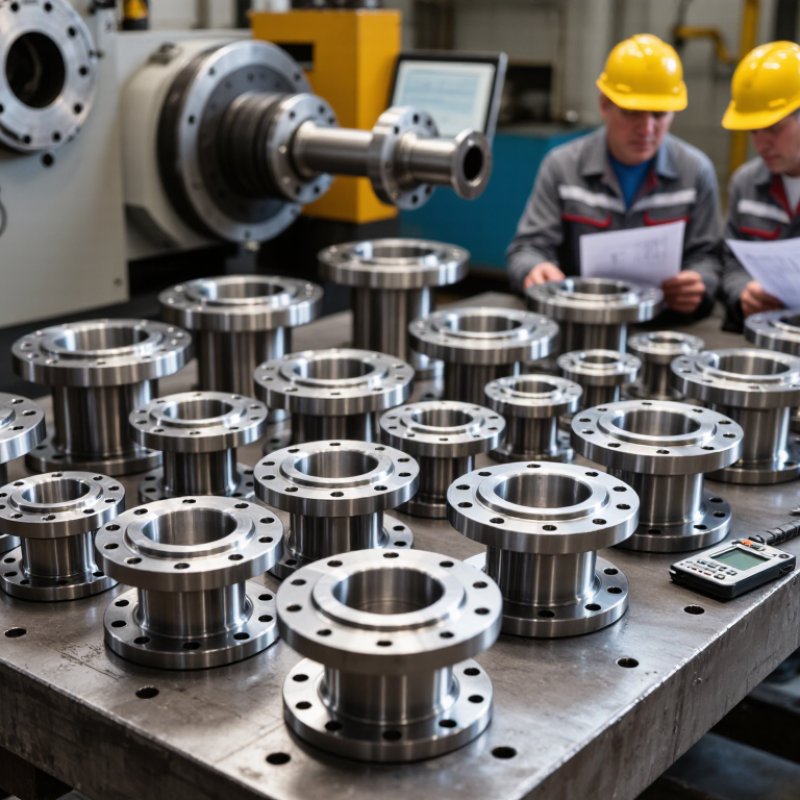
10 Best Joint Flange Suppliers for Global Buyers

What Joint Flanges Are and How They Are Used

A joint flange is a bolted connection that joins pipes, valves, pumps, or equipment. Two flange faces meet around a gasket, and bolts apply the compression needed to help contain fluid or gas. The joint can be taken apart for inspection or maintenance. That access is useful in a pump room, where technicians may need to replace a valve without cutting the pipe.

Flanges are selected by size, pressure rating, material, facing, and service conditions. ASME B16.5 covers pipe flanges and flanged fittings from NPS 1/2 through NPS 24, with pressure classes from 150 to 2500. Those ranges do not make every flange interchangeable. A mismatched facing or gasket can create leakage, even when bolt holes appear to align. Small detail. Big consequence.

Flanged connections are common in process plants, water systems, and pipeline infrastructure. The U.S. Energy Information Administration reports more than 3 million miles of natural gas pipelines in the United States, illustrating the scale of systems that require dependable connections.

At installation, workers should check flange alignment, gasket condition, and bolt tightening sequence. In practice, alignment is sometimes imperfect; forcing bolts to close a gap can add stress rather than solve it. Verify the applicable project specification and standard before assembly.

Key Criteria for Evaluating Joint Flange Suppliers

Evaluate a joint flange supplier against the project’s drawings, pressure class, material grade, and delivery conditions. Confirm that dimensions and pressure-temperature ratings match the specified standard, such as ASME B16.5. Ask for heat-number traceability and material test certificates; compare the numbers on certificates with markings on the flange. Ask for proof. When required, review inspection records, including dimensional checks and specified non-destructive testing. Details matter. A polished certificate alone cannot reveal every production or handling problem.

Capacity and sourcing resilience matter too. The World Steel Association’s World Steel in Figures 2024 reports 1,892.2 million tonnes of crude steel production in 2023. That scale describes the upstream market, not a supplier’s reliability. Ask where the forging and machining take place, how stock is controlled, and whether lead times include inspection and export packing. Check how flanges are protected from moisture and impact; damaged faces can create costly delays at installation. Request sample records before approving a first order. Paperwork can still miss a defect, so agree on acceptance checks and escalation steps. Price is easy to compare. Traceability and realistic delivery promises take more work.

10 Best Joint Flange Suppliers for Global Buyers — Key Criteria for Evaluating Joint Flange Suppliers

Use these criteria to assess and rank suppliers against your application. The suggested weightings are an evaluation framework, not verified ratings of specific suppliers.

Evaluation criterion Why it matters Evidence to request or verify Suggested weight
Applicable standards and dimensional compliance Flanges must match the piping design, connection type, dimensions, and specified standard. Confirm the quoted standard and edition, such as ASME B16.5, ASME B16.47, or EN 1092-1, and review dimension reports. 15%
Material specification and suitability Material grade affects strength, corrosion resistance, temperature limits, and service compatibility. Check the purchase specification against the offered grade, product form, heat treatment, and service conditions. Common specifications include ASTM A105 for carbon-steel forgings and ASTM A182 for alloy- and stainless-steel forgings. 14%
Material traceability and documentation Traceable records help confirm that supplied items match the order and support inspection, maintenance, and audits. Request material test reports, heat or batch identification, and a documented link between markings and certificates. Confirm document requirements in the purchase order. 13%
Pressure, temperature, and service suitability A nominal pressure class alone does not establish suitability for every material, temperature, or operating condition. Verify the applicable standard’s pressure-temperature ratings alongside design pressure, temperature, fluid, and project requirements. 12%
Manufacturing and quality controls Consistent process controls reduce the risk of dimensional defects, material mix-ups, and nonconforming products. Review the quality-management system, inspection and test plans, calibration records, nonconformance process, and relevant certification scope. ISO 9001 is a quality-management-system standard, not product certification. 11%
Inspection and testing capability The required checks depend on the product specification, design code, purchase order, and service risk. Agree on applicable dimensional, visual, material, and nondestructive examinations before production. Request test procedures and reports where required by the order. 10%
Product range and customization A suitable range can simplify sourcing across sizes, facing types, materials, and project-specific requirements. Confirm available flange types, sizes, pressure classes, facing finishes, material options, and the limits of any custom production. 9%
Lead time and production capacity Realistic delivery commitments help buyers plan procurement, project milestones, and contingency stock. Request a schedule for the specific order, including production, inspection, documentation, and dispatch milestones; clarify how delays are communicated. 7%
Export packaging and logistics readiness Appropriate packing and complete shipping documents help protect goods and avoid preventable handling or customs issues. Agree on corrosion protection, packaging, marking, packing lists, shipping terms, and required export documents for the destination. 5%
Commercial clarity and after-sales support Clear terms make offers easier to compare and provide a defined route for handling questions or nonconformities. Compare like-for-like quotations, payment and delivery terms, warranty scope, claims procedure, response times, and technical support arrangements. 4%
Total suggested weighting 100%

Profiles of Ten Joint Flange Suppliers for Global Buyers

Profiles of ten joint flange suppliers reveal how differently manufacturers serve global buyers. The group includes specialists in forged carbon steel, stainless steel, alloy grades, large diameters, low-temperature service, and high-pressure applications. Other profiles focus on custom drilling, protective coatings, ready-stock distribution, or export coordination. These distinctions matter: a flange that fits the pipe may still fail the project’s pressure, material, or traceability requirements.

World Steel Association’s October 2024 Short Range Outlook forecast global steel demand would rise 1.2% in 2025, reaching 1.772 billion tonnes. That broad market signal does not guarantee flange availability. Buyers should compare material test reports, dimensional inspection records, applicable standards, and delivery windows. Ask how suppliers control heat numbers and packing; a clear answer is useful. A polished catalogue alone is not proof.

Tips: Request a sample inspection record and confirm the flange rating, facing, bore, and bolt pattern against the project specification. Check whether stated lead times include testing and export packing. Small mismatch, costly delay. Some supplier profiles may look similar on paper, and this comparison has limits: actual performance depends on the order, inspection scope, and site conditions.

Comparing Supplier Standards, Capabilities, and Export Reach

Comparing joint flange suppliers requires more than checking price and delivery time. Buyers should confirm that quoted dimensions, facing, material grade, and pressure class match the project specification. ASME B16.5 covers pipe flanges and flanged fittings from NPS ½ through NPS 24, but compliance claims still need verification. Ask for current inspection records, material test certificates, and clear traceability from heat number to finished flange. Small paperwork gaps can delay a shipment as easily as a machining defect.

Manufacturing capacity matters. Review machining tolerances, production range, testing options, and how the supplier handles urgent or repeat orders. World Steel Association data put global crude steel production at about 1.89 billion tonnes in 2024, but abundant steel does not guarantee consistent flange quality. Material sourcing and process control make the difference. Details matter.

Export reach deserves equal attention. UNCTAD’s Review of Maritime Transport 2024 reported that seaborne trade grew 2.4% in 2023, underscoring how much industrial supply depends on shipping networks. Compare export destinations, packing practices, port access, and experience preparing destination-specific documents. Ask for realistic lead times that include inspection and transit, not just factory production. A supplier may have broad export claims yet limited experience with your route; that deserves a closer look.

How to Select and Verify a Supplier for Your Project

Choosing a joint flange supplier requires more than comparing prices. Start with the project’s drawings, material grade, pressure rating, temperature range, and required dimensions. Ask suppliers to confirm these details in writing. A capable supplier should provide traceable material records, inspection documents, and clear tolerances. Check that its proposed standards match your project specification rather than assuming all flanges are interchangeable. Small details matter.

Before placing an order, review sample documentation and request references for similar sizes or service conditions. Confirm manufacturing capacity, inspection steps, packaging, and realistic delivery dates. If possible, arrange a sample or independent dimensional check before approving a large batch. Compare the flange’s markings with its paperwork, including heat or batch identification. A polished brochure is not proof of consistent production. Even experienced buyers can overlook a mismatch between drawings and purchase documents; that is worth checking twice.

Tips: Ask who verifies dimensions and when. Request records for material, testing, and final inspection. Clarify how the supplier handles nonconforming parts before shipment. Keep the approved drawing and acceptance criteria attached to the purchase order. If an answer is vague, ask for a specific document or measurement.

Flange Supplier Verification: Check the Applicable Standard

Use the required flange standard and size range to screen supplier capability. ASME B16.5 covers NPS ½–24; ASME B16.47 covers NPS 26–60.

The bars show each standard’s upper NPS limit, not a pressure rating or supplier ranking. Confirm the applicable class, material, temperature, dimensions and documentation for your project.

References: ASME B16.5 and ASME B16.47.

Our dedicated sales and support staff are here to help you identify the ideal pump solution for your needs.

Contact Us