5 Best Nanosecond Picosecond Lasers for Melasma Treatment?
Melasma can look like soft brown shadows across the cheeks, forehead, or upper lip, yet treating it is rarely as simple as choosing a powerful laser. Heat and light may affect unwanted pigment, but melasma can also return or become darker after irritation. The right approach depends on skin tone, pigment depth, medical history, and careful diagnosis.
This guide examines five nanosecond and picosecond laser options often discussed for melasma. It explains how pulse duration and wavelength may influence treatment, and why a device’s reputation alone cannot predict results. A Melasma Nanosecond Picosecond Laser is not a single standardized treatment; settings, technique, and patient selection matter. Evidence also varies between devices, and results from small studies may not apply to everyone.
There is no universal winner. Not even close. A board-certified dermatologist or other qualified skin specialist should confirm the diagnosis and discuss alternatives, including topical treatments and sun protection. Ask about the clinician’s experience with your skin tone, expected treatment intervals, likely benefits, and the risk of rebound pigmentation. Darker skin tones may need particular caution, but individual assessment matters more than assumptions. Protective habits count: daily broad-spectrum sunscreen, shade, and limiting visible-light exposure can support a treatment plan. Some details remain uncertain, and that deserves honest discussion. The comparisons ahead focus on practical differences and safety considerations, not promises of flawless skin.
How Nanosecond and Picosecond Lasers Target Melasma Pigment
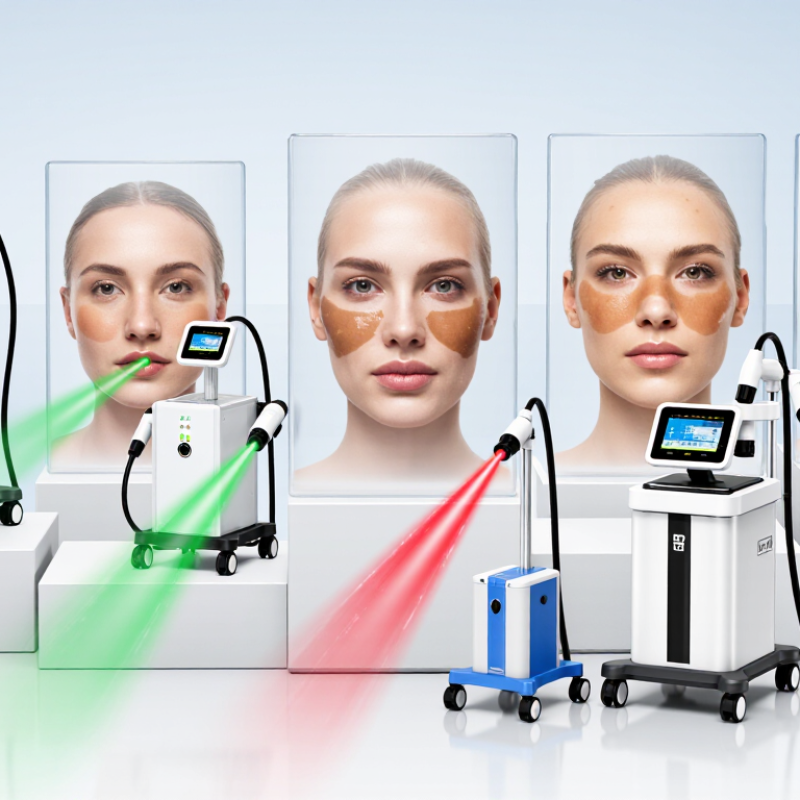
Melasma is not simply a dark spot waiting to be erased. Its pigment may sit at different depths, and sunlight, hormones, heat, and irritation can keep stimulating discoloration. Nanosecond lasers deliver energy in billionths of a second. Picosecond lasers use even shorter pulses, measured in trillionths. Both can disrupt melanin into smaller particles, which the body gradually clears. The shorter pulse may create a stronger photoacoustic effect, but it does not guarantee better results.
It is tempting to compare pulse speed alone. That is not enough. A dermatologist also considers skin tone, pigment depth, medical history, and past reactions. With melasma, excess heat or aggressive settings may cause irritation, post-inflammatory darkening, or a flare. Sometimes the pigment looks darker before it improves. A careful assessment and conservative settings matter more than chasing the newest device. Treatment may also involve topical care and daily broad-spectrum sunscreen, because laser sessions cannot prevent new pigment from forming. Ask what outcome is realistic for your skin, and how the clinician will respond if discoloration worsens.
Key Differences Between Nanosecond and Picosecond Laser Systems
Nanosecond and picosecond lasers differ mainly in pulse duration, not in a simple “strong versus gentle” ranking. A nanosecond pulse lasts billionths of a second; a picosecond pulse lasts trillionths. Both can target pigment, but their effects also depend on wavelength, energy settings, spot size, and skin type. Small details matter.
Melasma is influenced by hormones, heat, and sunlight, so treating visible pigment does not remove every trigger. Picosecond systems may create a stronger photoacoustic effect, while nanosecond systems have a longer clinical history for pigment concerns. Neither guarantees better results. Irritation or excess heat can worsen discoloration, especially in deeper skin tones. That risk deserves honest discussion.
A qualified clinician should assess the diagnosis and skin tone before recommending either system. Ask how the wavelength and settings fit your specific pattern of melasma, and whether treatment will be paired with daily broad-spectrum sunscreen. A test spot may offer useful information, but it cannot predict every response. Follow-up photos and careful checks for new darkening are sensible; even with good planning, outcomes can be uneven.
Five Laser Types Commonly Considered for Melasma Treatment
Five Laser Types Commonly Considered for Melasma Treatment
Melasma is not one simple pigment target. Clinicians may consider five laser approaches: nanosecond Q-switched Nd:YAG at 1064 or 532 nm, 755 nm picosecond alexandrite, 1064 nm picosecond Nd:YAG, 1927 nm fractional thulium, and 1550 nm fractional erbium-glass. These wavelengths are technical reference points, not treatment recommendations. American Society for Laser Medicine and Surgery educational materials describe these common laser wavelengths and their distinct interactions with skin. The best option depends on pigment depth, skin tone, prior treatments, and a clinician’s assessment.
The evidence is mixed. Clinical reviews report variable improvement and frequent recurrence, so laser treatment should not be presented as a permanent fix. Short-pulse devices may lighten spots, but excessive energy can trigger irritation or post-inflammatory darkening. Fractional lasers create controlled microscopic treatment zones; recovery may include redness and peeling. That can be inconvenient. Device choice and settings matter as much as the laser category, and results from one patient do not predict another’s outcome.
Tips: Ask a board-certified dermatologist about risks, alternatives, and a test spot. Use daily broad-spectrum sunscreen; tinted formulas with iron oxides can help protect against visible light. Share any history of irritation or pigment rebound before treatment.
How Clinicians Compare Laser Options for Different Skin Types
Nanosecond and picosecond lasers should be compared by wavelength, fluence, and patient skin type—not pulse speed alone. For Fitzpatrick I–III skin, pigment contrast can make treatment response easier to assess, though melasma may still return. In types IV–VI, clinicians generally use extra caution: epidermal melanin absorbs laser energy too, raising the risk of post-inflammatory darkening. A clinical review in Dermatologic Surgery reported melasma recurrence rates of 50–100% after low-fluence Q-switched laser toning, often within months. That figure reflects varied studies, not an individual prediction.
Picosecond pulses may fragment pigment with less thermal spread in some settings, while nanosecond systems have longer clinical experience. Neither is automatically safer for darker skin. A small test spot, conservative settings, and review after healing can reveal irritation before a full-face session. I still pause here. Laser treatment may aggravate melasma, especially when heat, sun exposure, or inflammation is not controlled.
Tips: Ask how the clinician adjusts wavelength and fluence for your phototype, and whether topical treatment and strict visible-light protection are part of the plan. Take clear baseline photos in the same lighting. If the treated area becomes persistently darker, stop further sessions and seek clinical review.
Risks, Treatment Limits, and Aftercare for Melasma Laser Therapy
Nanosecond and picosecond lasers can target pigment, but melasma is not simply a collection of dark spots. Heat and inflammation may trigger more pigment, especially in darker skin tones or recently tanned skin. Some people develop temporary redness, swelling, crusting, or post-inflammatory darkening. Rarely, lighter patches or scars may occur. Results vary.
Melasma can return after treatment, even when patches fade. Laser therapy may help selected patients, but it is not a guaranteed cure or a substitute for daily sun protection. A dermatologist should assess your skin, medical history, and likely triggers before recommending treatment. Ask about test spots, conservative settings, expected sessions, and what to do if pigmentation worsens. A pause may be wiser than another session.
After treatment, skin may feel warm and look pink, much like mild sunburn. Use a gentle cleanser and bland moisturizer; avoid scrubbing, picking, and irritating products until your clinician says they are safe. Shade, a hat, and broad-spectrum sunscreen matter. Reapply sunscreen outdoors. Heat can also be a trigger, and that detail is easy to overlook. Recovery is not always neat or predictable. My skin did not read the schedule. Follow your clinician’s instructions, and report blistering, severe pain, or increasing discoloration promptly.
Nanosecond vs. Picosecond Lasers for Melasma: Wavelengths, Risks & Treatment Limits
Common laser wavelengths used in pigment treatments. The chart compares wavelength only—not effectiveness or safety.
How to interpret: Nanosecond and picosecond describe pulse duration, not wavelength. Different devices may offer different wavelengths, and no wavelength is universally “best” for melasma. Laser and light procedures can trigger irritation, post-inflammatory hyperpigmentation, or worsening and recurrence; they are generally considered selectively, not a guaranteed cure. A dermatologist should assess skin type and melasma subtype first. Consistent broad-spectrum sun protection and clinician-directed topical treatment are central to care. After a procedure, follow the treating clinician’s instructions, use gentle skincare, avoid picking or scrubbing, and protect treated skin from sun exposure.