

-

97 Auto Road, County of Vermilion River, AB T0B 0L0
-

-

97 Auto Road, County of Vermilion River, AB T0B 0L0

Choosing a Vacuum Transfer Pump is rarely as simple as comparing advertised flow rates. Global buyers face different fluids, voltages, climates, service networks, and compliance requirements. A pump that performs well in a clean laboratory may struggle with viscous oil, moisture, powder residue, or repeated start-stop cycles on a factory floor.
John F. O’Hanlon, author of A User’s Guide to Vacuum Technology, describes the basic principle clearly: “A vacuum is a space from which air or other gas has been removed.” That idea matters in practice. Buyers must examine how efficiently each pump removes gas, transfers liquid, controls contamination, and maintains stable pressure. Seals, hose connections, motor protection, noise levels, and maintenance access can decide whether a system remains reliable after months of use.
This guide reviews seven Vacuum Transfer Pump options for international purchasing teams. It considers pump type, achievable vacuum, transfer speed, fluid compatibility, energy demand, portability, and supplier support. It also looks at less visible details, such as replacement seal availability and technical documentation quality. Those details matter.
No single model fits every application. That is the uncomfortable part. A cheaper pump may reduce the initial budget but increase downtime later. A high-capacity unit may waste energy when the process needs gentle transfer. Specifications can also appear impressive while hiding testing conditions. This comparison therefore treats performance claims carefully and encourages buyers to verify them with real fluid samples, duty-cycle tests, and local service contacts before ordering.
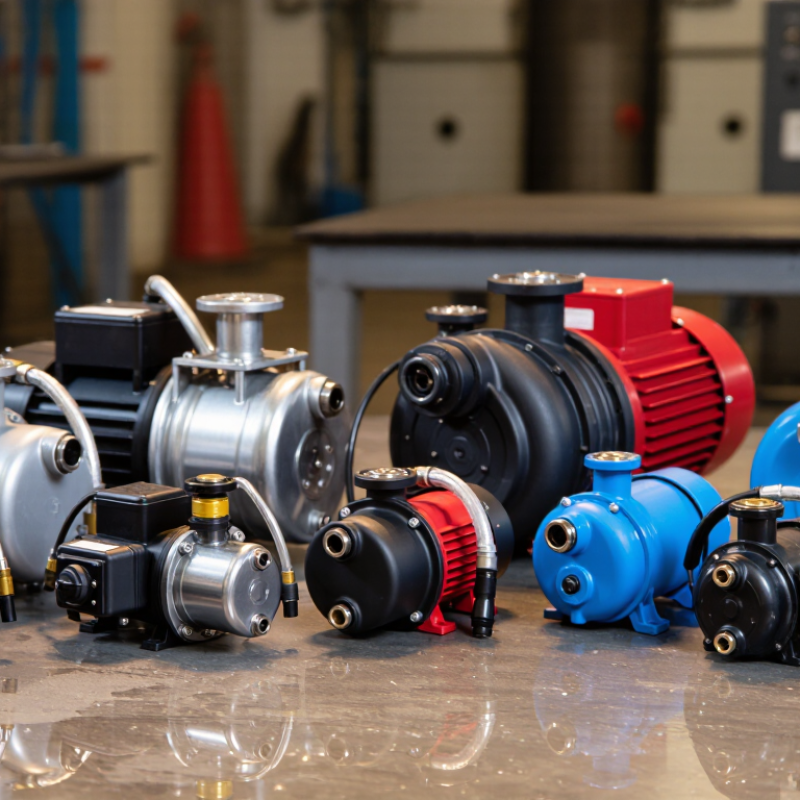
Choosing among the seven best vacuum transfer pumps starts with pressure, not marketing claims. Pressure is measured in absolute mbar, where lower numbers mean deeper vacuum. Around 1 mbar, rotary vane, diaphragm, and dry scroll pumps often handle rough evacuation. They suit chambers, filtration systems, and routine gas transfer. Moisture and vapour can still reduce performance.
The range near 10⁻³ to 10⁻⁶ mbar demands greater control. Roots boosters can accelerate pumping, but they usually need a backing pump. Turbo-molecular pumps reach high vacuum with clean, stable gas loads. They dislike sudden pressure changes and particles. Slow ramping matters. Very cold surfaces may also influence readings.
At 10⁻⁷ to 10⁻⁹ mbar, the system enters ultra-high-vacuum territory. A suitable transfer pump alone will not achieve it. Stainless-steel construction, leak testing, bakeout capability, and low outgassing become essential. Ion or cryogenic stages may support the final range, depending on the gas. Practical commissioning shows that gauges can disagree when placed far from the chamber. That detail is easy to miss. I would compare ultimate pressure, pumping speed, vapour tolerance, noise, maintenance, and local service access. A pump rated for 10⁻⁹ mbar may fail in practice if seals age, hoses are narrow, or the chamber was cleaned poorly. The rating is only one part of the evidence.
| Rank | Pump Type | Typical Ultimate Pressure | Effective Pressure Region | Typical Pumping Speed | Gas-Handling Principle | Key Advantages | Important Limitations | Best-Fit Applications |
|---|---|---|---|---|---|---|---|---|
| 1 | Oil-Sealed Rotary Vane Pump | 1 × 10⁻³ to 5 × 10⁻² mbar | Atmospheric pressure to high vacuum | 1–100 m3/h | Positive-displacement compression using rotating vanes and lubricating oil | Strong starting performance, high water-vapor tolerance with gas ballast, broad availability, and competitive cost | Oil backstreaming can contaminate the vacuum system; requires oil maintenance and exhaust filtration | Vacuum packaging, freeze-drying support, metallurgy, laboratory systems, and general industrial evacuation |
| 2 | Dry Screw Pump | 1 × 10⁻² to 1 × 10⁻³ mbar | Atmospheric pressure to medium/high vacuum | 10–500 m3/h | Non-contact screw rotors transport and compress gas without process oil in the pumping chamber | Clean, oil-free vacuum, good chemical resistance, high throughput, and suitability for continuous industrial duty | Higher purchase price; may require purge gas, inlet filtration, and protection against condensable or abrasive loads | Semiconductor processing, chemical drying, coating, battery production, and centralized vacuum systems |
| 3 | Scroll Pump | Approximately 1 × 10⁻² to 1 × 10⁻³ mbar | Atmospheric pressure to high vacuum | 1–30 m3/h | Orbiting scrolls reduce the gas volume progressively without lubricating oil in the pumping chamber | Clean dry vacuum, low vibration, relatively quiet operation, and compact installation | Tip seals are wear components; liquid slugs, heavy dust, and large condensable loads can reduce service life | Analytical instruments, electron microscopy, laboratory vacuum, medical equipment, and clean research systems |
| 4 | Diaphragm Pump | Approximately 1–5 mbar | Atmospheric pressure to rough vacuum | 0.5–15 m3/h | Flexible diaphragms alternately expand and compress chambers with check valves controlling gas flow | Oil-free operation, good chemical compatibility with suitable diaphragm materials, simple maintenance, and low operating cost | Cannot normally reach high-vacuum pressures; diaphragm and valve materials limit temperature and solvent compatibility | Filtration, rotary evaporation, vacuum concentration, gas sampling, and backing smaller high-vacuum pumps |
| 5 | Roots Booster | Down to approximately 1 × 10⁻³ to 1 × 10⁻⁵ mbar with a backing pump | Typically used from rough/medium vacuum into high-vacuum systems | 100–5,000 m3/h | Two synchronized lobed rotors transfer gas at high volume without internal contact | Very high volume flow, faster pump-down, oil-free compression chamber, and strong performance at medium vacuum | Requires a backing pump; direct operation at atmospheric pressure is limited unless equipped with bypass or variable-speed control | Large vacuum chambers, vacuum furnaces, freeze-drying, coating lines, and industrial evacuation systems |
| 6 | Turbomolecular Pump | Approximately 1 × 10⁻⁷ to 1 × 10⁻⁹ mbar | High vacuum to ultra-high vacuum | 50–2,000 L/s for nitrogen, depending on model | High-speed angled rotor and stator blades transfer momentum to gas molecules | Clean high vacuum, rapid removal of light gases, low hydrocarbon backstreaming, and precise vacuum control | Needs a backing pump; sensitive to particulates, sudden venting, vibration, and excessive foreline pressure | Surface analysis, semiconductor equipment, mass spectrometry, electron microscopy, and research vacuum chambers |
| 7 | Diffusion Pump | Approximately 1 × 10⁻⁷ to 1 × 10⁻⁹ mbar | High vacuum to ultra-high vacuum | 100–10,000 L/s for nitrogen, depending on pump size | High-speed vapor jets entrain gas molecules and direct them toward a cooled pump wall and backing pump | High pumping speed, robust construction, good tolerance for continuous high-vacuum operation, and attractive cost per unit of pumping speed | Requires heater power and cooling; possible vapor backstreaming; needs a backing pump and suitable baffles or traps for clean processes | Vacuum coating, metallizing, vacuum furnaces, large research systems, and high-throughput industrial chambers |
Note: Values are typical engineering ranges for standard configurations. Actual ultimate pressure and pumping speed depend on gas type, chamber volume, inlet conductance, temperature, contamination, backing-pump performance, and system leakage.