China Top CCK8 Assay Kit Suppliers for Global Buyers

Choosing a Cck-8 assay kit supplier is more than comparing prices. Researchers need consistent results across plates, batches, and laboratories. UNESCO’s Science Report 2021 puts global research and development spending at 1.7% of GDP in 2014 and 1.8% in 2018. OECD’s Main Science and Technology Indicators also tracks research investment across economies, underlining the scale of the research environment these suppliers serve. Neither report measures CCK-8 kit sales directly, so market claims should be treated with care.

The assay itself has a strong research foundation. In a 1999 study, assay researcher Masayasu Ishiyama and colleagues reported: “The WST-8 assay was found to be more sensitive than the MTT assay.” For buyers, that history is only a starting point. A clear certificate of analysis, lot traceability, storage instructions, and responsive technical support matter when a yellow signal is read at 450 nm in a 96-well plate. China-based suppliers can offer competitive sourcing, but specifications and documentation still deserve close review. A low quote is not proof of a reliable kit. Small differences count. This comparison should also admit a limitation: published performance may not predict every cell line or laboratory workflow. The sections ahead examine supplier capabilities, evidence, and practical questions global buyers can use before ordering.
China Top CCK8 Assay Kit Suppliers for Global Buyers

What CCK-8 Assay Kits Measure and How They Work

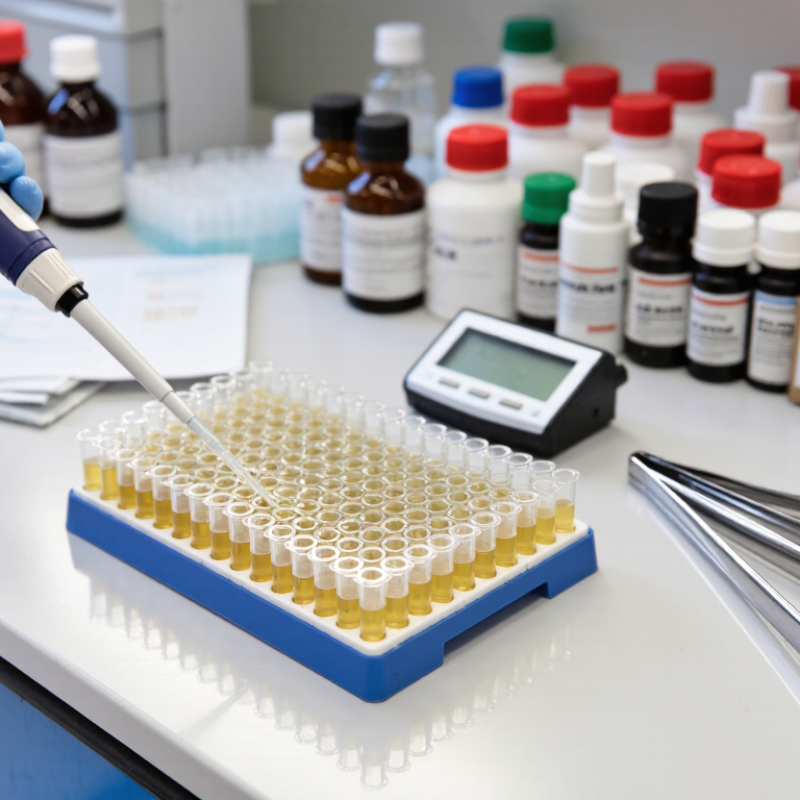
CCK-8 assays estimate cell viability by measuring metabolic activity, not by directly counting cells. The reagent contains WST-8, a pale compound that viable cells help convert into an orange, water-soluble formazan product. Cellular dehydrogenase activity drives this reaction, so stronger color usually indicates greater metabolic activity in the sample. The color is read with a plate reader, commonly near 450 nm. A clear signal. Yet it is still an indirect measure.

In practice, researchers compare treated wells with untreated controls and a blank containing medium and reagent. More orange color can suggest more viable cells, but interpretation needs care. A treatment may alter metabolism without changing cell number. Very dense cultures can also exceed the assay’s useful range. I have found that a neat-looking plate can still hide uneven cell seeding; small differences between wells matter. Establish a cell-density range and incubation time for the specific cell type before comparing conditions.

Tips: Protect reagents from strong light, use consistent incubation times, and avoid bubbles before reading absorbance. Include replicate wells and appropriate controls. If results seem unexpectedly high or low, check the blank, cell density, and reagent timing before drawing conclusions.

Key Quality Features of CCK-8 Assay Kits

A reliable CCK-8 assay kit should produce a clear, dose-responsive signal, not merely a strong color. WST-8 is reduced by cellular dehydrogenase activity, forming a water-soluble dye measured near 450 nm. Ishiyama et al. reported that WST-8 detection was about ten times more sensitive than MTT in their tested conditions (Talanta, 1997). That result is useful context, not a guarantee across cell types.

Check the kit’s stated linear range, recommended cell density, incubation time, and lot-to-lot controls. A good technical data sheet should show actual absorbance readings, replicate numbers, and variability across the working range. Small details matter. Include cell-free blanks and untreated controls; colored compounds or reducing agents can distort readings. CLSI EP06 guidance on measurement linearity offers a useful framework for assessing whether signal changes track cell number across the claimed range.

Packaging and handling also affect consistency. Look for clear storage limits, expiry dates, and instructions for avoiding repeated freeze-thaw cycles. Compare replicate wells at low and high cell densities, then inspect the raw optical readings rather than relying only on normalized percentages. Results may still vary with passage number and culture conditions. That part deserves reflection: a kit can be consistent while the biology is not.

China’s CCK-8 Assay Kit Supplier Landscape

China’s CCK-8 supplier landscape includes kit manufacturers, laboratory-reagent exporters, and sourcing partners serving research teams. Their offers may look similar, yet documentation, batch control, and technical support can differ substantially. CCK-8 uses WST-8 chemistry to produce a water-soluble colored product, commonly read near 450 nm. That detail matters. Buyers should compare protocols, recommended cell densities, incubation windows, and blank-correction guidance.

Ask for a current certificate of analysis, lot-specific quality records, storage conditions, and shipping details. For overseas orders, check whether the proposed temperature controls match the product’s requirements. A low quoted price is not enough; inconsistent handling can complicate comparisons across plates or experiments. Small differences count. Request technical answers in writing, especially when changing cell types, media, or exposure times. It is easy to assume a kit will fit every workflow, but that needs checking.

Tips: Run a pilot plate with controls, replicates, and a dilution series before scaling up. Keep cell density and incubation time consistent, and check the instructions for wavelength and interference warnings. Supplier information helps, but your own workflow still needs testing.

China’s CCK-8 Assay Kit Supplier Landscape

A practical protocol benchmark for global buyers comparing assay kit documentation and guidance.

The chart shows common 1–4 hour CCK-8 reagent incubation checkpoints, not supplier performance or market-share data. The optimal incubation time varies with cell type and density; follow the kit instructions and validate conditions for your assay.

How Global Buyers Can Compare Chinese Suppliers

When comparing Chinese CCK-8 assay kit suppliers, begin with product details, not the quotation. Ask for the reagent volume, storage range, expiration period, and compatible plate format. These details affect daily use. Request a lot-specific certificate of analysis and clear instructions for handling light-sensitive reagent. A generic brochure is not enough. Ask whether the kit has been evaluated with common cell types and what controls were used. Results can vary with cell density, incubation time, and medium composition, so supplier data should explain test conditions.

Then examine quality systems and shipment readiness. Look for documented lot-release checks, traceability, and a process for handling damaged or temperature-exposed packages. Confirm the shipping schedule, customs paperwork, and whether tracking will be provided promptly. For a first order, a small evaluation quantity may reveal more than a long sales call. Compare response times, too. A precise answer about storage is more useful than a fast promise.

Price still matters, but compare cost per test after accounting for controls, repeat runs, and usable shelf life. Ask how complaints are investigated and whether replacement decisions are recorded. I may be overcautious here. Yet a low quote can look less attractive when one delayed shipment interrupts a study. Keep the comparison sheet simple: specifications, evidence, delivery, support, and total usable tests. One detail is easy to miss: supplier claims should match the documents delivered with the actual lot.

Ordering, Shipping, and Compliance Considerations for Buyers

Before requesting a quote, define the assay format, expected sample volume, and number of tests required. State the preferred plate type and available reader wavelength. Ask for lot-specific certificates of analysis, safety data sheets, storage instructions, and a clear remaining shelf-life estimate. Check that the protocol matches your cell model and laboratory workflow. It matters.

Shipping terms deserve the same attention as kit specifications. Ask how the reagent will be packed and whether the shipping conditions follow the supplier’s documented stability guidance. Confirm dispatch timing, tracking availability, and who handles customs paperwork. Temperature requirements can vary. Do not assume that every shipment needs identical handling. Track the parcel against your receiving schedule, especially if customs clearance could take several days. Delays happen.

Import requirements differ by destination and product classification. Ask the supplier for accurate product descriptions and supporting documents, then verify local requirements with your institution’s procurement team or customs broker. Confirm that invoice details, declared value, and shipment contents agree. If the kit is labeled for research use, check that this designation fits your intended work and local rules. Keep emails, lot numbers, and delivery records together; they make questions about a delayed or damaged shipment easier to resolve. One detail is easy to miss: confirm who should be contacted if the package arrives warm or incomplete.

Article Source:

Our dedicated sales and support staff are here to help you identify the ideal pump solution for your needs.

Contact Us