China Best Ice Bath Pods for Wholesale Buyers?
China has become a significant sourcing destination for Ice Bath Pods, offering varied designs, materials, and production volumes. Wholesale buyers can find compact home models, commercial recovery units, and insulated outdoor systems. However, low pricing should never be the only purchasing factor. A cold plunge must control temperature consistently, drain safely, and withstand repeated use.
Dr. Susanna Søberg, a leading cold-exposure researcher, explains, “Cold exposure is a stressor that the body can adapt to.” This principle matters when evaluating Ice Bath Pods for gyms, hotels, sports clubs, and wellness retailers. Buyers should examine cooling performance, filtration, insulation thickness, electrical protection, and replacement-part availability. Ask for test reports, factory photographs, sample units, and clear warranty terms. A reliable supplier should explain how the unit performs after hours of continuous operation.
Small details reveal manufacturing quality. Check the lid seal, drain valve, pump noise, and internal surface finish. Request a real video showing temperature changes, not only polished catalogue images. Certification requirements may differ between countries, so importers should verify local electrical and product-safety rules before shipment. Claims about recovery should also remain measured. Results vary between users.
The process is not perfect. Some factories communicate quickly but provide weak after-sales support. Others offer excellent engineering with higher minimum order quantities. A practical buyer should compare total ownership cost, not just factory price. The best Ice Bath Pods supplier combines consistent production, transparent documentation, responsive service, and realistic performance claims.
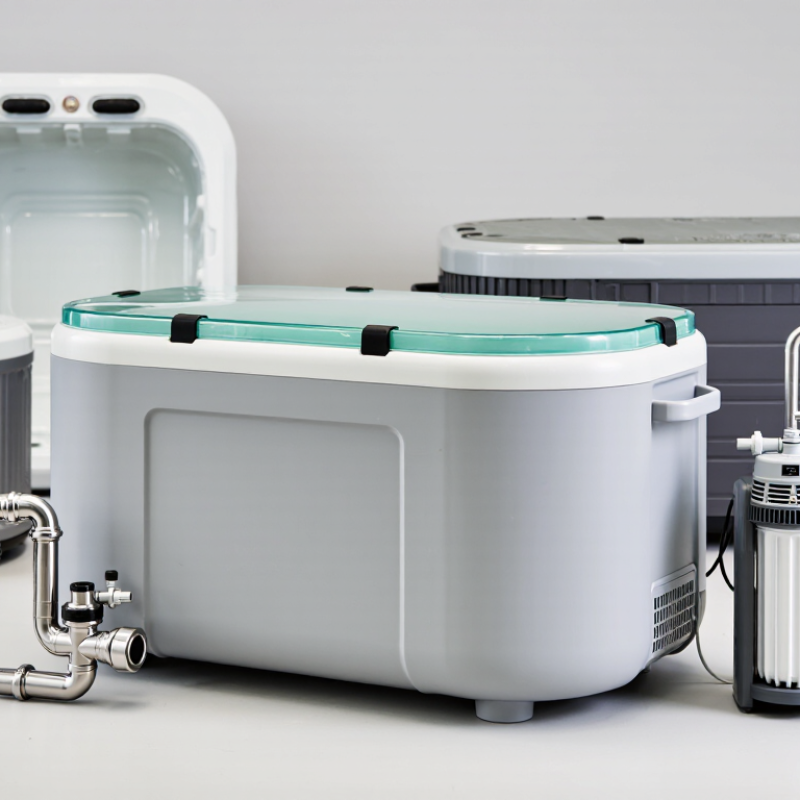
For wholesale buyers, a suitable ice bath pod must survive repeated use, not just photograph well. During evaluation, inspect wall thickness, frame stability, drain fittings, and the lid seal. A loaded pod should remain steady when users enter and exit. Check water temperature after several cycles in warm indoor conditions. Slow cooling may frustrate customers. Noise matters too. A loud chiller can weaken a premium wellness setting. Ask for test records, material specifications, and clear operating limits. Technical confidence needs evidence.
Commercial practicality starts with cleaning and maintenance. Smooth, nonporous surfaces reduce residue around seams and corners. Accessible filters and standard replacement parts can shorten service delays. Confirm how the unit drains, moves, and stores between appointments. Casters may help, but weak wheels create risks on wet floors. Packaging deserves equal attention. A damaged carton can turn a reliable product into an expensive return. Request a packed sample or detailed shipping photographs before ordering large quantities. Small details often decide margins.
Wholesale suitability also depends on documentation and support. Look for installation guides, electrical information, warranty terms, and responsive technical assistance. Safety instructions should be practical, not decorative. Buyers should understand water care, temperature controls, and emergency procedures. Do not trust every impressive specification. We once accepted a strong cooling claim, then found the testing conditions were unclear. That was a useful correction. Compare operating data, landed cost, repair access, and customer feedback before committing to volume. Consistency is the real test.
This procurement benchmark highlights the factors wholesale buyers commonly assess when comparing ice bath pods. A higher score indicates greater importance in a practical wholesale purchasing evaluation.
Cost control, insulation performance, product durability, shipping efficiency, compliance documentation, and after-sales support are key considerations for reducing operating risk and improving resale potential.
Chinese ice bath pods for wholesale buyers usually fall into three types: inflatable, rigid, and chiller-integrated models. Inflatable pods use reinforced PVC or drop-stitch fabric, making them light and easy to ship. Rigid pods often use stainless steel, fiberglass, or HDPE shells. They feel more stable and suit gyms, hotels, and recovery studios. Chiller-integrated pods add filtration, temperature control, drainage, and circulation systems. They cost more, but simplify daily operation.
Material quality deserves careful attention. Look for 304 stainless steel fittings, UV-resistant outer layers, insulated walls, secure covers, and smooth interior surfaces. Polyurethane foam insulation can slow temperature change and reduce cooling demand. Useful features include a drain valve, replaceable filter, thermometer, step access, and reinforced lifting points. However, extra functions are not always better. Complex controls may increase maintenance problems.
Tips: Request material specifications, leakage-test records, and clear product drawings. Ask how many hours the pod keeps cold after power-off. Check cleaning access and spare-part availability before ordering. A sample inspection is worth the added cost. Catalog photos can hide weak seams. Inspect them closely. Also confirm carton protection, pallet loading, delivery terms, and customization limits. In practical purchasing, a lower unit price may become expensive after damaged shipments, difficult assembly, or unavailable replacement parts. Some suppliers provide impressive cooling figures, yet actual performance depends on room temperature, water volume, and usage frequency. That detail is easy to overlook.
| Pod Type | Typical Construction | Common Materials | Main Features | Best Wholesale Applications | Key Inspection Points |
|---|---|---|---|---|---|
| Inflatable Ice Bath Pod | Air-filled circular or oval tub with a reinforced upper rim and drain outlet. | PVC Drop-stitch fabric EVA foam base | Lightweight, compact for shipping, quick to assemble, and easy to store when deflated. | Online retail, home users, fitness studios, event rentals, and entry-level wellness packages. | Check seam welding, air retention, puncture resistance, drain quality, maximum load, and included repair kit. |
| Portable Insulated Ice Bath Pod | Foldable or semi-rigid tub with a separate insulated cover and multilayer wall structure. | PVC or TPU liner EPE or EVA insulation Oxford fabric | Improved temperature retention compared with a basic single-wall tub; suitable for repeated setup and takedown. | Gyms, personal training facilities, sports clubs, hotels, and mobile recovery services. | Verify insulation thickness, liner waterproofing, cover fit, frame stability, drainage speed, and resistance to repeated folding. |
| Rigid Plastic Ice Bath Pod | Hard-shell tub with molded body, integrated drain, and optional insulated lid. | Rotomolded PE HDPE ABS components | Durable structure, stable shape, easy cleaning, and better resistance to impact than soft-sided products. | Commercial gyms, physiotherapy centers, sports academies, and permanent wellness rooms. | Inspect wall thickness, molded corners, UV resistance, drain fittings, surface smoothness, and dimensional consistency. |
| Stainless Steel Ice Bath Pod | Welded or formed metal basin, generally paired with an exterior support frame and drainage system. | 304 stainless steel 316 stainless steel Rubber seals | Premium appearance, high structural strength, non-porous interior, and good resistance to corrosion when properly maintained. | Luxury spas, hotels, premium gyms, clinics, and long-term commercial installations. | Confirm steel grade, weld quality, passivation, edge finishing, leakage testing, thermal insulation, and rust resistance. |
| Wood-Frame or Wood-Clad Pod | Insulated waterproof inner tub enclosed by a decorative timber frame or exterior cladding. | PVC or fiberglass liner Treated wood Composite panels | Warm natural appearance, customizable exterior finish, and suitability for outdoor wellness environments. | Resorts, garden spas, boutique hotels, private clubs, and residential outdoor spaces. | Check moisture protection, wood treatment, liner integrity, drainage access, fastener corrosion, and outdoor durability. |
| Chiller-Compatible Ice Bath Pod | Insulated tub equipped with water inlet and outlet ports for connection to an external cooling unit and filtration loop. | Rigid PE or fiberglass PVC piping EPDM seals | More consistent water temperature, reduced dependence on ice, and better suitability for frequent commercial use. | High-use gyms, recovery centers, athletic facilities, clinics, and hospitality venues. | Confirm port size, flow rate, hose compatibility, filtration access, electrical safety of connected equipment, and leak testing. |
| Compact Foldable Tub | Small collapsible basin with flexible walls, folding supports, and a low-position drain. | PVC TPU Aluminum or steel frame | Low storage volume, simple logistics, and convenient transport for apartments, travel, and temporary use. | Travel retailers, apartment users, small studios, promotional bundles, and seasonal sales channels. | Check folded dimensions, frame locking, floor stability, drain placement, material odor, and load-bearing capacity. |
A reliable evaluation starts with factory evidence, not polished product photos. Ask for the manufacturer’s legal business details, production address, and export history. Request a live video inspection of the workshop, assembly area, and quality-control process. Pay attention to welding seams, insulation layers, drain fittings, and electrical protection. Small details reveal more than showroom lighting.
Ask for test data under clear conditions. This should include cooling time, target water temperature, operating noise, power consumption, and performance at different room temperatures. Confirm the materials used for the tub, pipes, seals, and filtration system. Certificates should match the exact model you plan to purchase. Generic documents may not prove product compliance. Check them carefully.
Sample testing matters. Fill the pod, run it repeatedly, and inspect leaks, condensation, temperature stability, and drainage speed. Measure the water temperature independently. Do not rely only on the built-in display. A manufacturer should explain cleaning procedures, replacement filters, spare parts, warranty limits, and response times. Written details are essential.
Pricing can be misleading. A cheaper quotation may exclude packaging, testing, accessories, or after-sales support. Confirm the minimum order quantity, production schedule, inspection method, and shipping terms before payment. I have seen buyers focus too heavily on unit cost and overlook replacement parts. That mistake becomes expensive later. Leave room for improvement, too; even a promising supplier may need clearer manuals or better packaging.
China Best Ice Bath Pods for Wholesale Buyers?
Wholesale buyers should compare more than the unit price. A practical ice bath pod may include insulated walls, a reinforced frame, a drain valve, and a fitted cover. Pricing changes with material grade, capacity, insulation thickness, and order volume. Ask suppliers for tiered quotes at 10, 50, and 100 units. Request packaging costs separately. This reveals the real landed price.
Minimum order quantities often range from sample orders to several dozen units, depending on factory capacity and customization. A sample can confirm dimensions, water drainage, surface quality, and assembly time. It may feel expensive, but one failed shipment costs more. Confirm lead times, replacement parts, warranty terms, and inspection procedures in writing. Factory photos help, but they are not proof.
Customization can include colors, logos, drainage layouts, covers, carton printing, and private-label manuals. Ask whether changes require new molds or only artwork updates. Mold charges can affect smaller orders sharply. I would also request material certificates and basic leak-test records. Details matter. A low quote may hide thin insulation or weak packaging. My own buying mistake was focusing too much on price and overlooking pallet dimensions. That increased storage costs and damaged several cartons. Recheck the boring details.
Wholesale buyers should audit the factory, not just inspect polished photos. The Global Wellness Institute reported a $6.3 trillion wellness economy in 2023. That growth attracts capable suppliers and rushed ones. Request batch records, material certificates, electrical test reports, and serial-number traceability. Each pod should pass leak testing, insulation checks, controller testing, and a 24-hour cooling trial. Small details matter. A loose drain fitting can become an expensive return.
Compliance must match the destination market. Ask an accredited laboratory to assess applicable electrical, electromagnetic, chemical, and water-contact requirements. European shipments may require CE documentation, while other markets use different rules. Do not accept a certificate without checking its scope and issuing laboratory. I have seen paperwork look complete but miss the exact cooling assembly. That gap needs honest review.
Shipping planning should include reinforced pallets, moisture barriers, shock indicators, and clear lifting points. UNCTAD reports that more than 80% of global trade volume moves by sea, so port delays remain realistic. Confirm carton dimensions, container loading plans, spare-part packing, and insurance responsibilities before production. After-sales support should include remote troubleshooting, replacement pumps, sensors, seals, and a defined response time. A two-year warranty sounds strong. It means little without parts availability, repair instructions, and clear exclusions.("")]
//
We are here to help you with all your queries and concerns, just write to us using the below form and we will get back to you as soon as we can.