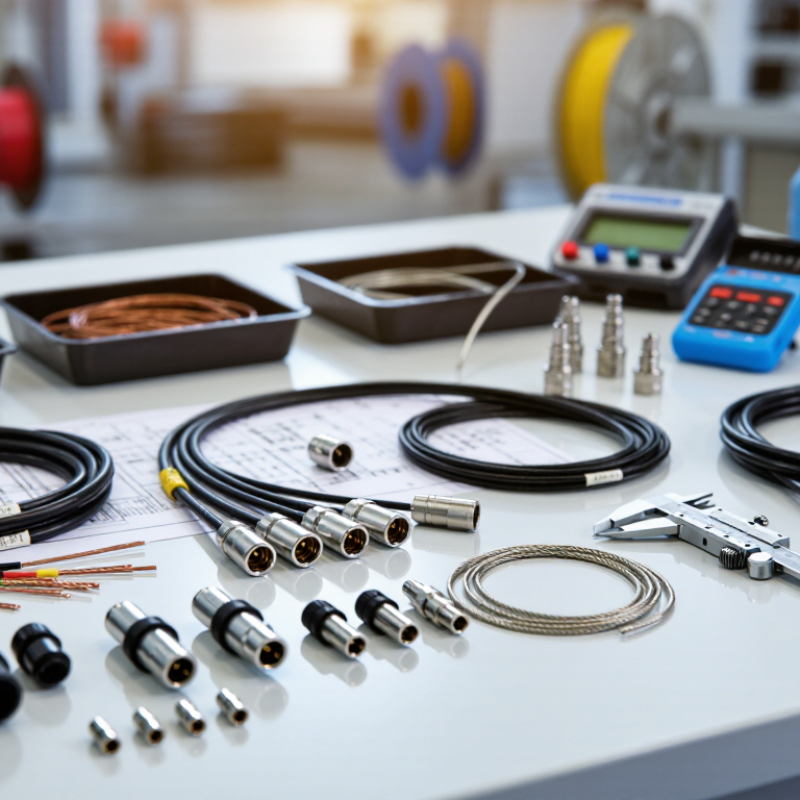
Finding reliable China Best Ebike Cable Suppliers for Global Buyers requires more than comparing prices. An Ebike Cable may look simple, yet it carries signals, power, and safety-related functions through demanding riding conditions. A loose connector, weak crimp, or poorly sealed joint can cause intermittent failures on wet roads. Experienced buyers inspect conductor quality, insulation thickness, connector compatibility, bend resistance, and production consistency. They also confirm whether the supplier can match wiring diagrams, custom lengths, terminal types, and labeling requirements.
This guide introduces practical methods for evaluating Chinese suppliers with greater confidence. It considers factory experience, quality-control procedures, sample performance, communication, and export capability. Buyers should request technical drawings, material details, inspection records, and clear sample approval terms. A capable manufacturer should explain its testing process, including continuity checks, pull tests, visual inspection, and waterproofing verification where applicable. Small details matter. Cable routing matters.
No supplier is perfect. A polished sample can hide unstable mass production. A low quotation may exclude testing, packaging, or replacement support. We have seen procurement decisions fail because buyers trusted photographs instead of verified samples. That lesson deserves attention. Reliable sourcing depends on repeatable evidence, not confident promises. The following overview helps global buyers compare suppliers more carefully, reduce avoidable risks, and select an Ebike Cable partner suited to their technical, commercial, and quality expectations.
China has become a leading source of ebike cable suppliers because its manufacturing ecosystem is unusually complete. The China Bicycle Association reported approximately 42.28 million electric bicycles produced in 2023. That scale supports cable factories with dedicated drawing, extrusion, crimping, and testing equipment. It also creates faster access to copper conductors, PVC compounds, connectors, and injection-molded parts.
The International Energy Agency’s Global EV Outlook 2024 identifies China as the dominant market for electric two- and three-wheelers. This domestic demand gives suppliers practical experience with waterproof routing, repeated handlebar movement, vibration, and outdoor temperature changes. A reliable factory should provide conductor specifications, insulation thickness, bending-cycle results, and sample traceability. Buyers can also compare flame resistance, tensile strength, salt-spray performance, and IP protection claims against applicable international standards.
That scale matters. Yet production volume does not guarantee consistent quality. Some suppliers still depend on manual inspection, which can miss uneven crimp pressure or tiny insulation cuts. This is where factory audits and batch testing become essential. During sampling, I would bend cables repeatedly near the connector, measure resistance, and inspect seals after moisture exposure. A low quotation may look efficient. It can also hide thinner copper, unstable materials, or weak documentation. China remains highly competitive, but global buyers should assess process control, not only price. The best sourcing decision may require one more test, one more question, and less trust in attractive specifications.
China Best Ebike Cable Suppliers for Global Buyers
Key Types of Ebike Cables and Their Applications
Ebike cable selection starts with the function each cable performs. Brake cables connect levers to mechanical calipers and need smooth movement, strong housings, and reliable return force. Shift cables control derailleur movement, so low friction and accurate length matter. These cables often fail after repeated bending near the handlebar.
Electrical cables serve different demands. Motor phase cables carry high current between the controller and hub motor. They require suitable conductor size, heat resistance, and secure waterproof connectors. Hall sensor cables transmit low-voltage signals and should remain separated from high-current wiring where possible. A small signal fault can stop the motor completely.
Battery and controller cables need careful matching. Check voltage, current capacity, connector shape, polarity, and cable length before ordering. Display, throttle, light, and speed-sensor cables usually carry lower power, but poor sealing can still cause intermittent faults. Choose abrasion-resistant jackets for cargo bikes and delivery use. Flexible cables suit folding frames better.
Real workshop checks are valuable. Bend samples repeatedly, inspect crimping, and test continuity under movement. Do not trust appearance alone. A neat cable may hide weak terminals. IP ratings help, but connector assembly still matters. I have seen moisture enter through an unused port. Cable routing deserves equal attention, because even a good cable can fail when stretched against a sharp frame edge.
Evaluating Chinese ebike cable manufacturers requires more than comparing prices. The IEA’s Global EV Outlook 2024 identifies electric two-wheelers as the largest electrified road-vehicle fleet. China’s bicycle industry association also reported domestic electric-bicycle output above 42 million units in 2023. This scale supports strong manufacturing experience, but it can hide uneven quality. Request conductor cross-section records, copper material declarations, and batch-level traceability. A polished factory video proves little.
Ask for samples tested under realistic conditions. Check voltage drop, bending resistance, connector retention, insulation thickness, and water ingress protection. For outdoor cables, confirm appropriate IP testing and flame-performance documentation. Request RoHS and REACH declarations when selling into regulated markets. The International Electrotechnical Commission’s connector and cable standards provide useful reference points, but compliance claims still need independent evidence. Look for calibrated test equipment, signed inspection reports, and retained samples from each production batch.
Visit the factory, or hire an independent auditor. Review incoming-material checks and corrective-action records. Small details matter: labels should remain readable after abrasion, and terminals should not loosen after repeated movement. I would also compare three production batches, not one perfect sample. No audit catches everything. Suppliers may overstate copper purity or testing capacity, and buyers sometimes accept vague certificates too quickly. A transparent manufacturer explains failures, production limits, and replacement procedures before receiving a large order.
For global buyers, an ebike cable supplier should provide more than a low quotation. The factory needs documented quality controls, traceable materials, and repeatable testing. ISO 9001 certification can indicate a controlled management system, but it does not prove every cable is safe. Ask for the certificate scope, issuing body, and validity date. Small details matter.
Cable assemblies should match the required voltage, current, temperature, bending, and moisture conditions. Depending on the application, buyers may request UL 758 recognition, IEC-based test reports, RoHS compliance, or REACH declarations. CE marking may apply to the complete ebike under relevant European rules, rather than to every cable separately. This distinction prevents costly misunderstandings. Request conductor specifications, insulation ratings, connector drawings, and sample test records before production.
I have found that reliable inspections combine documents with physical checks. Measure conductor resistance. Inspect crimp height and pull strength. Bend cables repeatedly near the connector. Check sealing after water exposure. Supplier reports are useful, but independent verification is stronger. Some factories present impressive certificates while controlling batch consistency poorly. That weakness deserves attention. A practical supplier should keep lot numbers, inspection photos, corrective-action records, and retained samples. Global buyers should also confirm factory capability through a live audit or qualified third-party inspection. Safety claims require evidence, not polished wording.
China Best Ebike Cable Suppliers for Global Buyers
Ordering, Customization, and Shipping from China
Reliable ebike cable sourcing starts with a clear technical sheet, not a low quotation. Specify conductor size, insulation material, connector type, cable length, bend radius, and waterproofing level. The International Energy Agency’s Global EV Outlook 2024 reports that electric two- and three-wheelers remain a major part of global electric mobility. Demand is growing, but cable failures can still damage an otherwise strong vehicle. Request samples before approving bulk production. Test fit, signal continuity, pull strength, and heat resistance.
Customization needs practical communication. Provide drawings, photos, pin layouts, and annual volume estimates. A supplier can then suggest tooling, minimum order quantities, and realistic lead times. Small changes matter. A two-millimeter length error may create frame stress. I have seen buyers approve samples too quickly, then discover connector interference during assembly. That mistake is avoidable, but not always.
Tips: Confirm the HS code, carton dimensions, gross weight, and shipping terms before payment. UNCTAD’s Review of Maritime Transport 2024 highlights continuing freight volatility and route disruption. Ask for two freight options, such as sea and air, with separate duties and destination charges. Use pre-shipment inspection and keep one sealed reference sample. It costs time. It protects consistency. Supplier certificates should be checked against the actual production batch, not accepted blindly.
| Sourcing Dimension | Typical Requirement or Benchmark | Common Options for E-Bike Cable Orders | Buyer Verification Point |
|---|---|---|---|
| Cable Category | The cable type should match the electrical function and the connector system used on the bicycle. | Motor cables, battery cables, display cables, brake-sensor cables, throttle cables, lighting cables, charging cables, and extension cables. | Request a wiring diagram, connector drawing, pin assignment, and sample cable before mass production. |
| Conductor Material | Copper conductors are commonly selected for good electrical conductivity and flexibility. | Bare copper or tinned copper; stranded conductors are normally preferred for vibration-prone bicycle applications. | Confirm conductor cross-sectional area, strand construction, resistance, and the material stated on the specification sheet. |
| Wire Size | The required size depends on current, cable length, allowable voltage drop, temperature, and installation conditions. | Common purchasing specifications may use AWG or mm²; power cables are generally larger than signal cables. | Do not select wire size only by appearance; verify continuous current, peak current, voltage, and cable temperature rating. |
| Voltage and Current Rating | The cable assembly must be rated above the system’s operating voltage and expected continuous and peak current. | Low-voltage DC assemblies for battery, motor, control, display, sensor, and lighting circuits. | Ask for rated voltage, current capacity, conductor resistance, insulation rating, and any derating conditions. |
| Insulation and Jacket | The outer jacket should withstand abrasion, bending, moisture, oils, temperature variation, and outdoor use as required. | PVC, TPU, PE, or other specified cable compounds; black is common, while other colors may be produced to order. | Confirm operating temperature range, flexibility, flame performance, UV exposure needs, and jacket thickness. |
| Connector Configuration | Connector selection must match mating parts, contact count, keying, locking method, sealing level, and current requirements. | Overmolded connectors, waterproof circular connectors, sealed inline connectors, multi-pin signal connectors, and battery or motor connection assemblies. | Verify mating compatibility, terminal plating, contact resistance, locking force, insertion cycles, and water-resistance test conditions. |
| Water and Dust Protection | Outdoor e-bike cable assemblies may require an ingress-protection target, but the actual rating depends on the complete assembly. | Sealed connectors, waterproof overmolding, gaskets, cable seals, heat-shrink tubing, and protective conduit. | Request the applicable test method and report; a connector rating alone does not automatically prove the rating of the finished cable assembly. |
| Customization Scope | Most cable assemblies can be customized when the buyer provides clear technical drawings or approved samples. | Length, wire gauge, conductor color, connector orientation, pinout, labels, sleeving, branching, terminals, overmolding, and packaging. | Freeze the drawing revision and sample approval before production; document all changes in writing. |
| Prototype and Sample Stage | A pre-production sample is recommended for fit, function, connector compatibility, and installation validation. | One or more engineering samples, followed by a golden sample retained for production comparison. | Check dimensions, bend radius, pinout, polarity, continuity, insulation, locking, and routing on the actual e-bike. |
| Minimum Order Quantity | MOQ varies by cable complexity, connector tooling, custom molds, materials, and packaging requirements. | Standard cable assemblies may support smaller trial quantities; customized overmolded or tooled parts commonly require higher quantities. | Obtain separate quotations for sample quantity, pilot quantity, and production quantity, including tooling charges if applicable. |
| Typical Production Timing | Timing depends on material availability, sample approval, tooling, order quantity, and factory capacity. | Standard repeat orders may take several weeks; new connector tooling, molds, or complex cable assemblies usually require additional time. | Confirm sample lead time, tooling lead time, production lead time, inspection date, and shipping-ready date separately. |
| Quality Control | Cable assemblies should be checked for electrical performance, dimensions, appearance, connector fit, and workmanship. | Continuity testing, short-circuit testing, polarity verification, crimp inspection, pull testing, dimensional inspection, and visual inspection. | Define acceptance criteria, sampling level, defect classification, inspection records, and corrective-action procedures in the purchase contract. |
| Technical Documentation | Complete documentation reduces errors during quotation, production, customs clearance, and after-sales support. | 2D drawings, 3D files when needed, wiring diagrams, pinout tables, bill of materials, test specifications, packing lists, and revision history. | Ensure the documents identify cable length, tolerance, connector orientation, wire specification, label position, and approved revision. |
| Compliance Requirements | Requirements depend on the destination market, finished e-bike, battery system, and whether the cable is treated as a component or part of a certified assembly. | Material declarations, restricted-substance documentation, safety test records, and destination-specific technical files where applicable. | Ask the importer or compliance specialist which regulations apply; do not assume a cable has certification simply because a supplier provides a general certificate. |
| Packaging | Packaging should prevent tangling, connector damage, moisture exposure, and deformation during storage and transport. | Individual bags, labeled bundles, protective caps, partitioned cartons, moisture protection, and export cartons. | Specify quantity per bag and carton, carton dimensions, gross weight, labels, barcode requirements, and connector protection. |
| Shipping Method | The best method depends on order volume, urgency, destination, customs requirements, and total landed cost. | Express courier for samples, air freight for urgent or medium-sized shipments, and sea freight for larger planned orders. | Compare transit time, chargeable weight, customs service, insurance, delivery terms, and destination handling fees. |
| Trade Terms | The selected Incoterm determines responsibility for freight, export clearance, insurance, import clearance, duties, and delivery. | EXW, FOB, CIF, CPT, DAP, and other terms may be considered according to the buyer’s logistics capability. | Confirm the named place, cost responsibility, transfer of risk, customs responsibility, and whether duties and taxes are included. |
| Export Documents | Accurate documents are essential for customs clearance and should match the physical shipment. | Commercial invoice, packing list, transport document, export declaration information, and certificate of origin when required by the destination. | Verify product description, quantity, value, country of origin, HS classification, carton count, and consignee information before dispatch. |
| Payment Structure | Payment terms should protect both parties and correspond to the sample, tooling, and production stages. | A deposit for order initiation, balance after production or inspection, and separately stated tooling or sample charges. | Record payment milestones, refundability of tooling, inspection rights, bank details, and the procedure for nonconforming goods. |
| After-Sales Support | Long-term supply is easier when technical changes, replacement parts, and quality claims are managed systematically. | Replacement cable arrangements, corrective-action reports, retained samples, drawing updates, and production traceability. | Agree on warranty scope, claim response time, replacement responsibility, traceability codes, and engineering-change procedures. |
Note: Lead times, MOQs, pricing, compliance requirements, and shipping costs vary by specification, order quantity, destination, season, and trade terms. Confirm all values in the supplier quotation and purchase contract.
We are here to help you with all your queries and concerns, just write to us using the below form and we will get back to you as soon as we can.