How to Choose the Best Combination Sweeper Scrubber in 2026

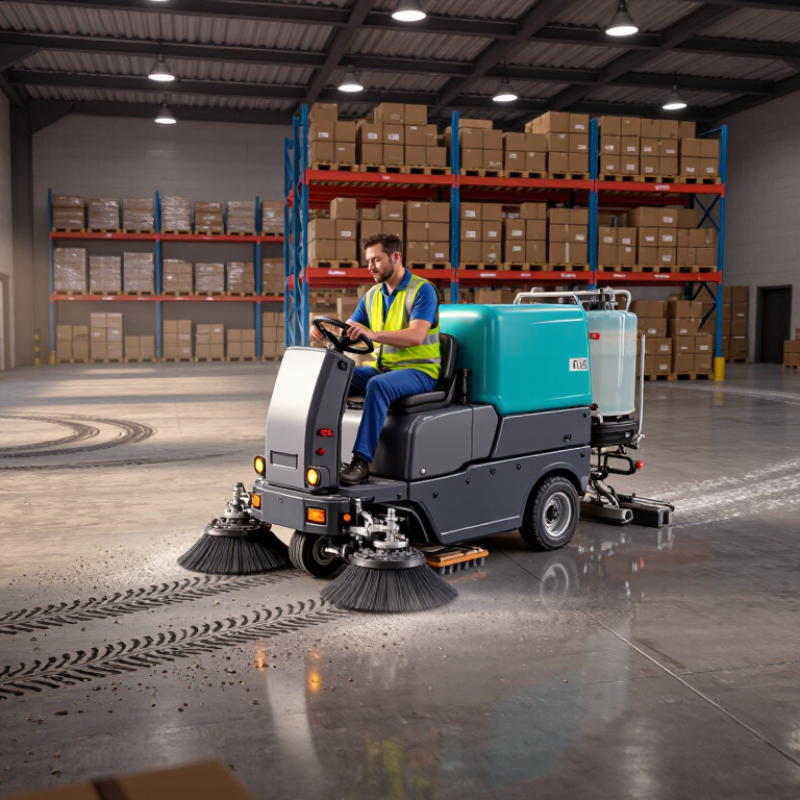
A warehouse floor tells its own story: tire marks near loading bays, fine dust beneath shelving, and damp tracks around wash stations. A Combination Sweeper Scrubber can collect loose debris and wash hard floors in one pass, but the wrong model may leave wet edges, clog with heavy grit, or struggle through a full shift. Choosing well starts with the building, not the brochure.

Grand View Research’s Floor Cleaning Machines Market report valued the global market at about $5.3 billion in 2023 and projected continued growth through 2030. That figure covers floor-cleaning machines broadly, not combination units alone. Still, it reflects growing demand for productive, mechanized cleaning. For facility teams, the practical questions are more specific: How wide are the aisles? What debris is collected? How many hours must the machine run before charging or refilling?

Cleaning-for-health specialist Dr. Michael A. Berry’s published work emphasizes that cleaning should support health, not just improve appearance. That principle matters when comparing pickup performance, water recovery, filtration, and operator visibility. Look closely. A polished sales sheet cannot show how a machine turns beside a pallet rack or handles grit at a doorway. Some specifications will still require an on-site trial.

This 2026 guide explains how to compare brush systems, tank capacity, battery runtime, service access, and total ownership costs. It also considers the trade-offs that are easy to overlook, including training time and floor-drying consistency. The best choice is rarely the largest machine. It is the one your crew can use safely, maintain reliably, and fit into the building’s actual cleaning schedule.
How to Choose the Best Combination Sweeper Scrubber in 2026

Match Sweeping and Scrubbing Methods to Floor Type, Soil, and Debris

A combination machine should be selected by the soil it must remove, not by its advertised coverage rate. On polished concrete, a cylindrical brush can collect grit and small debris before the scrub deck wets the surface. On resilient vinyl, softer brushes or pads help reduce scuffing. Avoid aggressive pads on delicate coatings; a single test pass can reveal dulling or swirl marks.

Fine dust needs a different approach from leaves, packaging scraps, or tracked-in sand. EPA’s The Inside Story reports that indoor pollutant levels can be two to five times outdoor levels, and sometimes much higher. This is not a floor-cleaning trial, but it supports controlling dust rather than spreading it with a dry brush. Use effective dust capture where fine particles are common. Not always easy. Filters clog, and wet debris can smear if the pickup system is poorly adjusted.

Match the scrub method to the floor and residue. Neutral detergent and a soft brush suit routine soil on many sealed surfaces; oily shop floors may need compatible chemistry and more dwell time. A machine that sweeps well may still leave a slick film if its solution flow is excessive. Check the recovery tank, squeegee edges, and floor drying after a short trial. EPA’s Exposure Factors Handbook estimates people spend about 87% of their time indoors, so dust control and slip prevention deserve attention in everyday routes.

Check Safety Requirements Under OSHA 29 CFR 1910.22

When comparing combination sweeper scrubbers, look beyond cleaning speed. OSHA 29 CFR 1910.22 requires walking-working surfaces to be kept clean, orderly, and, as far as feasible, dry. It also requires regular inspections and prompt correction or guarding of hazards. The standard does not prescribe a particular cleaning machine. Your choice should suit the actual floor, debris, moisture, and traffic.

Walk the route before selecting equipment. Note tight turns, floor drains, uneven joints, and areas where wet cleaning could leave standing water. Check that the machine can collect the site’s typical dust and debris while recovering scrub water effectively. Ask for practical details: tank capacity, stopping distance, visibility around the cleaning head, and how easily operators can see spills. Small details matter. A machine that fits the aisle but blocks sightlines may create a new problem.

During a demonstration, observe the floor after a pass, especially near corners and loading doors. Set procedures for signs, barriers, spill response, and checking floors before reopening cleaned areas to foot traffic. These controls support safe housekeeping; they do not replace workplace inspections or hazard correction. One imperfect point: advertised cleaning performance may not match your floor’s finish or soil. Test the equipment under ordinary site conditions, document what you observe, and involve operators who know where water tends to collect.

Estimate Theoretical Coverage: Cleaning Width × Speed × 5,280 ft per Mile

For a combination sweeper scrubber, theoretical coverage gives a quick way to compare cleaning width and travel speed. Use this formula: cleaning width in feet × speed in miles per hour × 5,280 feet per mile. The result is theoretical square feet per hour. For example, a 30-inch cleaning path equals 2.5 feet. At 3 mph, the estimate is 39,600 square feet per hour.

That number is a ceiling, not a shift plan. The calculation assumes steady speed and a full-width cleaning path. Real floors include rack ends, tight turns, doorways, and areas that need a second pass. Slowdowns matter. A small change in route can reduce productive coverage more than expected.

When comparing machines in 2026, use the formula with the width and cleaning speed you can realistically maintain. Then test the estimate on a representative area, including refill and debris-dumping stops. Record the area cleaned and the time spent cleaning, turning, and servicing the machine. I still find theoretical figures easy to overtrust; the measured result may be less tidy, but it is more useful for scheduling.

How to Choose the Best Combination Sweeper Scrubber in 2026 - Estimate Theoretical Coverage: Cleaning Width × Speed × 5,280 ft per Mile

Compare illustrative machine configurations using theoretical coverage and an estimated operating-efficiency adjustment. Theoretical coverage is calculated as cleaning width in feet × travel speed in miles per hour × 5,280 feet per mile.

Configuration Cleaning Width (in.) Travel Speed (mph) Theoretical Coverage (sq. ft./hr.) Estimated Efficiency Estimated Practical Coverage (sq. ft./hr.)
Compact walk-behind 20 2.5 22,000 55% 12,100
Mid-size walk-behind 26 3.0 34,320 60% 20,592
Compact ride-on 28 4.0 49,280 65% 32,032
Standard ride-on 36 4.5 71,280 65% 46,332
Large ride-on 40 5.0 88,000 60% 52,800
Industrial ride-on 48 5.0 105,600 55% 58,080

These are illustrative planning scenarios, not manufacturer specifications. Practical coverage is estimated by multiplying theoretical coverage by the listed efficiency factor to account for turns, obstacles, overlap, and other interruptions. Actual results vary with site layout, soil load, water and debris capacity, and operating conditions.

Compare Solution and Recovery Tank Capacities with Manufacturer Ratings

Compare solution and recovery tank capacities as a pair, not as isolated numbers. A machine might hold 30 gallons of cleaning solution and 32 gallons of recovered liquid. That difference provides some room for dirty water, foam, and debris. It does not guarantee a full cleaning cycle. Actual results depend on floor condition, solution flow, and how much liquid the squeegee leaves behind.

Read the manufacturer’s rated capacities and confirm what each figure measures. Some specifications show nominal tank volume, while usable capacity may be lower to prevent spills or allow for movement. Check the operating manual for fill limits and recommended detergents. Too much foam can fill the recovery tank early. Small detail, big interruption. A narrow aisle or sloped floor may also change how reliably the machine collects liquid.

Match tank size to the work pattern. For a large open floor, fewer refill and dump stops can save time. In a crowded facility, a smaller machine may be easier to empty and refill between sections. Compare stated capacities with a practical test on similar flooring, tracking area cleaned before each stop. The numbers are useful, but they are not the whole story. It is easy to overestimate runtime from tank size alone.

Estimate Battery Runtime: Volts × Amp-Hours ÷ Average Load Watts

For a combination sweeper scrubber, estimate runtime with this formula: battery volts × amp-hours ÷ average load watts. A 24-volt battery rated at 100 amp-hours stores about 2,400 watt-hours. If the machine averages 800 watts, the calculation gives three hours. That is a starting estimate, not a promise.

Real floors are less tidy than a worksheet. Brushes working on rough concrete, strong vacuum, and frequent starts can raise the load. Water flow and brush pressure matter, too. Use average watts during actual cleaning, rather than the motor’s peak rating. If that figure is unavailable, track battery use over a normal shift; the estimate may be imperfect, but measured notes beat guesswork. Leave some margin. A battery rarely delivers all its rated energy in daily service, and cold conditions or an aging pack can reduce usable capacity. Applying a 20 percent reserve to the example leaves roughly 2.4 hours of practical runtime. Check the battery specifications and confirm the result during a representative route, with the same tools and settings you expect to use.

How to Choose the Best Combination Sweeper Scrubber in 2026

Estimate battery runtime using Volts × Amp-Hours ÷ Average Load Watts. The examples below show calculated runtime estimates for different battery and load combinations.

How to read the chart: A 24 V, 100 Ah battery provides 2,400 Wh of nominal energy; at a 600 W average load, the estimate is 4 hours. Actual runtime may be lower because of usable battery capacity, changing machine load, battery condition, and operating conditions. Compare estimates using the same assumptions when selecting equipment.

Our dedicated sales and support staff are here to help you identify the ideal pump solution for your needs.

Contact Us