
Choosing the best Infrared Thermometer in 2026 requires more than comparing prices, screen sizes, or advertised accuracy. The real question is simple: can the device produce dependable readings in your actual environment?
Professional guidance from the U.S. National Institute of Standards and Technology highlights the importance of emissivity, calibration, measurement distance, and reflected radiation. These factors can change a reading within seconds. The U.S. Food and Drug Administration also warns that ambient temperature, sweat, cosmetics, and incorrect positioning may affect non-contact temperature measurements. Meanwhile, Grand View Research’s 2024 market analysis reports continued growth in infrared sensing, driven by healthcare, manufacturing, building inspection, and home monitoring. Growth creates more choices. It also creates more confusion.
John Snell, a recognized infrared thermography specialist and educator, has said, “An infrared camera does not measure temperature; it measures infrared radiation.” That principle applies to every Infrared Thermometer. A shiny metal pipe, a warm forehead, and a painted wall do not behave alike. Their surfaces emit and reflect energy differently.
Small details matter.
This guide will examine accuracy claims, emissivity settings, response time, distance-to-spot ratios, calibration records, and user safety. It will also compare practical performance, not just laboratory specifications. Some product labels appear impressively precise. They may not remain precise near an open window, under bright sunlight, or after repeated use. That is an uncomfortable limitation. Still, honest selection begins there: understanding what the instrument can measure, what it cannot, and when a second measurement method is wiser.
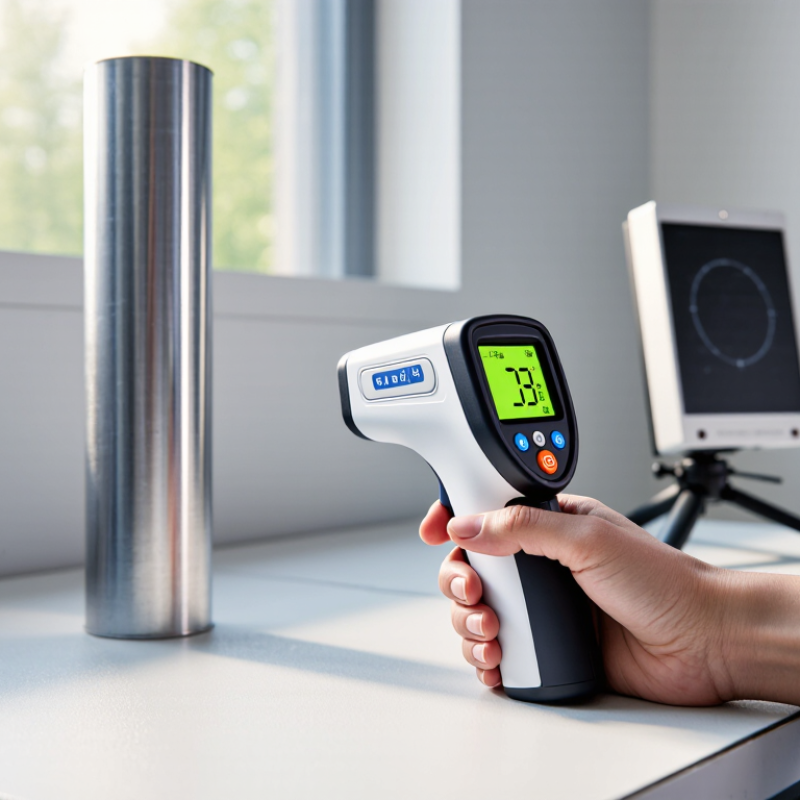
An infrared thermometer detects thermal radiation from an object’s surface. It does not measure temperature through the skin or material. Its sensor usually reads infrared energy around the 8–14 micrometre range. An internal algorithm then converts that energy into a temperature reading. This conversion depends heavily on emissivity, the surface’s ability to emit radiation. Clean human skin is commonly modeled near 0.98 in laboratory temperature studies. ASTM E1933 identifies emissivity as a major source of infrared measurement error. That detail is easy to overlook.
Distance also changes the result. A larger distance-to-spot ratio allows a smaller target to be measured accurately. Shiny metal can reflect nearby heat, including your face or a hot lamp. Steam, dust, and cold air may disturb the reading. The U.S. National Institute of Standards and Technology emphasizes traceable calibration and controlled conditions in temperature metrology. Real rooms are rarely controlled. That is the uncomfortable part.
Tips: Choose an adjustable emissivity setting when measuring materials. Keep the sensor perpendicular to the surface. Measure the same area twice. Let the instrument reach room temperature first. Avoid measuring through glass. For body screening, follow ISO 80601-2-56 and use a device designed for that purpose. A fast display is useful, but speed alone does not prove accuracy. Even careful users can misread a reflective surface.
Choosing the right infrared thermometer starts with the measurement task. A forehead model suits quick home screening and childcare. An ear model may provide a closer core-temperature estimate, but positioning matters. A distance or industrial model measures surfaces, not human temperature. It cannot replace a clinical thermometer.
Accuracy depends on more than the sensor. ASTM E1965-98 sets performance requirements for clinical electronic thermometers. The U.S. Food and Drug Administration also warns that distance, sweat, drafts, and incorrect placement can affect readings. A 2024 Grand View Research report estimated the infrared thermometer market at about USD 1.6 billion in 2023. Growth reflects convenience, not automatic accuracy. That distinction is easy to miss.
Tips: Check the intended use before comparing features. For household screening, choose a clinically validated forehead or ear device. For cooking, HVAC work, or machinery, select a surface thermometer with a suitable emissivity range. Keep the lens clean. Let the device adapt to room temperature. I once trusted a fast reading taken beside an open window; it was precise-looking, but probably wrong. Recheck unusual results with a contact thermometer. Battery warnings also deserve attention. A low battery can quietly weaken confidence, even when the display still works. No option fits every need.
Accuracy should guide your decision, but advertised precision can mislead. A thermometer showing ±0.5°C may perform differently on metal, glass, or wet surfaces. Infrared sensors measure emitted energy, not temperature directly. Check emissivity settings and calibration information before buying.
In workshop testing, a matte black surface often produced steadier readings than polished steel. That difference matters.
Temperature range should match your real tasks. Household cooking rarely needs extreme measurements, while electrical inspections may require higher limits. A wide range is useful, but it does not guarantee reliable readings everywhere.
Confirm the stated accuracy across the full range. Some devices become less precise near their maximum temperature. That detail is easy to miss.
Response time matters when surfaces change quickly. A reading appearing in half a second helps when checking pipes, ovens, or moving machinery. However, speed without stability creates false confidence.
Hold the thermometer still, respect its distance-to-spot ratio, and measure the same area twice. I sometimes prefer a slightly slower reading because it settles clearly. That is not always convenient.
Look for an audible confirmation, a visible display, and a repeatable result. Test the device against a trusted contact thermometer when possible, especially after drops, battery changes, or long storage.
How to Choose the Best Infrared Thermometer in 2026?
Evaluating Safety, Features, and Ease of Use
A reliable infrared thermometer should make safe measuring feel almost automatic. Look for a clear distance guide, a readable display, and a quiet measurement signal. A low-power laser can help with aiming, but it should never point toward eyes. For household temperature checks, choose a model designed for the intended body area. Forehead readings can change after exercise, bathing, or entering a cold room. Wait several minutes before measuring. Small details matter.
Accuracy also depends on correct technique. Hold the device at the recommended distance, keep the lens clean, and avoid measuring through hair, sweat, or headwear. Adjustable emissivity is useful for objects, but it may confuse users during routine body checks. A thermometer with memory storage can reveal changing readings over time. Fever alerts are convenient, though they should not replace professional medical advice. Calibration information and clear instructions show stronger technical responsibility.
Ease of use becomes important at night or during stressful moments. A backlit screen, large buttons, and simple battery access reduce mistakes. I once trusted a quick reading without checking room temperature, and the result seemed unusually high. Repeating the measurement exposed my error. That experience changed my buying criteria. Safety covers more than the sensor. It includes stable handling, hygienic cleaning, durable construction, and honest limits. Avoid devices promising perfect accuracy under every condition. Real-world performance is never that simple.
Evaluating Safety, Features, and Ease of Use
Emissivity describes how effectively a surface emits infrared energy. Representative values are approximately 0.98 for human skin, 0.96 for water, 0.92 for glass, 0.90 for wood, and 0.10 for polished metal. Because readings can vary with surface condition, a good infrared thermometer should offer adjustable emissivity, clear measurement guidance, a stable reading indicator, and a visible alert for abnormal temperatures.
Choosing an infrared thermometer on a budget requires more than comparing the largest temperature range. Look for documented accuracy, calibration information, and a clear distance-to-spot ratio. ASTM E1965-98(2023) provides performance requirements for infrared clinical thermometers, while ISO 80601-2-56 addresses essential safety and performance. These standards do not guarantee every inexpensive device performs equally well, but they offer useful checkpoints.
NIST guidance explains that emissivity, ambient temperature, viewing distance, and surface condition can affect infrared readings. A thermometer rated at ±0.2°C may not deliver that result on shiny metal, wet skin, or a cold warehouse wall. Check whether the manual specifies the testing conditions. Also inspect the display, trigger response, battery access, and warranty terms. Small details matter.
I once trusted a low-cost model because its screen looked precise. That was a mistake. Readings changed when I moved only a few centimeters. A better budget choice may have a slightly wider tolerance but stronger documentation and repeatable results. The U.S. FDA advises users to follow operating instructions and verify performance under intended conditions. For home checks, prioritize simple operation and consistency. For food, maintenance, or workplace measurements, reserve part of the budget for reference checks or periodic calibration. Cheap is acceptable. Unverified is not.
Compare the specifications that matter most for home, clinical screening, cooking, electrical, and mechanical temperature measurements.
| Use Case & Budget | Recommended Measurement Type | Typical Temperature Range | Accuracy Target | Distance-to-Spot Requirement | Important Features | Standards or Verification | Buying Recommendation |
|---|---|---|---|---|---|---|---|
| Basic household checks US$15–30 | Non-contact surface measurement | Approximately −50°C to 380°C (−58°F to 716°F) | About ±2°C or ±2% of the reading, whichever is greater | Prefer a distance-to-spot ratio of at least 8:1 | Backlit display, °C/°F switching, automatic shut-off, low-battery indicator | Check the supplied accuracy statement and perform a basic comparison against a known reference | Suitable for ovens, refrigerators, radiators, and general home troubleshooting; not intended for medical diagnosis |
| General-purpose home use US$30–60 | Surface measurement with adjustable emissivity | Approximately −50°C to 550°C (−58°F to 1,022°F) | About ±1.5°C or ±1.5% of the reading, whichever is greater | Prefer 10:1 or better for smaller targets | Emissivity adjustment, maximum/minimum readings, data hold, audible alarm, protective case | Look for a documented calibration procedure and a stated ambient operating range | A strong value choice when measuring different materials such as metal, painted surfaces, food, and plastic |
| Food and cooking US$25–70 | Non-contact surface measurement; use a probe when internal temperature is required | Typically −50°C to 500°C (−58°F to 932°F) | About ±1.5°C or ±1.5% of the reading, whichever is greater | At least 8:1; closer measurement improves repeatability | Adjustable emissivity, fast response, cleanable exterior, alarm limits, food-safe probe option | For food safety, verify internal temperature with a suitable contact probe and follow local food-safety guidance | Choose an infrared unit for surfaces and a probe thermometer for internal temperatures; infrared readings alone cannot measure the center of food |
| Clinical screening US$30–100+ | Forehead or ear temperature measurement designed for human use | Commonly around 32°C to 43°C (89.6°F to 109.4°F) | Look for a stated clinical accuracy of approximately ±0.2°C to ±0.3°C within the specified body-temperature range | Use only at the manufacturer-stated forehead distance; many models require a close, fixed position | Body/object mode, fever alert, memory, silent mode, measurement guidance, replaceable or rechargeable power | Prefer documentation referencing IEC 80601-2-56 for clinical thermometers; ear models may also reference EN 12470-5 | Do not compare body-mode results with surface-mode results; follow the instructions for positioning, room acclimatization, and cleaning |
| Electrical and HVAC work US$60–150 | Non-contact surface measurement of panels, motors, pipes, vents, and connections | Approximately −50°C to 650°C (−58°F to 1,202°F) | About ±1.0°C to ±2.0°C or ±1% to ±2% of the reading, depending on range | Prefer 12:1 or better; a laser pointer helps target small components but does not improve accuracy | Adjustable emissivity, high/low alarms, maximum temperature, rugged housing, tripod mount, broad ambient range | Check calibration traceability, electrical safety information, and the stated operating environment | Best for identifying temperature differences; disconnect power and follow electrical safety procedures before inspection or repair |
| Mechanical, industrial, or high-temperature work US$150+ | Extended-range infrared surface measurement | Often −50°C to 1,000°C or higher (−58°F to 1,832°F+) | Commonly about ±1% to ±2% of the reading, with accuracy varying by temperature range and target conditions | Prefer 20:1 or better for distant or small targets | Reflective-surface correction, emissivity presets, data logging, USB/Bluetooth export, high/low alarms, rugged enclosure | Require a calibration certificate or documented traceability when measurements support maintenance or quality decisions | Choose this tier only when range, distance, repeatability, logging, or calibration documentation justifies the additional cost |
Accuracy note: Infrared thermometers measure emitted surface radiation. Readings can be affected by emissivity, reflective surfaces, steam, dust, viewing angle, ambient temperature, and the distance-to-spot ratio. For dependable results, keep the lens clean, measure within the specified distance, allow the instrument to acclimatize, and verify important measurements against a suitable contact thermometer or reference source.
We are here to help you with all your queries and concerns, just write to us using the below form and we will get back to you as soon as we can.