How to Choose the Best Pump Vendor for Your Needs?

Choosing the right pump vendor is crucial for any industrial project. As Michael Thompson, a leading expert in the pump industry, notes, "The best pump vendor considers your specific needs.” Each project has unique requirements, and a tailored approach can make a significant difference.

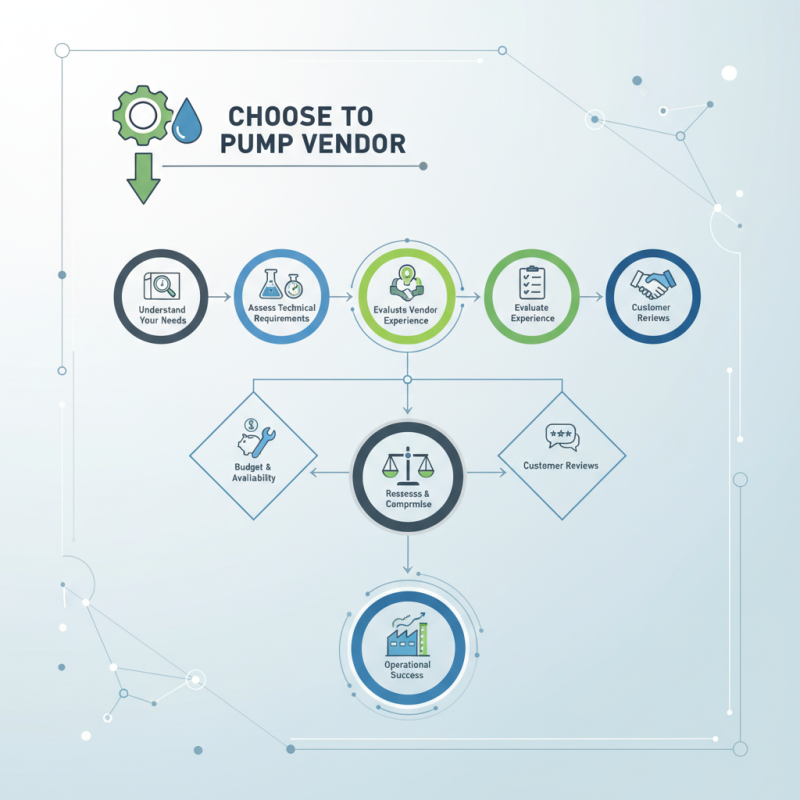
Understanding your application helps narrow down your options. A good vendor will assess factors such as fluid type, pressure levels, and maintenance needs. Sometimes, this process can feel overwhelming. Not every vendor has the knowledge or resources to meet diverse demands. Disappointing experiences with vendors can lead to delays, increased costs, and frustration.

Look for vendors with proven track records. Customer reviews can reveal a lot about reliability and service quality. Remember, a perfect match doesn't always exist. Often, compromises must be made based on budget constraints or availability. Be prepared to reassess your options as you gather more information. Ultimately, your choice in a pump vendor can significantly impact the success of your operations.
How to Choose the Best Pump Vendor for Your Needs?

Identifying Your Specific Pump Requirements and Applications

How to Choose the Best Pump Vendor for Your Needs?

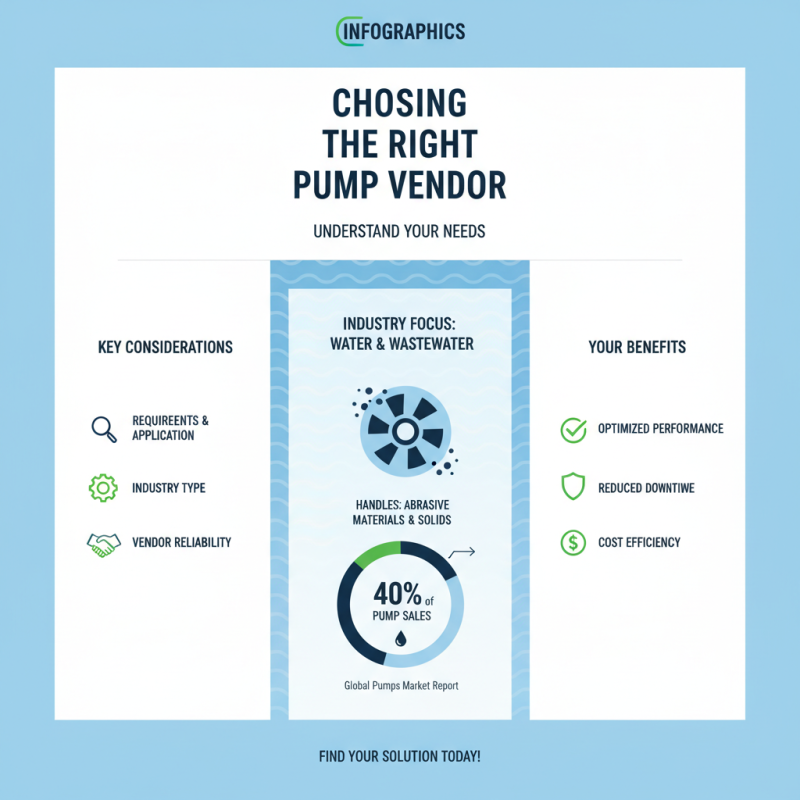
Choosing the right pump vendor requires a clear understanding of your specific requirements and applications. Different industries have distinct needs. For instance, the water and wastewater sector often requires pumps that can handle abrasive materials and solids. According to the Global Pumps Market report, around 40% of pump sales are driven by this sector.

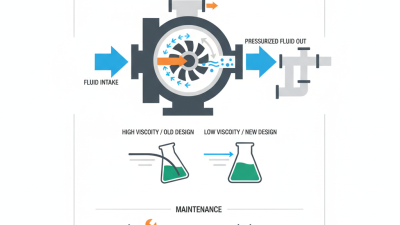
Understanding the flow rates, head requirements, and the nature of the fluid is crucial. For example, a food processing plant needs sanitary pumps. These must meet strict hygiene standards. However, many vendors can struggle to provide tailored solutions. The market pressure can lead them to promote generic products instead, which may not fit specific needs.

Budget plays a significant role too. Opting for the cheapest option often leads to issues down the line. According to industry research, around 30% of pump failures are due to improper sizing and selection. By investing in proper consultation, businesses could avoid unnecessary costs. Ensuring your vendor understands your application is critical to success.

Researching Potential Pump Vendors and Their Offerings

Choosing the right pump vendor is crucial for your specific needs. Start by gathering insights about potential vendors. Look online for reviews and testimonials. Check forums where professionals discuss their experiences. This information can reveal strengths and weaknesses in different vendors.

Once you have a list, dive deeper into their offerings. Consider the types of pumps they provide. Do they cater to your industry? Evaluate their technical support and customer service. A vendor might have great products, but poor support could lead to frustration later. Take note of their delivery times and warranty policies as well.

Don’t forget to reach out and ask questions. Engaging directly can clarify any uncertainties. Analyze their response time and willingness to help. Sometimes, an unclear or rushed response can be a red flag. Trust your instincts; if something feels off, it’s worth reflecting again on your options.

Evaluating Vendor Experience and Industry Reputation

When selecting a pump vendor, evaluating their experience and reputation is critical. Industry reports indicate that about 70% of organizations prioritize vendor track records. Companies with at least five years of experience are often more reliable. They typically have faced various challenges and have developed effective solutions.

A vendor’s reputation also hinges on customer satisfaction scores. According to recent surveys, 65% of clients rate their vendors based on service responsiveness and product reliability. If a vendor has multiple complaints or low ratings, it may signal deeper issues with their quality or support services. Researching online reviews and referrals can provide deeper insights.

However, even renowned vendors may not meet all specific needs. Some may excel in reliability but lack innovative solutions. The key is to balance both experience and innovation. A vendor's ability to adapt to new technologies is as important as their historical performance. This complexity often requires an in-depth analysis of individual situations rather than relying solely on general reputation.

Comparing Pricing, Warranty, and Support Services

How to Choose the Best Pump Vendor for Your Needs?

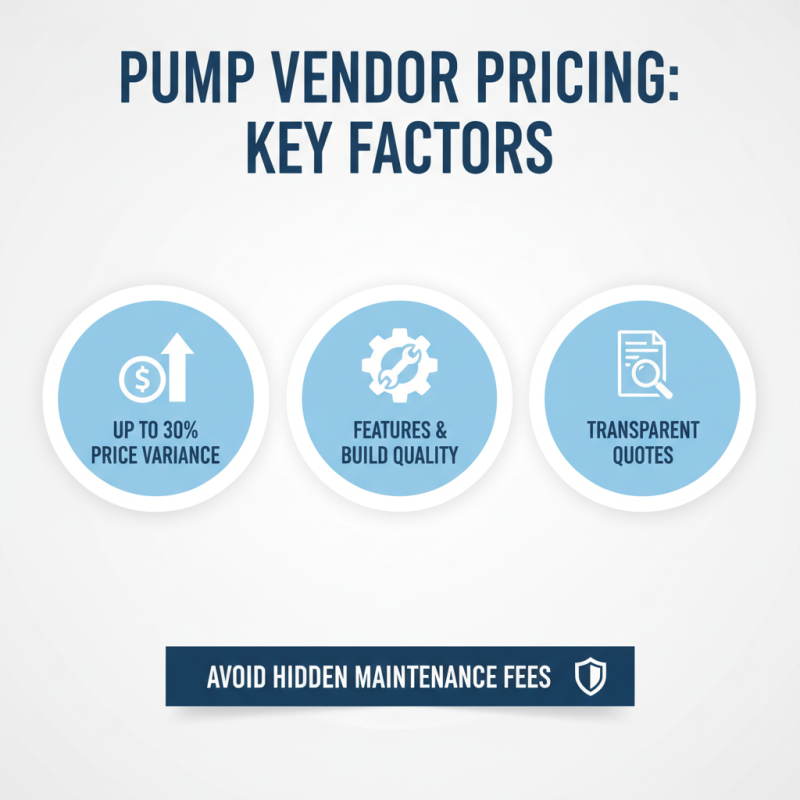
When choosing a pump vendor, pricing is a critical factor. A recent industry report shows that pump costs can vary widely. On average, the price difference between vendors can be up to 30%. This variance often comes from the specific features or build quality. Some vendors may offer lower initial costs but include hidden fees in maintenance. Transparent pricing is essential. Always ask for detailed quotes.

Warranty is another significant aspect. Many vendors provide warranties that last from one to five years. Some studies suggest that 40% of users experienced issues within the first year. A strong warranty can save on unexpected repairs. However, be wary. A long warranty may not guarantee service quality. Examine the terms carefully. Not all warranties cover the same components, leading to potential gaps.

Support services deserve attention too. Quick response times are vital, especially in emergencies. Data indicates that 60% of pump failures happen during critical operations. Excellent support can minimize downtime and costs. A vendor with 24/7 service may charge more but could be worth it in high-stakes environments. Reflect on your unique needs. Investing in support services can pay off significantly in the long run.

Assessing Vendor Responsiveness and Customer Service Capability

Choosing the right pump vendor is crucial for your operations. Assessing vendor responsiveness is a key factor. A vendor's ability to address inquiries quickly reflects their commitment to customer service. Consider how long it takes for them to reply. Does their response meet your expectations?

When evaluating vendors, pay attention to their communication channels. Are they available via phone or email? How do they handle urgent requests? You need a vendor who responds promptly and effectively. A lack of responsiveness can lead to delays and disruptions in your operations.

**Tips:** Look for vendors who offer a dedicated support team. This ensures you’ll always have access to help when you need it. Also, check reviews from other customers. They can provide insights into the vendor's reliability. Reflect on your own experiences too. Have you faced issues in the past due to poor vendor support? These reflections can guide your decision-making.

Customer Service Capability Assessment of Pump Vendors

Our dedicated sales and support staff are here to help you identify the ideal pump solution for your needs.

Contact Us