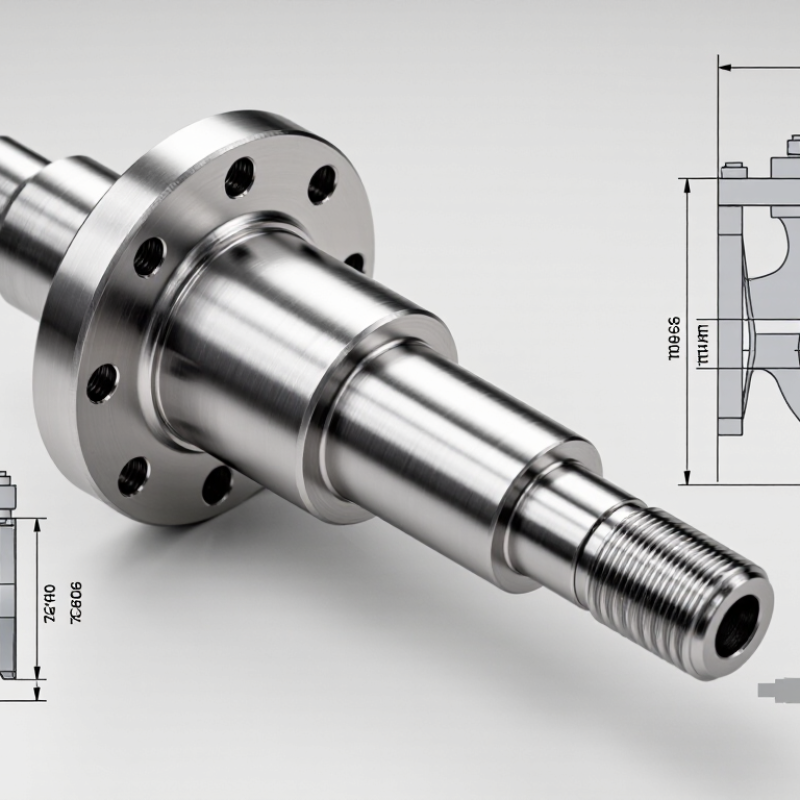
How to Choose the Right Stainless Valve Stem?

Choosing the right Stainless Valve Stem is not a minor purchasing decision. This small component transfers force, seals pressure, and supports repeated valve operation. A poor match may create leakage, galling, corrosion, or difficult maintenance. The failure often begins quietly, beneath a clean surface.

Dr. Elena Markovic, a valve materials specialist, offers a practical reminder: “A stem is small, but its failure can stop the whole valve.” Her point matters in chemical processing, water treatment, food production, and demanding industrial systems. Stainless steel is not one universal solution. Grade selection must reflect the fluid, temperature, pressure, motion, and surrounding atmosphere. A stem exposed to chlorides may require different protection than one used with dry air. Surface finish matters, too. Rough machining marks can increase friction and damage packing during repeated cycles.

Start with the operating details, not the catalog photograph. Check stem diameter, thread form, actuator connection, exposed length, and sealing arrangement. Confirm compatibility with the valve body and packing material. Ask whether the stem is rotating, rising, or sliding. These details are easy to overlook. They should not be.

Austenitic stainless steel may provide strong general corrosion resistance, while hardened alloys can improve wear performance. Still, neither choice is automatically correct. Actual service conditions can be messier than the specification sheet. This guide explains how to compare materials, dimensions, finishes, manufacturing quality, and supplier documentation. It also examines testing, inspection, and lifecycle cost. The best Stainless Valve Stem is not merely strong or shiny. It is the one that remains dependable when pressure, friction, contamination, and human assumptions meet.

How to Choose the Right Stainless Valve Stem?

Define the Valve Stem’s Role and Operating Conditions

Choosing the right stainless valve stem starts with defining its role. The stem transfers handwheel or actuator force to the closure element. It also forms a moving pressure boundary through packing or bellows. A polished surface helps, but it does not solve every problem.

Field inspections often reveal the same mistake: selecting stainless steel by corrosion resistance alone. Record the medium, pressure, temperature, cycling frequency, torque, and contamination before choosing an alloy. Chloride exposure may require stronger pitting resistance than dry air service. Abrasive particles can damage packing, even when the stem remains visually bright.

The U.S. EPA’s Leak Detection and Repair guide reports that valves may contribute roughly 60% of fugitive emissions in petroleum facilities. Stem sealing deserves serious attention. API 624 qualification testing evaluates fugitive emissions through repeated cycling, commonly reaching 310 cycles. That benchmark exposes weak packing, poor surface finish, and excessive actuator loads.

However, laboratory cycling cannot reproduce every site condition. This is where specifications sometimes become too optimistic.

Match the stem design to the operating pattern. Rising stems need clearance and protection from impact. Rotating stems need controlled friction and suitable anti-galling practices. Check compatibility between the stem, packing, process fluid, and cleaning chemicals.

ISO 15848-1 provides standardized methods for evaluating external leakage from industrial valves. Use its leakage classes when emissions control matters. A lower leakage class may increase cost, but uncontrolled maintenance can cost more.

Do not overlook installation alignment. Even a suitable stem can bend under side loading.

Identify the Required Stainless Steel Grade

A stainless valve stem must match the service environment, not just the valve body. Identify the required stainless steel grade by checking the fluid, temperature, pressure, and exposure conditions. Moisture alone does not tell the whole story. Chlorides, acids, cleaning chemicals, and stagnant water can attack different grades in different ways.


Grade 304 stainless steel suits many indoor and general-purpose applications. It offers good corrosion resistance and is usually easy to machine. However, chloride-rich water may cause pitting, especially around threads or packing areas. Grade 316 contains molybdenum, which improves resistance to chlorides and marine exposure. It is often the safer choice for coastal equipment, chemical washdown, and damp processing areas. Still, 316 is not immune to corrosion.

Higher temperatures may require a heat-resistant or stabilized grade, depending on the operating cycle. A hardened martensitic grade can provide useful strength and wear resistance, but its corrosion performance may be lower. Check the actual material certificate, chemical composition, hardness, and applicable valve standard before approval. Do not rely on a polished surface or a supplier’s short description.

I have seen grade selection fail when engineers considered only pressure. Thread wear, galling, and repeated cycling also matter. A technically suitable grade may still perform poorly with an unsuitable stem nut or packing material. Review the complete stem assembly, then confirm the choice through service data and, when possible, a controlled site trial.

Match Stem Design to Valve Type and Pressure Rating

Choosing the right stainless valve stem starts with the valve type, not the metal grade alone. A rising stem suits gate valves because it shows travel clearly. A non-rising stem fits compact spaces, but position becomes harder to verify. Ball and butterfly valves usually need short, high-strength stems that resist twisting during rapid operation.

Pressure rating changes the design requirements. ASME B16.34 uses pressure-temperature ratings, so a stem suitable at room temperature may lose capacity when heat increases. The body rating is not enough. Check stem diameter, shoulder strength, packing load, and actuator torque. API 6D also emphasizes pressure-boundary integrity and functional testing for pipeline valves. Stainless steel improves corrosion resistance, but it does not prevent galling under poor lubrication or repeated cycling.

Tips: Match the stem to the valve’s torque direction and travel. Verify the rating at the actual operating temperature. ISO 15848-1 testing can help when fugitive-emission control matters. The U.S. Department of Energy estimates that compressed-air leaks can waste 20–30% of compressor output; a leaking valve stem can add to that loss. A practical lesson from field inspections is simple: oversized stems are not automatically safer. They may increase actuator load and packing friction. I would also avoid selecting by pressure class alone. Stem geometry, surface finish, and maintenance access deserve equal attention.

Evaluate Sealing, Corrosion Resistance, and Surface Finish

How to Choose the Right Stainless Valve Stem?

Evaluate sealing, corrosion resistance, and surface finish before comparing steel grades. NACE’s IMPACT study estimated global corrosion costs at 2.5 trillion dollars annually, equal to about 3.4% of global GDP. That figure makes small stem decisions less small. For wet, chloride-rich service, verify the alloy’s resistance and confirm passivation records. A shiny stem is not automatically a durable stem.

Sealing depends on geometry, hardness, and finish. Measure stem straightness and inspect the packing contact area under strong light. Deep tool marks can create leakage paths. ISO 5208 provides valve pressure-testing procedures and acceptance criteria, but field cycling can expose weaknesses that a factory test misses. Ask for test conditions, cycle counts, and leakage results. Do not accept “tested” as a complete answer.

Surface finish needs a defined value, not a visual opinion. ASTM A967 covers chemical passivation practices for stainless steel parts, while engineering drawings should state roughness requirements and measurement methods. A polished stem may reduce packing wear, yet excessive polishing can change dimensions. That is an easy detail to overlook. In my experience, the best selection records alloy, hardness, finish, passivation, and seal compatibility together. Recheck the specification after installation; assumptions often survive longer than valves.

How to Choose the Right Stainless Valve Stem?

Evaluate sealing performance, corrosion resistance, mechanical strength, and surface finish before selecting a stainless valve-stem material.

Material Typical Condition Recommended Sealing-Surface Finish Typical Application Guidance
304 Stainless Steel Annealed Ra ≤ 0.40 μm General water, air, and mildly corrosive service
316 Stainless Steel Annealed Ra ≤ 0.40 μm Chloride-containing, marine, and chemical environments
17-4 PH Stainless Steel H900 precipitation hardened Ra ≤ 0.20 μm High-load stems requiring high strength and wear resistance
410 Stainless Steel Hardened and tempered Ra ≤ 0.40 μm Moderate corrosion exposure with high hardness requirements

PREN values are representative estimates calculated from typical chromium, molybdenum, and nitrogen contents using PREN = Cr + 3.3Mo + 16N. Yield-strength values are typical material-condition values and may vary by specification and heat treatment. A low Ra value generally improves dynamic sealing reliability, but the final finish should be matched to the seal material and operating conditions.

Verify Dimensions, Standards, and Supplier Quality

How to Choose the Right Stainless Valve Stem?

Verify the stem’s diameter, overall length, thread form, and shoulder position against the valve drawing. A stem that looks correct may still bind inside the packing area. Measure an old part with calipers, but do not rely on it alone. Wear can reduce its original diameter. Check the stainless grade for the fluid, temperature, and surrounding environment. Common choices include 304 and 316 stainless steel, but compatibility depends on chloride levels and chemical exposure. Standards such as ASME, API, or ISO may define valve requirements, yet they may not cover every replacement dimension.

Tips: Ask the supplier for material certificates, dimensional inspection records, and heat-lot traceability. Confirm that certificates match the delivered batch. Review thread tolerances and surface finish, especially where the stem contacts packing. A polished surface can reduce leakage, but excessive polishing may remove needed material. Ask how hardness and corrosion resistance are verified. Supplier quality is not proven by a clean website or quick reply. It is shown through controlled production, inspection evidence, and consistent documentation.

A practical check is to compare the supplier drawing with your valve assembly before ordering. Include stem travel and actuator connection details. I have seen specifications copied incorrectly between similar valves. That small error caused delayed installation. Even a careful checklist is not perfect, so request a sample or first-article inspection when the service is critical.

How to Choose the Right Stainless Valve Stem? - Verify Dimensions, Standards, and Supplier Quality

Use the dimensional values as a screening guide only; the valve manufacturer’s approved drawing and applicable standard take precedence.
Selection Area Check Item Typical Requirement or Data Recommended Verification Method Applicable Standard or Quality Evidence
Dimensions Stem diameter Common machined stem diameters: approximately 6–50 mm, depending on valve size, design, pressure class, and actuator load. Measure the bearing, packing, threaded, and sealing sections separately with a calibrated outside micrometer. Do not rely only on the nominal valve size. Use the valve assembly drawing and the specified dimensional tolerances. For general dimensional tolerancing, the drawing may reference ISO 2768 where applicable.
Dimensions Stem length Must match the original design from the thrust shoulder or drive interface to the end of the stem; even a small length error can affect travel and actuator engagement. Compare the overall length, shoulder locations, thread run-out, and end profile against the approved drawing or a verified sample. Valve-specific drawings and manufacturer tolerances control this dimension. API, ASME, and ISO valve standards generally do not replace the product drawing for stem geometry.
Dimensions Thread and drive interface Confirm thread diameter, pitch, thread form, handedness, keyway, square, flats, or splined connection before ordering. Use thread gauges, pitch gauges, calipers, and a profile template. Check full engagement with the matching nut or actuator component. Thread details should be stated on the component drawing. ISO metric thread dimensions may be referenced to ISO 724 and ISO 965 when metric threads are specified.
Dimensions Surface finish and sealing zones The packing and seal-contact surfaces should be free of scoring, laps, burrs, corrosion pits, and sharp edges. Inspect visually under adequate lighting and measure roughness where required by the drawing or seal supplier. Check concentricity of critical sealing diameters. Surface-finish limits are normally defined on the engineering drawing. A rough or damaged sealing surface can cause leakage even when the nominal diameter is correct.
Material 304 / 304L stainless steel General-purpose austenitic stainless steel with good corrosion resistance; typically non-magnetic in the annealed condition. Confirm the exact grade and heat number through the material test report. Verify chemistry by positive material identification when required. ASTM A276 covers stainless steel bars and shapes; ASTM A479 covers stainless steel bars and shapes for pressure-vessel and general applications. The purchase specification must identify the required grade.
Material 316 / 316L stainless steel Higher resistance to chloride-containing environments than 304 grades because of molybdenum content; 316L has lower carbon content. Review the chemical composition, especially chromium, nickel, molybdenum, and carbon values, against the specified material grade. ASTM A276 and ASTM A479 are commonly used material specifications. Material selection must still account for temperature, chloride concentration, crevice conditions, and stress-corrosion risk.
Material 410 / 420 martensitic stainless steel Heat-treatable grades offering higher hardness and wear resistance than austenitic grades, with generally lower corrosion resistance. Check heat-treatment condition, hardness, and dimensional stability after machining. Confirm that the hardness is compatible with packing and mating components. ASTM A276 includes stainless steel bars and shapes. The required hardness and heat-treatment condition should be stated on the purchase order or drawing.
Material 17-4 PH stainless steel Precipitation-hardening stainless steel providing high strength and good dimensional stability when correctly aged. Verify the specified condition, such as H900, H1025, or another approved aging condition, together with hardness and tensile-property results. ASTM A564 covers hot-rolled and cold-finished age-hardening stainless steel bars and shapes. The heat-treatment condition must be explicitly specified.
Standards Pressure and design compatibility The stem material and geometry must support the valve’s pressure class, temperature range, operating torque, and corrosion environment. Match the stem specification to the valve pressure-temperature rating, actuator torque, packing system, and design calculation. ASME B16.34 addresses pressure-temperature ratings, materials, dimensions, and testing requirements for many valve types. It does not by itself define every stem dimension.
Standards Valve-specific construction Gate, globe, check, ball, and butterfly valves may use different stem retention, anti-blowout, sealing, and drive arrangements. Confirm the valve type, nominal size, pressure class, end connection, stem design, and revision level before selecting a replacement. API 600 is used for many bolted-bonnet steel gate valves; API 608 covers metal ball valves; API 609 covers butterfly valves. Select the standard appropriate to the valve type.
Standards Pressure testing The completed valve assembly should pass the specified shell and seat tests; a stem-only component cannot demonstrate complete valve tightness. Request the valve pressure-test record when purchasing a complete valve. For a replacement stem, verify dimensional fit, material, and functional testing after assembly. ISO 5208 specifies pressure testing of metallic valves. API 598 is also widely used for inspection and testing of certain industrial valves.
Supplier Quality Material traceability Each stem should be traceable to a heat or lot number linked to the raw-material certificate and production records. Check physical marking, packaging identification, lot records, and consistency between the stem, certificate, and purchase order. Request an EN 10204 inspection document, preferably a Type 3.1 certificate when independent third-party certification is not required.
Supplier Quality Inspection documentation A useful inspection package includes dimensional results, material chemistry, heat treatment, hardness, surface inspection, and nonconformance status. Review whether measured values include actual results, calibrated equipment identification, acceptance criteria, inspector approval, and inspection date. An ISO 9001-certified quality management system can support process control, but certification alone does not prove that a specific stem meets the required specification.
Supplier Quality Positive material identification PMI can help distinguish stainless grades by alloy chemistry, but it does not replace a complete mill certificate or mechanical-property report. Use calibrated X-ray fluorescence or another suitable method on representative or specified parts. Avoid testing locations that could compromise sealing surfaces. Document the instrument, method, calibration status, tested location, and acceptance limits. Chemical verification should match the material standard and purchase specification.
Supplier Quality Final functional inspection The assembled valve should operate smoothly through the full travel without binding, excessive play, leakage, or actuator misalignment. Perform dry-cycle testing, check stem runout and travel, verify packing adjustment, and conduct the specified shell and seat tests on the completed valve. Use the approved inspection and test plan together with the applicable valve standard, such as ISO 5208, API 598, or the project specification.
Selection Decision Minimum purchase-order information Valve type, nominal size, pressure class, service fluid, temperature, stem material, heat-treatment condition, dimensions, finish, quantity, and documentation requirements. Submit a controlled drawing or a complete dimensional sketch. Clearly identify critical-to-fit dimensions and permitted tolerances. Require written confirmation that substitutions, material changes, dimensional deviations, and repairs need approval before shipment.

Our dedicated sales and support staff are here to help you identify the ideal pump solution for your needs.

Contact Us