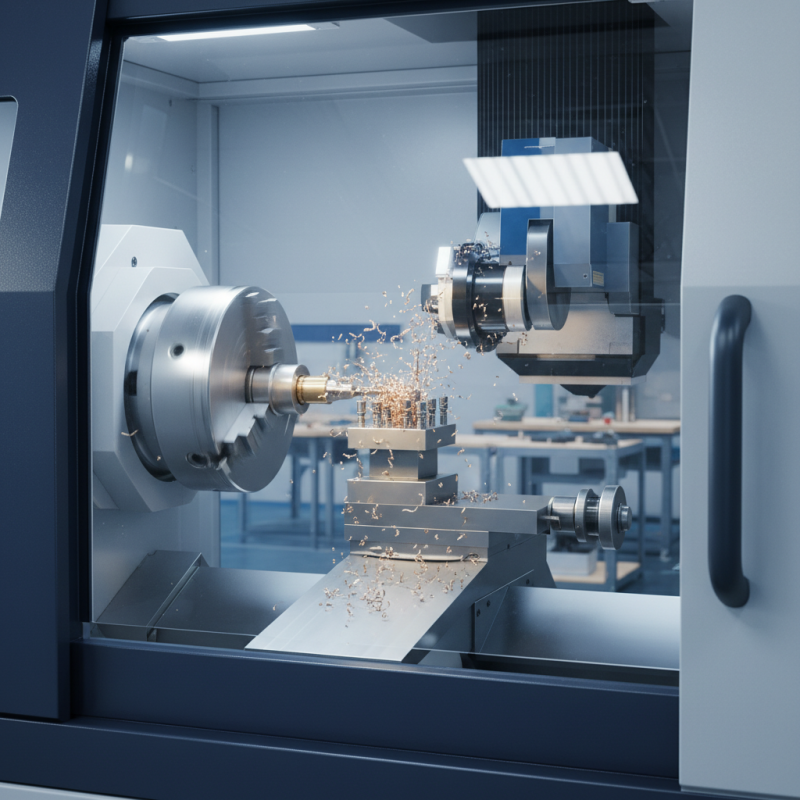
What is a Cnc Lathe Machine and How Does it Work?
The Cnc Lathe Machine stands out in modern manufacturing. It plays a key role in shaping metal, wood, and plastic. Understanding its operation is crucial for many industries.
This machine combines precision and efficiency. With a rotating workpiece, tools carve out the desired shape. The Cnc Lathe Machine allows for intricate designs that manual lathes cannot achieve. Its programming provides automation, which enhances productivity.
Yet, there are challenges. Programming errors can lead to defects. Regular maintenance is essential to ensure accuracy. Operators must be trained to avoid mistakes. Embracing this technology requires careful consideration and continuous learning.
What is a CNC Lathe Machine?
A CNC lathe machine is a powerful tool used in manufacturing. Designed for precision, it automates the process of shaping materials. This technology transforms raw materials into detailed components. CNC stands for Computer Numerical Control, which means that the machine is operated through programs, not manual labor.
According to a 2022 industry report, about 35% of manufacturers rely on CNC lathes. These machines can produce complex shapes that manual lathes struggle to create. For instance, CNC lathes are capable of turning materials such as metal and plastic into complex geometric forms with high accuracy. They often operate around the clock, significantly increasing productivity.
However, CNC lathes are not without challenges. Programming errors can lead to flawed parts. Additionally, maintenance requires skilled personnel, which can add to operational costs. Training new operators can be a hurdle, as they need to understand the intricacies of software and machinery. Balancing automation and human talent is essential for maximizing the benefits of CNC technology.
Key Components of a CNC Lathe Machine
A CNC lathe machine is a vital tool in modern manufacturing. It automates the process of shaping materials, primarily metals and plastics. The key components make the CNC lathe functional and effective.
The spindle is crucial. It holds and rotates the workpiece. This action allows precise shaping and cutting. The tool holder securely holds the cutting tools in place. It needs to be robust to handle various materials. The bed supports these components. A strong, stable bed is necessary for accuracy, but not all beds perform equally. Poor design can lead to vibrations and inaccuracies.
Another important component is the control system. It directs all operations, translating designs into movements. Issues can arise if the programming is flawed or if maintenance is neglected. Some operators may overlook regular checks, resulting in decreased efficiency. Regular updates and testing are essential yet often forgotten.
How a CNC Lathe Machine Operates
CNC lathe machines are precise tools in manufacturing. They transform raw materials into finished products. These machines work with rotating workpieces and cutting tools. By controlling the movement of the tools, they achieve intricate designs. According to market reports, the CNC lathe industry is expected to grow significantly, reaching $8 billion by 2027.
The operation of a CNC lathe involves programming codes. These codes dictate the machine's actions. Users input specifications like speed or depth. Sensors ensure accuracy during production. Yet, despite their precision, errors can occur. Misalignment or incorrect adjustments may lead to defects. A recent survey showed that 15% of operators reported issues due to programming mistakes.
Maintaining these machines is crucial for optimal performance. Regular checks can prevent breakdowns. However, some operators overlook this. It poses a risk to productivity. In an industry reliant on efficiency, such oversights are concerning. Engaging in ongoing training can mitigate these challenges. Consistent education may improve machine handling and reduce errors over time.
Applications of CNC Lathe Machines in Manufacturing
CNC lathe machines play a vital role in the manufacturing sector. They are used to create precision components from materials like metal and plastic. Reports estimate that the global CNC lathe market will grow significantly, reaching $3.1 billion by 2026. Various industries rely on these machines for efficiency and accuracy.
The automotive industry is a major user of CNC lathes. They create components such as shafts and gears. This sector demands high precision, with tolerances as tight as 0.001 inches. In 2020, about 43% of CNC lathe applications were in this field.
Aerospace also benefits from CNC lathes. They produce parts like turbine blades and engine components. These components require advanced techniques for shaping and finishing. However, the complex designs can lead to challenges in production. Companies must constantly review their processes to improve efficiency and reduce waste.
Advantages of Using CNC Lathe Technology
CNC lathe technology is transforming manufacturing processes. One major advantage is precision. CNC lathes replicate designs with incredible accuracy. This ensures that each part produced meets exact specifications, reducing errors. A well-calibrated machine can achieve tolerances to fractions of a millimeter. This reliability creates strong, consistent components for various industries.
Another advantage is efficiency. CNC lathes operate autonomously after programming, reducing manual labor. This allows for longer production runs without fatigue. Automation also shortens lead times for projects. However, it's important to recognize that setup and programming can be time-consuming. The initial learning curve may slow down operators.
Moreover, the versatility of CNC lathes is noteworthy. They can handle a wide range of materials, from metals to plastics. This flexibility enables manufacturers to diversify their product lines. Yet, not all designs are suitable for CNC machining. Some complex shapes may require additional processes. Balancing these factors is crucial for optimal results in production.