
Control Components play a vital role in various mechanical systems. These parts ensure precision and efficiency in operations. Understanding how they work can enhance our use of technology.
These components regulate processes. They monitor and adjust functions according to specific parameters. For example, they control fluid flow in pipelines or manage temperature in HVAC systems. Without Control Components, systems might fail or operate inefficiently.
Many users overlook the complexity of these devices. While they seem simple, their function is intricate. There is always room for error and improvement in design. As we explore Control Components, we gain insight into their significance. A deeper understanding allows us to innovate and refine our systems.
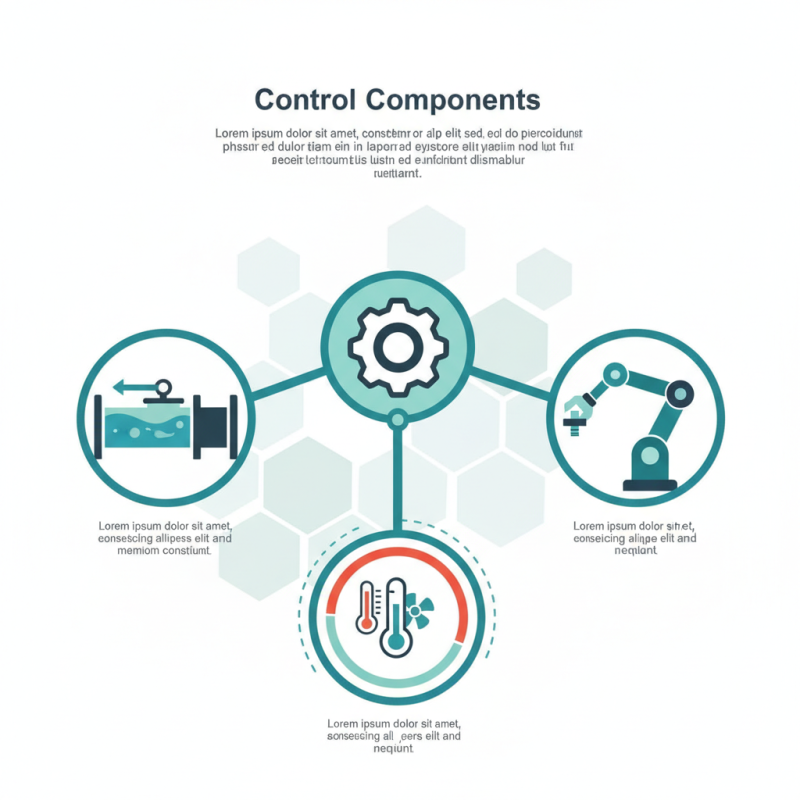
Control components are essential devices in automated systems. They help manage and regulate various processes. By receiving inputs, they make decisions that influence the output of a system. This functionality ensures that systems operate efficiently.
For example, a thermostat acts as a control component in a heating system. It senses the room temperature and decides whether to activate the heater. Its role is vital in maintaining comfort and energy efficiency. Without such components, systems could easily become inefficient or unsafe.
Control components can also be found in industrial applications. They regulate everything from assembly lines to complex machinery. However, implementation may not always be perfect. These components can malfunction or misinterpret signals. This leads to disruptions or inefficiencies. Continuous testing and improvement are necessary to enhance their performance.
Control components are crucial for various systems. They help manage operations in industries, vehicles, and home automation. Understanding the different types of control components is essential for effective design and implementation.
One common type is sensors. They detect changes in the environment. Temperature sensors, for example, monitor heat levels. Their accuracy is vital. Another type is actuators. These components carry out actions based on sensor data. Electric motors are typical actuators. They convert electrical energy into mechanical motion. However, issues can arise with calibration. Over time, sensors may drift away from accurate readings.
Moreover, controllers play a key role in feedback systems. They analyze data and adjust operations accordingly. Programmable logic controllers (PLCs) are widely used in manufacturing. They are highly versatile. Yet, they require proper programming. Mistakes in coding can lead to malfunction. Monitoring and maintaining these components is an ongoing challenge. In conclusion, exploring various control components reveals their importance in building efficient systems.
| Component Type | Function | Applications | Key Features |
|---|---|---|---|
| Sensors | Detect changes in the environment and provide feedback. | Industrial automation, HVAC systems, automotive. | High precision, rapid response time, various communication protocols. |
| Actuators | Convert control signals into physical action. | Robotics, manufacturing machinery, valve control. | Various types (electric, pneumatic, hydraulic), precise control, durable. |
| Controllers | Process user inputs and implement control logic. | Process control, robotics, temperature regulation. | Programmable, user-friendly interfaces, integration capabilities. |
| Human-Machine Interfaces (HMIs) | Allow users to interact with control systems. | Control rooms, machinery operation, data monitoring. | Intuitive design, customizable layouts, real-time data display. |
Control components play a vital role in various mechanical systems. They regulate the operation of machinery by managing flow, pressure, and temperature. These components can include valves, pumps, and actuators. Their performance impacts the overall efficiency of industrial systems. According to industry reports, effective control systems can lead to a productivity increase of up to 25%.
Mechanically, control components function through precise movements. They respond to signals from sensors or controllers. A valve opens or closes based on pressure changes. An actuator transforms signals into mechanical motion. This interaction is crucial. However, not all systems are flawless. For instance, malfunctioning sensors can lead to inefficiencies. Studies show that nearly 30% of control system failures stem from sensor errors.
It’s important to optimize these components. Regular maintenance is essential. Neglected parts can cause significant downtime. A report indicated that unexpected failures cost industries around 20% of their operational budget annually. Emphasizing operational reliability is key. Improving the functionality of control components ensures smoother operations. Mechanical flaws need continuous addressing. Understanding these nuances can enhance the efficiency of control systems.
Control components play a crucial role in various industrial applications. They enable precise monitoring and regulation of different processes. For example, in the manufacturing sector, they help manage temperatures, pressures, and flow rates. According to new industry reports, about 70% of production efficiency is linked to effective control systems. This shows their significance in maintaining optimal operations.
In the energy sector, control components ensure safety and efficiency. They monitor the flow of electricity through grids. Data suggests that up to 60% of energy losses can be mitigated through improved control mechanisms. However, many industries face challenges in implementing these systems fully. The lack of standards and integration issues can hinder performance.
Another application is in the chemical manufacturing industry. Control components regulate chemical reactions, ensuring safety and product quality. Reports indicate that improper control can lead to costly shutdowns, sometimes exceeding millions of dollars. It's crucial for industries to reassess their use of control components. Continuous improvement can drive innovation and reduce risks significantly.
Control components are evolving rapidly. They play a vital role in automation and industrial processes. Companies seek more efficient and reliable options. This leads to innovations that can enhance performance.
One trend is the integration of artificial intelligence. AI can optimize control strategies. It analyzes data and predicts outcomes. This can reduce downtime and increase overall efficiency. Another trend involves miniaturization. Smaller components save space and energy. They are easier to integrate into existing systems.
However, challenges remain. Not all companies can adapt quickly. The need for skilled technicians is growing. Training programs must expand to meet demand. Cybersecurity also poses risks. As systems become more connected, vulnerabilities increase. Keeping systems secure is essential for future progress.
We are here to help you with all your queries and concerns, just write to us using the below form and we will get back to you as soon as we can.