10 Electric Winch Buying Tips for Global Buyers

An Electric Winch can look straightforward in a catalogue: rated line pull, motor power, cable length, and price. The real decision is more demanding. A unit lifting a boat trailer faces different loads and exposure than one used for recovery or industrial material handling. Buyers should examine duty cycle, drum capacity, line speed under load, braking, control options, mounting strength, and service support—not just the headline capacity.

Grand View Research’s Winch Market Size, Share & Trends Analysis Report tracks demand across applications including marine, construction, and industrial use. That breadth matters: market growth does not tell an individual buyer whether a specific winch suits a specific task. It does show why comparing products by application and operating conditions is more useful than comparing prices alone. Check manufacturer specifications, installation instructions, and applicable standards for the intended use. Small details count. A wet mounting point, undersized battery cable, or poorly matched rope can change performance.

A useful field principle is: “Choose for the working load and duty cycle, not the largest number on the box.” This is practical guidance, not a verified quotation from a named winch expert; attributing it otherwise would be misleading. The ten tips ahead focus on verifiable specifications, realistic operating conditions, and supplier support. Some buying decisions still involve trade-offs. Be honest about them.
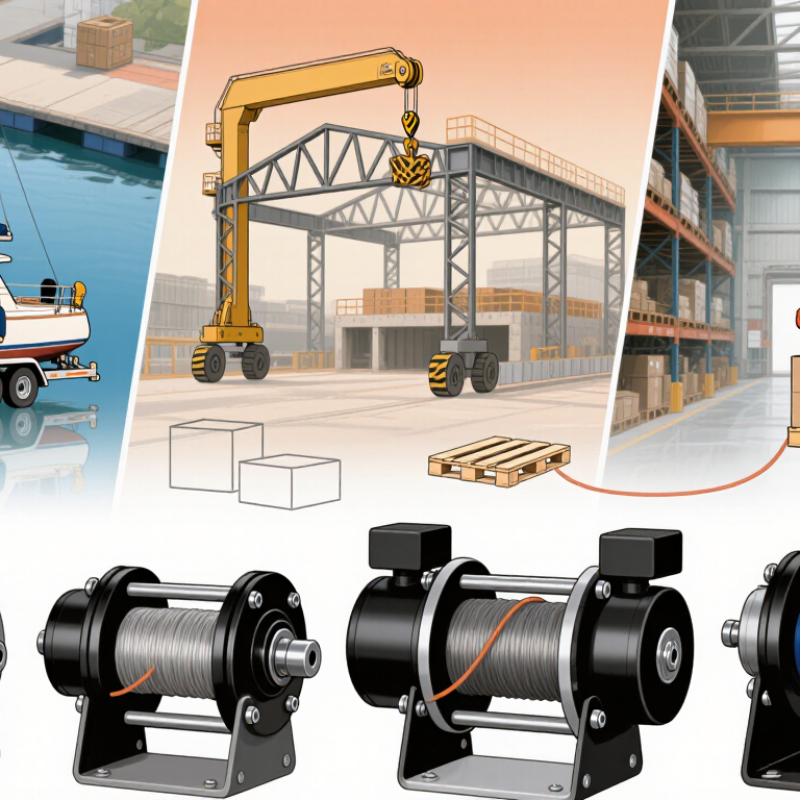
10 Electric Winch Buying Tips for Global Buyers

Define Required Line Pull Using the Winch’s First-Layer Rating

A winch’s headline line pull usually refers to the first rope layer, where the drum’s effective radius is smallest. As rope builds up, the radius grows and available pull falls, even if motor torque stays constant. Use the relation line pull = drum torque ÷ effective radius. For example, a 10 kN first-layer rating at a 100 mm radius yields about 6.7 kN at a 150 mm radius. This is a calculated example, not a product rating. ASME B30.7-2021 provides a useful reference for winch ratings and operating practices; check the equipment’s layer-by-layer data against its stated conditions. That changes fast. One detail buyers can miss is whether the quoted pull assumes a full battery, a particular voltage, or a specific rope arrangement.

Tip: Start with the actual load, then account for slope, rolling resistance, and the drag of the load’s contact surface. Compare the required pull with the first-layer rating, not the maximum figure in a headline. Ask for the rated pull on each layer and the rope capacity chart. If the chart is missing, don’t estimate from motor power alone. Recheck the calculation with the intended rope diameter and drum dimensions; those inputs are easy to misread.

Match Motor Duty to the Work Cycle: IEC 60034-1 S1 Means Continuous Duty

IEC 60034-1 classifies S1 as continuous duty: a motor runs at constant load long enough to reach thermal equilibrium. For a winch, that may mean sustained pulling, not merely a high peak-load rating. A motor that lifts a load for minutes, then rests briefly, may heat differently from one running steadily. Short bursts still add heat. Check the manufacturer’s duty rating against the actual lifting, holding, and cooling cycle.

The US Department of Energy’s 2002 United States Industrial Electric Motor Systems Market Opportunities Assessment estimated that motor-driven systems used about 69% of industrial electricity. This broad figure is not winch-specific, but it shows why motor selection affects both heat and operating costs. An S1 rating alone does not confirm that the gearbox, brake, drum, or power supply can handle continuous work. A warm enclosure, frequent starts, and high ambient temperatures also deserve attention. The label is useful, but it is not the whole story.

Tips: Record load, lift time, pause time, and starts per hour during a typical shift. Compare that cycle with the motor’s stated duty and thermal limits. Ask for clarification if the rating is missing; guessing from motor power is tempting, and sometimes wrong. Check the brake’s holding capacity separately, especially when loads remain suspended between lifts.

Compare Rope Diameter, Drum Capacity, and Rated Line Speed

Rope diameter, drum capacity, and rated line speed should be judged together, not as isolated specifications. A thicker rope may better withstand abrasion, but it takes up more drum space and can reduce usable line length. Check the winch manual’s specified rope size and capacity; matching only the rope’s strength rating is not enough. Small mismatch, big consequences.

Ask whether rated line speed is measured without a load, at a particular drum layer, or under working conditions. A winch can look fast on paper yet slow noticeably during a heavy pull. As rope builds up on the drum, its effective radius increases, so available pulling force typically decreases. The speed figure needs context.

Before ordering, compare the rope’s actual diameter, the drum’s usable width, and the required working length. Allow room for orderly winding; a tightly packed capacity estimate can mislead. If a specification omits rope size or layer assumptions, ask how capacity was calculated. Field conditions are rarely perfect. Verify the figures against the expected load and duty cycle where possible.

10 Electric Winch Buying Tips for Global Buyers: Rope Diameter, Drum Capacity & Rated Line Speed

Compare representative winch configurations. Bubble size indicates the approximate length of rope that fits on the drum.

These illustrative specifications show a plausible range, not a universal rule: drum capacity depends on drum dimensions and rope construction, while line speed varies with load, motor, and gearing. Confirm capacity and rated speed at the specified load with the supplier before buying.

Specify Enclosure Protection: IEC 60529 IP55 Is Dust-Protected and Jet-Resistant

When selecting an electric winch for outdoor or dusty work, specify the enclosure rating clearly. Under IEC 60529, IP55 means the enclosure is dust-protected and protected against water jets. Dust may still enter in limited amounts, so IP55 does not mean dust-tight. That distinction is easy to miss.

Check which parts carry the rating. A motor enclosure may be IP55 while a pendant, junction box, cable entry, or brake housing has a different level of protection. Ask for documentation covering the exact winch configuration, including any supplied controls. Check the details. Glands and covers must also be fitted correctly; a poorly sealed cable entry can undermine protection in real use.

Think about the site, not just the label. A winch near washdown spray may suit IP55, but direct high-pressure cleaning or immersion requires a separate assessment. Look for exposed seams, damaged seals, and water paths around mounting points during inspection. I would not assume that a new enclosure stays protected after rough installation or repeated maintenance. Dust, vibration, and hurried reassembly can change the outcome. If the working conditions are severe, ask the supplier to confirm suitability in writing and identify any limits on cleaning or exposure.

10 Electric Winch Buying Tips for Global Buyers - Specify Enclosure Protection: IEC 60529 IP55 Is Dust-Protected and Jet-Resistant
No. Buying Tip What to Specify What to Verify
1 Define the required line pull State the maximum load to be pulled and whether the winch will pull horizontally, on a slope, or under another defined arrangement. Compare the required pull with the manufacturer’s rated line pull and its stated operating conditions. Do not treat a winch’s maximum pull as its allowable suspended-load capacity.
2 Check capacity at the working rope layer Give the required pull and the amount of rope that must be wound onto the drum during the lift or pull. Ask for the line-pull rating by drum layer. Pulling capacity commonly decreases as rope builds up on the drum, so a first-layer rating may not represent capacity at the required rope length.
3 Specify enclosure protection For dusty locations exposed to water jets, request an enclosure rating of IP55 in accordance with IEC 60529. The first digit, 5, means dust-protected: dust ingress is not fully prevented but must not occur in a quantity that interferes with satisfactory operation or safety. The second digit, 5, means protection against water jets from any direction under the standard test. IP55 does not mean dust-tight or suitable for immersion.
4 Match the power supply Specify the available supply voltage, phase, and frequency, such as the applicable single-phase or three-phase supply and 50 Hz or 60 Hz. Confirm that the motor and control circuit are designed for the site supply. Voltage and frequency requirements vary by country and installation; verify the equipment nameplate and wiring documentation.
5 Describe duty and operating cycle Provide expected starts per hour, operating time, load profile, and cooling or rest periods. Check the motor and winch duty ratings against the planned cycle. Frequent starts, long running periods, and heavy loads can increase thermal stress compared with intermittent operation.
6 Select rope type and usable length Specify wire rope or synthetic rope, required working length, rope diameter where applicable, and the termination arrangement. Confirm compatibility with the drum, sheaves, and manufacturer’s permitted rope specification. Check that the required length fits while preserving the required dead wraps on the drum.
7 Review braking and load control State whether the application requires controlled lowering, load holding, or emergency stopping, and describe the operating arrangement. Verify the braking method and its suitability for the application with the supplier. A winch intended for pulling should not be assumed suitable for lifting people or for any lifting duty without the required design and approvals.
8 Plan mounting and rope approach Provide the mounting orientation, available space, anchor arrangement, and expected rope lead direction. Check the installation drawing and foundation loads. Confirm that the rope approaches the drum correctly and that the installation follows the manufacturer’s requirements for alignment and fastening.
9 Choose controls and safety features Specify control location, pendant or fixed controls, emergency-stop needs, limit devices, and any required interlocks. Confirm the control arrangement is suitable for the work area and that protective devices are included where required by the applicable regulations and risk assessment.
10 Confirm compliance and documentation Identify the destination country, applicable regulations, required conformity documents, and preferred documentation language. Request the rating plate details, operating and maintenance instructions, wiring diagrams, inspection guidance, and any conformity documentation applicable to the product and destination market.

Verify Supply Voltage, 50/60 Hz Frequency, and Applicable Winch Standards

Before placing an order, match the winch nameplate to the site supply. Check voltage, phase, and frequency, then compare them with the motor and control-panel diagrams. A 230 V, 50 Hz supply is not automatically suitable for a 230 V, 60 Hz winch. Controls, brakes, and transformers may have separate ratings. Small details matter.

Frequency affects motor speed and can change operating behavior. Ask the supplier to confirm the approved voltage and frequency range in writing. Check rated line pull, duty cycle, and brake performance at the stated supply conditions. Do not assume a dual-frequency motor makes the complete winch compatible. A data plate can still leave questions.

Standards depend on the winch type, installation, and destination market. Ask which editions and national adoptions apply, and whether EN 14492-1 or IEC 60204-1 is relevant to the specific equipment. Request the declaration of conformity, test records, and clear identification of the standard’s scope. Compare these documents with the winch model and rated capacity. If voltage details or compliance documents conflict, pause the purchase and seek written clarification. I would not treat a generic certificate as proof that every configuration is covered.

Our dedicated sales and support staff are here to help you identify the ideal pump solution for your needs.

Contact Us