10 Essential Tips for Choosing the Right Water Pump for Water Supply?

Choosing the right water pump for water supply is crucial for efficiency and reliability. Experts in the industry, like John Harris, emphasize its importance. He once stated, "Selecting the right water pump can save you time and resources." This advice rings true for homeowners and businesses alike.

When considering a water pump for water, various factors come into play. Assessing your water needs, the distance of pump installation, and the type of fluid being pumped are vital. Incorrect choices lead to inefficiencies. For example, a pump that's too small can strain under workload, leading to burnout.

It’s easy to overlook specifications like flow rate and pressure. Every detail matters. Take the time to analyze your requirements. The wrong selection could mean wasted power and increased bills. In this ever-evolving industry, making informed choices is essential.

10 Essential Tips for Choosing the Right Water Pump for Water Supply?

Understanding the Different Types of Water Pumps Available for Use

When selecting a water pump, understanding the different types available is crucial. There are centrifugal pumps, submersible pumps, and diaphragm pumps, each serving unique needs. For instance, centrifugal pumps are efficient for moving large volumes of water. They are best for surface applications, but might lose pressure with longer distances.

Consider your water source. If it’s deep, a submersible pump may be necessary. These pumps function underwater and are ideal for wells. However, installation can be complex, and maintenance can be tricky. Be ready to check for blockages or wear.

Tip: Always match the pump to your specific requirements. Flow rate and head height matter greatly. Exaggerating your needs can lead to a mismatch. Another tip: don’t ignore energy efficiency. A pump that consumes too much electricity can be a long-term financial drain. Assess your options carefully before making a choice.
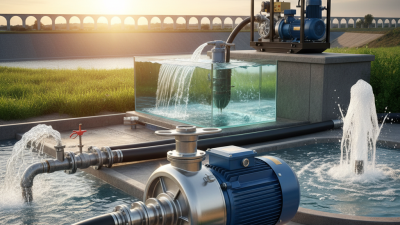
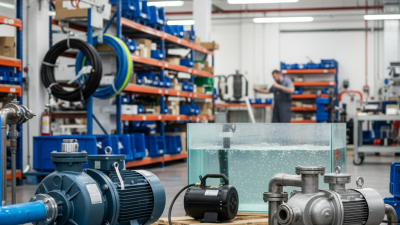
Water Pump Types and Their Common Applications

Evaluating the Flow Rate and Pressure Needs for Your Water Supply

Choosing the right water pump requires careful consideration of flow rate and pressure. These factors impact the efficiency of your water supply system. Research shows that flow rate impacts household needs significantly. A family of four typically requires a minimum flow rate of 6-10 gallons per minute (GPM). This ensures adequate supply for daily activities like showering and laundry.

Pressure is another vital element. Standard residential systems operate at 40-60 psi (pounds per square inch). Insufficient pressure can lead to poor water delivery. Reports highlight that inadequate pressure may lead to dissatisfaction among users, especially in larger homes. Assessing the elevation from the pump to the highest tap can also reveal potential challenges. A general rule is about 0.43 psi lost for every foot of elevation.

Yet, many overlook these factors. Some users may underestimate the need for continuous water availability. High demand situations, such as gardening or filling a pool, can drain a system quickly. It’s important to re-evaluate your requirements regularly. Seasonal changes might also affect water demand, and adjustments may be necessary. Balancing flow and pressure can be tricky but vital for a seamless water supply experience.

Considering the Source of Water and Pump Compatibility

When selecting a water pump, understanding the water source and pump compatibility is essential. Different water sources, such as rivers, wells, or reservoirs, require specific pumps. For example, submersible pumps are ideal for deep wells, while centrifugal pumps work better for shallow water sources. According to industry reports, nearly 40% of pump failures result from incompatible pump selection. This highlights the need for careful consideration.

The water's characteristics also play a critical role. Is it clean, or does it contain debris? A solids-handling pump may be necessary for murky water. Additionally, the water's temperature can affect pump performance. If you overlook these factors, efficiency drops significantly. Some studies indicate that mismatched pumps can lead to a 30% increase in operational costs. Regular evaluations are vital in ensuring that the selected pump meets the demands of the source.

Beyond functionality, installation and maintenance are crucial. A poorly installed pump may struggle in various conditions, leading to breakdowns. The type of piping material can also impact pump efficiency. For instance, using PVC pipes can minimize friction loss compared to others. Evaluating these details helps create a reliable water supply system. Reflecting on pump choices often uncovers hidden challenges scenarios.

10 Essential Tips for Choosing the Right Water Pump for Water Supply

Tip Number Tip Description Considerations
1 Identify the source of water. Surface water, groundwater or rainwater.
2 Determine the flow rate required. Gallons per minute (GPM) based on usage.
3 Consider the vertical lift. Height from water source to delivery point.
4 Evaluate the pump's efficiency. Energy consumption vs. output.
5 Check for material compatibility. Corrosion resistance based on water type.
6 Consider ease of maintenance. Access to parts and service.
7 Look for noise level ratings. dB ratings for residential areas.
8 Assess environmental impact. Sustainability and efficiency ratings.
9 Evaluate installation requirements. Space and infrastructure needed.
10 Read user reviews and testimonials. Real-world performance insights.

Assessing Energy Efficiency and Operating Costs of Water Pumps

10 Essential Tips for Choosing the Right Water Pump for Water Supply?

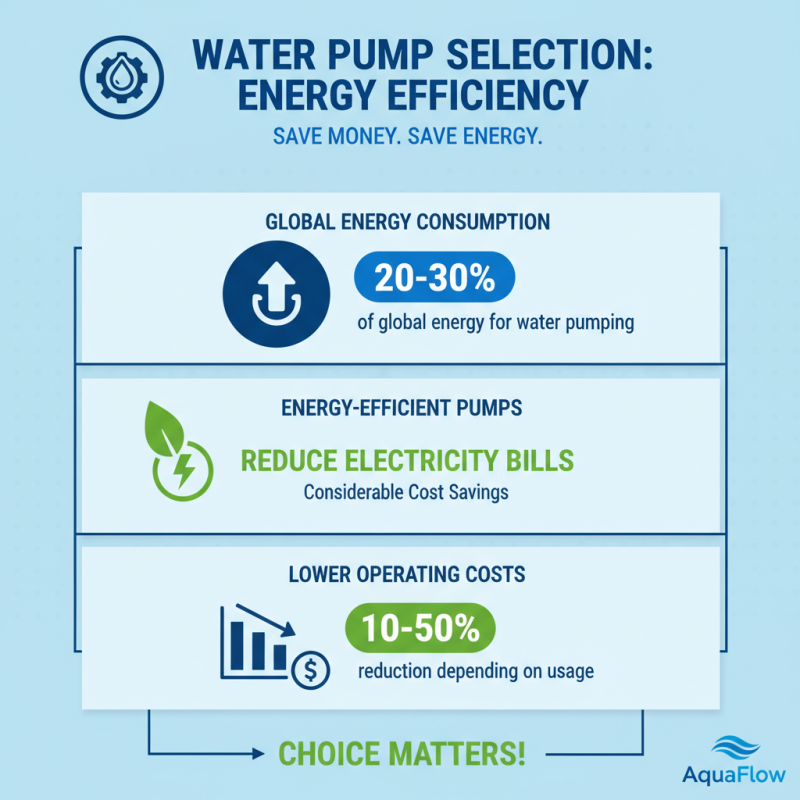
When selecting a water pump for water supply, energy efficiency and operating costs play critical roles. Studies show that nearly 20-30% of global energy consumption is attributed to water pumping systems. This staggering figure highlights the need for careful assessment. Energy-efficient pumps can lead to considerable cost savings, reducing electricity bills. Choosing the right pump can help lower operational costs by 10-50%, depending on usage patterns.

Tip: Look for pumps with a high efficiency rating. A pump's efficiency directly affects energy usage. Pumps that meet or exceed the Minimum Energy Performance Standards (MEPS) can significantly lower long-term costs.

Another factor is the total cost of ownership. This includes upfront costs, maintenance, and energy consumption. Many users overlook ongoing expenses. A less efficient pump might be cheaper initially but can lead to higher energy bills over time.

Tip: Evaluate the pump's operating costs over its lifespan. A comprehensive analysis can help avoid financial pitfalls. Regular maintenance also impacts efficiency, so consider that when selecting your pump.

In conclusion, while there are many quality options, a thorough understanding of energy efficiency and costs is essential for making an informed decision.

Identifying Essential Maintenance Requirements for Longevity and Performance

Maintaining a water pump is crucial for its performance and longevity. Regular inspections can help detect issues early. Look for leaks, unusual noises, or vibrations. These signs may indicate wear or malfunction. Cleaning the pump's exterior is also essential. A dirty exterior can lead to overheating.

Changing the oil regularly is another key aspect. Neglecting this task can result in premature failure. Users often overlook this detail. It's vital for smooth operation. Additionally, ensuring the pump is properly lubricated can prevent friction. Check the manufacturer's guidelines for lubrication intervals.

Every pump has a specific lifespan. Factors like usage frequency and environmental conditions affect this. For example, pumps in dusty areas may require more frequent maintenance. Addressing these details is important for long-term efficiency. Planning for possible repairs can save time and money. Ignoring small problems often leads to larger issues down the line.

Our dedicated sales and support staff are here to help you identify the ideal pump solution for your needs.

Contact Us