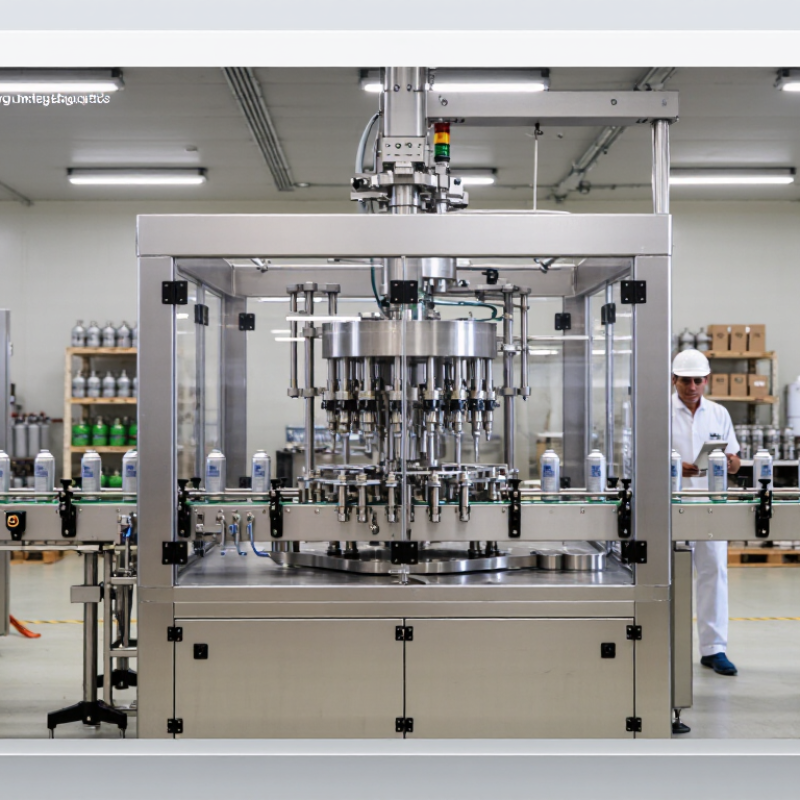
2026 How to Choose an Automatic BOV Aerosol Filling Machine?

Choosing an Automatic BOV Aerosol Filling Machine in 2026 requires more than comparing hourly output. Bag-on-valve packaging demands controlled product dosing, accurate valve placement, and dependable pressure management. Small differences in crimping force, filling temperature, or container handling can affect seal integrity and customer confidence. This guide introduces a practical framework for evaluating equipment before purchase. It examines capacity, automation, cleaning access, changeover time, safety controls, and documentation. No machine is perfect.

Practical selection begins with the product, container, and target production range. Buyers should verify compatibility with approved formulations, propellants, valves, cans, and facility utilities. Look for servo-driven dosing, repeatable crimping, inspection points, and clear operator interfaces. Material compatibility matters when products contain oils, alcohols, or sensitive ingredients. Ask for factory acceptance tests using representative containers, not only sample demonstrations. Do not accept vague promises.

Reliable suppliers provide manuals, training, validation support, and responsive spare-parts service. Request measurable data for fill accuracy, reject rates, line speed, and recovery after stoppages. Traceable records support quality reviews and responsible maintenance decisions. Service access can matter more than a slightly lower purchase price. Cost calculations should include labor, utilities, changeover losses, consumables, and downtime. A careful decision balances throughput, compliance, worker safety, and long-term reliability. Still, uncertainty remains. That is worth admitting.

2026 How to Choose an Automatic BOV Aerosol Filling Machine?

What Is an Automatic BOV Aerosol Filling Machine?

An automatic BOV aerosol filling machine is equipment designed for bag-on-valve packaging. It fills a product into a flexible inner pouch inside an aerosol can. A separate compressed gas surrounds the pouch and provides pressure during dispensing. The product does not normally contact the propellant.

The machine coordinates several operations. It feeds empty cans, fills the pouch, places the valve, and crimps it onto the can. It can then charge the approved propellant, check pressure, test for leaks, and apply batch information. Sensors monitor fill weight, valve position, and can movement. These controls help reduce spills and maintain consistent output.

A reliable machine should match the product’s viscosity, fill volume, container size, and required production speed. Stainless steel contact parts support cleaning and corrosion resistance. Operators still need practical training. Small changes in temperature can affect filling accuracy. In practice, the perfect setting rarely exists. That weakness matters. Regular calibration, documented inspections, and sample checks are essential for safe, compliant production. The system should also include guarding, emergency stops, pressure protection, and procedures aligned with local regulations. An experienced technician will review the entire process, not only the filling head. Even a fast line can create waste when pouch alignment or crimp pressure is overlooked.

Which Product and Packaging Factors Should You Evaluate?

When choosing an automatic BOV aerosol filling machine, product behavior matters more than headline speed. The product’s viscosity, solids content, pH, and temperature can change filling accuracy. A thin lotion may fill smoothly, while a thick cream can leave residue inside the valve. Test the actual formula, not a substitute. Bag material must also resist the product and remain stable during storage. A small compatibility mistake can create leakage months later.

Packaging dimensions require equal attention. Check can diameter, height, neck finish, valve size, bag capacity, and crimp specifications. The machine should control product dosing, propellant charging, vacuum creation, and valve crimping independently. FEA’s 2023 European aerosol statistics recorded more than five billion units produced, showing the scale of this packaging sector. Smithers’ “The Future of Aerosol Packaging to 2028” also highlights lightweighting and material efficiency as continuing industry priorities. Therefore, choose equipment that handles reduced wall thickness without damaging cans.

In practical trials, inspect fill-weight variation, crimp depth, leakage, and line-cleaning time. Use calibrated scales and pressure checks. Ask for documented factory acceptance tests. Servo-driven dosing can improve repeatability, but it may increase maintenance complexity. That trade-off deserves honest review. A perfect specification is rarely realistic. Leave room for future products, yet avoid paying for unused capacity. Reliable after-sales training and spare-part availability can matter more than maximum speed.

2026 How to Choose an Automatic BOV Aerosol Filling Machine? - Which Product and Packaging Factors Should You Evaluate?

Evaluation Dimension Typical Reference Data Why It Matters for BOV Aerosol Filling Recommended Evaluation Method Selection Guidance
Product Formulation Water-based liquids, gels, creams, foams, lotions, and low-viscosity emulsions are commonly used in BOV systems. Viscosity, solids content, foaming behavior, and shear sensitivity determine pump type, filling speed, and cleaning requirements. Measure viscosity at the intended filling temperature and test the actual formulation with production valves and bags. Choose a machine with product-contact parts and pumps specifically suited to the formulation rather than relying only on nominal speed.
Product Viscosity A practical test range may extend from approximately 1 mPa·s for water-like products to more than 10,000 mPa·s for thick creams or gels. Higher viscosity can reduce filling speed, increase residual product, and require positive-displacement or servo-controlled pumping. Provide viscosity curves, temperature data, and samples for a full-speed filling trial. Specify the acceptable viscosity range and require documented accuracy results at the highest expected viscosity.
Product Fill Volume Common finished aerosol formats are approximately 50–750 mL, depending on can and bag capacity. The fill-volume range affects metering cylinders, pump capacity, indexing time, and recipe control. Compare minimum, nominal, and maximum fill volumes using the same product and container type. Select a machine whose operating range covers all planned sizes without requiring frequent hardware replacement.
Can Diameter and Height Typical aerosol can diameters are approximately 35–66 mm, with height varying by capacity and format. Container dimensions determine conveyor guides, star wheels, filling-head height, crimp tooling, and change parts. Confirm dimensional drawings, tolerances, neck geometry, and base stability for every planned can size. Prefer tool-less or quick-change format parts when multiple can sizes will be produced.
BOV Bag and Valve Compatibility Bag materials, bag volume, valve dimensions, dip-tube design, and gasket materials vary by product and application. Incorrect compatibility may cause leakage, poor product evacuation, valve blockage, or inconsistent spray performance. Check valve drawings, bag specifications, sealing materials, and product compatibility data before machine approval. Require controlled trials with the exact bag-valve assembly intended for commercial production.
Product Fill Accuracy A practical target for many liquid products is approximately ±0.5% to ±1.0% of the set fill weight, subject to product and equipment design. Accurate filling controls product giveaway, label compliance, and batch consistency. Run statistical fill-weight tests over time, including start-up, steady-state, and changeover samples. Base acceptance on measured capability data, not only the supplier’s stated nominal accuracy.
Production Speed Automatic BOV lines may be configured from several hundred containers per hour to several thousand containers per hour, depending on process steps. Real output is limited by filling, valve placement, crimping, propellant charging, inspection, and product viscosity. Measure sustained good output over at least a representative production run, excluding rejected containers. Compare guaranteed good-container output with the required annual volume and planned operating shifts.
Propellant Type and Charging BOV products commonly use compressed air or nitrogen; the required pressure and charge level depend on the formula and package design. Propellant pressure affects spray quality, package performance, equipment classification, and workplace safety. Verify required pressure, flow rate, gas quality, charge accuracy, and pressure-decay test requirements. Choose a controlled charging system with pressure monitoring, interlocks, and automatic rejection for out-of-range containers.
Crimping and Valve Sealing Crimp dimensions must match the valve and can neck specification; excessive or insufficient crimping can cause leakage or poor actuation. Reliable crimping is essential for pressure retention and long-term package safety. Inspect crimp diameter, height, valve position, and leakage performance using validated test methods. Specify adjustable crimp tooling and in-line verification where package risk or production volume is high.
Container and Valve Detection Sensors can detect can presence, valve presence, correct orientation, fill level, and product or gas pressure. Detection prevents filling empty positions and reduces the risk of unsealed or incorrectly assembled packages entering finished goods. Test sensor performance with transparent, reflective, dark, lightweight, and dimensionally variable components. Use fail-safe interlocks and automatic reject mechanisms for missing or incorrectly positioned components.
Product-Contact Materials Common choices include stainless steel suitable for hygienic processing, with elastomers selected for chemical and temperature compatibility. Material compatibility affects corrosion resistance, contamination control, cleaning life, and product stability. Review material certificates, surface finish, gasket specifications, and chemical compatibility data. Specify product-contact materials according to the formulation, cleaning agents, and applicable regulatory requirements.
Cleaning and Changeover Changeover time varies with product design, format parts, pump configuration, cleaning method, and operator access. Short, repeatable changeovers improve equipment utilization and reduce cross-contamination risk. Record disassembly steps, cleaning time, line clearance time, and first-good-piece time during a practical trial. Prioritize drainable pipework, accessible product paths, quick-release fittings, and recipe-controlled settings.
Compressed Air and Gas Utilities The machine may require clean, dry compressed air plus a controlled gas supply for BOV charging; exact pressure and flow depend on configuration. Insufficient flow or moisture can reduce filling stability, actuator performance, and package quality. Compare utility consumption at the intended production rate and confirm filtration, dew point, and pressure requirements. Include peak demand, not only average consumption, when sizing compressors and gas systems.
Safety and Risk Controls Important controls include guarded moving parts, pressure relief, emergency stops, door interlocks, gas monitoring where required, and safe exhaust. The process combines pressurized containers, moving machinery, and potentially flammable or oxygen-displacing gases. Complete a documented risk assessment and verify safety functions under abnormal operating conditions. Select equipment designed for the site classification and applicable machinery, pressure, electrical, and occupational-safety rules.
Control System and Traceability Useful functions include recipe management, password levels, alarm history, batch records, parameter limits, and production counters. Electronic records improve repeatability, troubleshooting, audit readiness, and operator control. Review sample screens, data export formats, user permissions, backup procedures, and network requirements. Require recipe locking and electronic recording of fill weight, pressure, rejects, alarms, and key process settings when traceability is important.
Quality Inspection Potential checks include fill weight, can presence, valve position, crimp dimensions, pressure, leakage, coding, and package appearance. In-line inspection reduces the likelihood that defective or unsafe aerosol packages reach packing. Define critical quality attributes and test the machine’s detection and reject accuracy using known defects. Integrate inspection points according to product risk rather than adding sensors without a defined quality purpose.
Footprint and Line Integration Required space depends on the filling modules, conveyors, accumulation tables, inspection equipment, guarding, and operator access. A compact machine may still require additional room for safe access, utilities, maintenance, and material flow. Prepare a layout showing equipment footprint, service clearances, container flow, waste handling, and utility connections. Evaluate the complete line footprint rather than the main machine dimensions alone.
Maintenance and Spare Parts Wear items may include seals, gaskets, pump components, crimp tooling, sensors, filling nozzles, and pneumatic components. Availability of critical parts directly affects uptime and response to failures. Request a recommended spare-parts list, preventive-maintenance schedule, service intervals, and troubleshooting documentation. Choose standardized, accessible components and confirm local technical support and parts lead times.
Acceptance Testing A complete trial should cover speed, fill accuracy, pressure control, leakage, reject performance, changeover, and continuous operation. Factory demonstrations using substitute materials may not reveal real formulation or packaging limitations. Use the actual product, can, bag, valve, propellant, and approved operating procedures whenever possible. Put measurable acceptance criteria into the purchase specification before equipment fabrication begins.
Note: The numerical ranges above are general engineering reference values for preliminary comparison. Final requirements should be confirmed through product, packaging, utility, safety, and production trials using the exact formulation and BOV components.

How Do You Select the Right Filling and Sealing System?

Selecting the right filling and sealing system starts with the product, not the machine. Confirm the formulation’s viscosity, temperature range, and container size. These details affect pump choice, dosing accuracy, and line speed. A BOV system also needs controlled bag handling during filling. Small errors can create wrinkles, trapped air, or weak seals.

In production reviews, I check the filling tolerance under real operating conditions. Laboratory results can look excellent. Shift changes, product temperature, and operator adjustments may tell a different story. Ask for a practical trial using your container, valve, bag, and propellant specification. Measure fill weight, sealing strength, leakage rate, and changeover time. Keep the records.

The sealing unit deserves close attention. It should control pressure, heat, and dwell time consistently. Contact parts should resist corrosion and allow thorough cleaning. Tool-free access can reduce maintenance delays, although it may increase the equipment cost. That trade-off needs honest evaluation. I have seen teams focus on output speed and overlook inspection access. The result was longer cleaning work and more unplanned stops.

Review the control system as well. Operators need clear alarms, recipe protection, and traceable production data. Safety interlocks must be easy to test, not hidden in complicated menus. Ask how the supplier supports spare parts, training, validation documents, and troubleshooting. A short demonstration is not enough. Watch the machine after several hours of continuous operation. That is when unstable sealing, foaming, or inconsistent dosing may appear.

What Safety, Quality, and Compliance Features Are Essential?

2026 How to Choose an Automatic BOV Aerosol Filling Machine?

Safety should guide every machine decision. Choose equipment with grounded components, protected electrical systems, and controlled filling zones. If flammable propellants are used, the machine must match applicable hazardous-area requirements. Pressure sensors should detect abnormal conditions quickly. Interlocked doors can stop filling during unsafe access. Emergency stops must be easy to reach and simple to test.

Quality depends on repeatable control. Look for accurate dosing, stable valve placement, and automatic leak testing. Product-contact parts should resist corrosion and support hygienic cleaning. A clear touchscreen can display pressure, fill weight, alarms, and batch settings. Useful systems also record process data for traceability. Ask for factory acceptance testing, calibration records, and validation support. Do not rely on attractive speed claims alone. Real performance may change with container size, formulation, temperature, and operator training.

Tips: Request sample testing with your actual containers and valves. Check how quickly the machine changes between formats. Inspect seals, hoses, and filling heads before approval. Ask whether software access is controlled and whether records can be exported. A perfect checklist does not exist. In practice, operators still miss small details, especially during cleaning and changeovers. Include these activities in trials. Confirm that procedures follow applicable local safety, quality, environmental, and manufacturing requirements. Independent inspection may reveal weaknesses your internal team overlooks. Reliability is built through evidence, not promises.

How Should You Compare Suppliers, Costs, and Long-Term Support?

Choosing an automatic BOV aerosol filling machine in 2026 requires more than comparing quotations. Supplier capability matters first. Review documented factory acceptance tests, filling accuracy, valve placement, pressure controls, and changeover records. Ask for sample runs using your actual containers and propellant system. A polished demo can hide weak engineering.

PMMI’s 2024 State of the Industry report identifies labor availability and productivity as major automation pressures. This makes service response a measurable cost factor. Request training hours, spare-parts lead times, remote diagnosis procedures, and technician coverage in your region. Also check whether the supplier supports preventive maintenance after installation. A low purchase price means little if one failed sensor stops production for three days. Get downtime assumptions in writing.

Smithers’ The Future of Aerosol Packaging to 2028 reports continued demand for efficient, reliable aerosol packaging systems. Compare suppliers using total cost of ownership, not machine price alone. Include utilities, rejected cans, compressed-air use, planned maintenance, software updates, and operator training. A practical benchmark is a witnessed run with defined targets for output, fill-weight tolerance, and recovery time after a fault. Request traceable calibration records and risk assessments aligned with applicable safety standards. Do not accept vague “high-speed” claims. Measure cans per minute under real conditions.

One detail is easy to miss. Ask who owns the machine software and production data. Some contracts leave operators dependent on one technician. That dependency deserves scrutiny. A realistic decision may favor a slower machine with stronger documentation and local support. It may not look impressive in a showroom.

2026 How to Choose an Automatic BOV Aerosol Filling Machine?

Five-year total cost of ownership comparison by procurement profile

The model compares typical procurement cost categories for an automatic BOV aerosol filling line. Equipment price alone is not enough: installation, validation, operator training, preventive maintenance, spare parts, and technical support can materially affect the five-year budget. Use these planning values as a supplier-comparison framework and replace them with verified quotations, service-level terms, and machine performance data.

Our dedicated sales and support staff are here to help you identify the ideal pump solution for your needs.

Contact Us