
Choosing the right Wrench can significantly impact your DIY projects. A wrench is an essential tool in any toolbox. Yet, not all wrenches are alike. Understanding your specific needs is crucial.
When selecting a wrench, consider the tasks you'll tackle. Various types exist, including adjustable, socket, and torque wrenches. Each type serves different purposes. A common mistake is overlooking the size and compatibility with your fasteners. This can lead to frustration and ineffective work.
Quality matters too. Some wrenches are made from durable materials, while others might wear down quickly. Investing in a reliable wrench can save time and effort in the long run. Remember, the right wrench will enhance your efficiency but choosing incorrectly may lead to challenging situations. Reflecting on your past experiences will guide you in making the best choice.
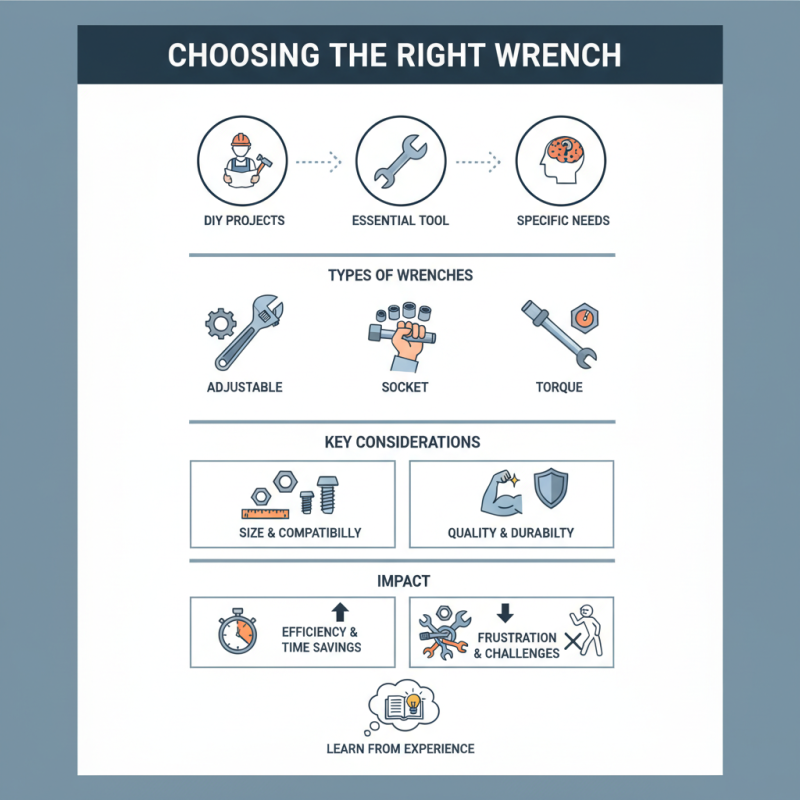
Choosing the right wrench can seem overwhelming due to the variety available. Wrenches are designed for specific tasks, making it essential to select the one that fits your need. Adjustable wrenches are versatile and popular among DIY enthusiasts. They can fit various sizes of nuts and bolts, allowing for flexibility during projects.
Box-end wrenches offer a different advantage. These wrenches grip multiple sides of a fastener, providing better torque. They are ideal for tight spaces where a standard wrench won’t fit. Socket wrenches, on the other hand, provide easy handling and quick changes. Each type has its benefits, but improper use can lead to stripped fasteners.
It's crucial to assess your tasks before making a decision. A wrong choice can slow down your work. Always consider the specific application. An incorrect size can ruin your project. Taking time to reflect on your needs might just save you effort later. Consider if a torque wrench is necessary for precision tasks. This careful evaluation can help you avoid mistakes in the long run.
When choosing a wrench, several factors come into play. The size of the nuts and bolts you'll be working with is crucial. Different wrenches serve different purposes, so understanding what you need is key. Consider the torque requirements for your tasks. A wrench too small won't provide enough force, while one that's too large may not fit in tight spaces.
Tip: Always measure the fasteners you work with before purchasing a wrench. This ensures proper fit and prevents unnecessary frustration.
Material is another important factor. Wrenches can be made of various metals or alloys. Choose materials that offer durability and rust resistance. A wrench should withstand repetitive use. Check the finish of the wrench as well. A good finish can provide better grip and reduce slipping.
Tip: Look for wrenches with a textured surface. This can improve your grip, especially in wet conditions.
Don't overlook the type of wrench you need. Adjustable wrenches offer versatility, while socket wrenches can provide ease of use in hard-to-reach places. Reflect on your specific projects and choose appropriately. The right wrench can make all the difference.
Choosing the right size for your wrench is crucial for effective maintenance and repair tasks. Common sizes for wrenches range from 8mm to 32mm, reflecting a wide variety of applications. Data from industry reports indicate that incorrect sizing can lead to damaged fasteners or ineffective torque application. A wrench that is too large may slip and strip the bolt. Conversely, a wrench that is too small can lead to rounded edges, making future repairs more difficult.
Measuring accurately is essential. Use a caliper or a measuring tape to determine the size of the fastener to be adjusted. The standard measurement for wrenches is usually expressed in inches or millimeters. Industry studies show that having a full set of wrenches, including both metric and imperial sizes, enhances efficiency. Moreover, an underutilized aspect is the inspection of the wrench itself. Ensure that the jaws of your wrench do not have any wear that could affect grip and precision. Regular inspections can save time and avoid costly errors.
It’s worth noting that different tasks might require different wrench types, such as adjustable or fixed wrenches. Often, users underestimate the importance of selecting the right type. Adjusting your approach based on the specific needs of the job is critical. A small miscalculation can lead to frustration. Make sure to think carefully about both size and type before starting your work, as this can significantly impact your overall success in any project.
When selecting the right wrench, material choices can greatly impact durability and performance. Steel is a common option. It offers high strength and resistance to wear. Chrome vanadium or chromium-molybdenum alloys add even more toughness. These materials resist corrosion, extending the lifespan of your tools. However, not all steel wrenches are created equal. Some may rust quickly if not cared for properly.
Another important option is aluminum. It's lightweight and resistant to rust. This makes it ideal for carrying in a toolbox. However, aluminum may not be as strong as steel. For heavy-duty tasks, this can be a limitation. Some users find aluminum wrenches bend under pressure. In this case, reflect on your needs. If frequent heavy use is expected, steel might be the better choice.
Lastly, consider coatings. Many wrenches feature a protective layer. This aids in corrosion resistance and can enhance grip. Look for options like black oxide or chrome plating. These coatings can make a significant difference in both performance and longevity. Yet, they may wear off over time. It's essential to maintain your tools and keep an eye on wear and tear. Each material has its pros and cons; understanding these can lead to better tool choices.
When selecting the right wrench, it's essential to consider specific features that enhance functionality. Look for adjustable wrenches with a wide jaw capacity. These are versatile and can handle various sizes of nuts and bolts. A wrench with a comfortable grip will reduce hand fatigue. Also, check for materials that offer durability and resistance to wear.
Innovations such as ratcheting mechanisms can improve efficiency. These wrenches allow for quick adjustments without needing to re-position them continually. A wrench with clear size markings can save time, particularly during urgent tasks. Ensure that your choice fits your usual fastening needs.
Tips for choosing a wrench: Always assess the specific tasks you’ll perform. A simple task may not require a complex tool. Pay attention to the weight of your wrench; too heavy can be cumbersome. Finally, consider the warranty or return policy when making a purchase. A good tool should support your work without disappointment.
We are here to help you with all your queries and concerns, just write to us using the below form and we will get back to you as soon as we can.