What is a Liquefaction Plant and How Does it Work?
A Liquefaction Plant is a fascinating facility that converts gas into liquid form. This process is vital for various industries, including natural gas and renewable energy. By cooling gas to very low temperatures, the plant transforms it into a manageable liquid. This change enables easier transportation and storage.
In a Liquefaction Plant, complex machinery and precise technology work together. Compressors, heat exchangers, and storage tanks play key roles. These components ensure that the conversion process is efficient and safe. Operators monitor each step closely. Any slight error could lead to serious consequences. Although these plants are engineered to perfection, there is always room for improvement.
The role of a Liquefaction Plant is crucial in today's energy landscape. It helps meet global energy demands while reducing carbon footprints. Nevertheless, public awareness about safety and environmental impacts remains limited. More discussions on these topics are needed for a balanced perspective. The future of Liquefaction Plants relies on innovation and responsible practices.
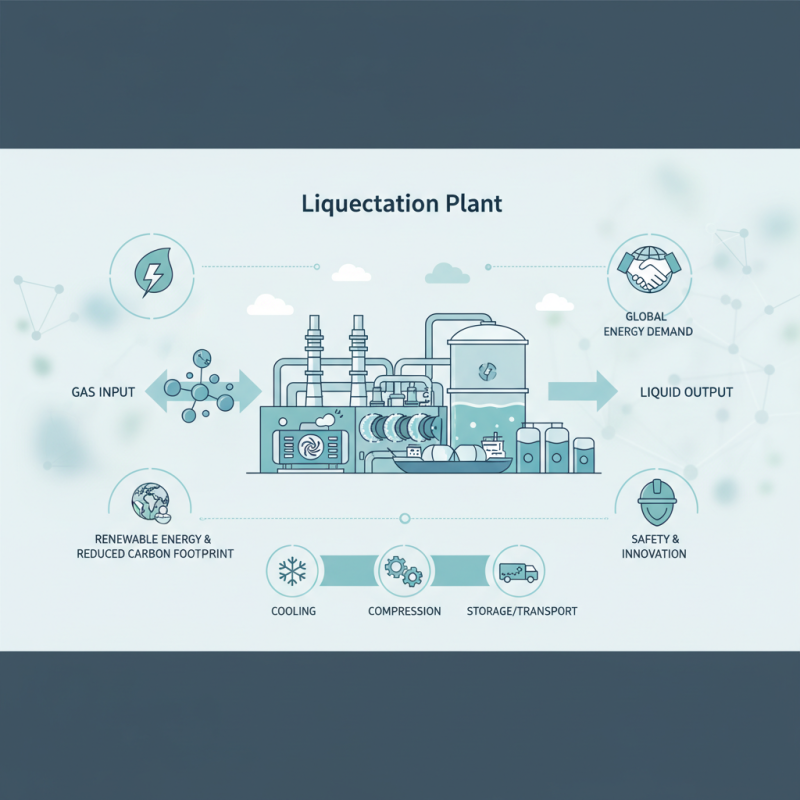
What is a Liquefaction Plant? Overview and Definition
A liquefaction plant is a facility designed to convert gases into a liquid form. This process is vital for various industries, primarily energy. It helps in transporting and storing gases more efficiently. When gas is cooled to extremely low temperatures, it becomes liquefied. This change drastically reduces its volume, making it easier to handle and move.
The liquefaction process involves several stages. First, the gas is purified to remove impurities. Next, it is cooled through specialized cooling systems. These systems often use natural gas to absorb heat and chill the gas. Finally, the gas is stored in insulated tanks. It's crucial to maintain low temperatures to keep the gas in a liquid state.
However, not all liquefaction plants operate flawlessly. Some face challenges, such as energy consumption and emissions. These issues require ongoing evaluation and improvement. Engineers constantly seek ways to enhance efficiency while minimizing environmental impacts. The balance between performance and sustainability remains an area for reflection and development in liquefaction technology.
Key Components of a Liquefaction Plant: Equipment and Technology
A liquefaction plant converts natural gas into liquid form for easier storage and transport. Key components of this plant play a crucial role in its efficiency.
The cryogenic heat exchangers are vital. They cool the gas down to very low temperatures. This process turns gas into liquid. The pressure is also carefully managed to maintain the gas's state. Efficiency is important in this system. Small variations in temperature can lead to losses.
Compressor systems help to increase the pressure of the gas. They make it easier to transport and store. Meanwhile, insulated storage tanks ensure the liquid remains in a stable state. Maintaining the right environment is challenging. It's vital to monitor the conditions regularly.
Tip: Regular maintenance of equipment is essential. It can prevent costly failures. Also, consider investing in monitoring systems. They help keep track of temperature and pressure in real time.
Another aspect worth noting is the importance of safety measures. Liquefaction plants carry inherent risks. Understanding these risks is crucial for operators. Training and preparation are vital for incident prevention.
The Liquefaction Process: Steps and Operational Mechanisms
Liquefaction plants play a crucial role in converting natural gas into a liquid form for easier storage and transport. The liquefaction process involves multiple steps that transform gas into a high-density liquid. The first step is cooling the gas. This is achieved using refrigeration cycles. The temperature drops significantly, usually below -160 degrees Celsius.
Next, the cooled gas moves to a compression stage. High pressure helps maintain the liquid state. During this stage, any impurities are also removed, ensuring the final product is clean and efficient. The final step is storage. Tanks designed to hold the liquefied gas help maintain the low temperatures required.
Tips: Monitor the temperature closely during the cooling phase. Minor fluctuations can affect the efficiency. Additionally, regular maintenance of compressors is essential. Neglecting this can lead to unexpected failures. Always ensure safety measures are in place, as working with gases under pressure can be risky.
In the world of liquefaction, even small errors can have significant consequences. It’s crucial to reflect on the operational processes regularly. Continuous training of staff can help minimize mistakes. By focusing on precision during liquefaction, plants can optimize production and enhance safety.
Liquefaction Plant Operational Capacity Over Time
This chart illustrates the operational capacity of a liquefaction plant over the demonstrated time periods. The data shows a steady increase in operational capacity from Q1 2022 to Q2 2023, reflecting enhancements in efficiency and production reliability within liquefaction processes.
Industrial Applications: Natural Gas and Other Markets for Liquefied Products
Liquefaction plants play a crucial role in making natural gas more manageable. They convert gaseous natural gas into liquefied natural gas (LNG) by cooling it to very low temperatures. This process enables efficient storage and transport, especially over long distances. According to industry reports, global LNG trade is expected to reach 500 million tons per year by 2025. This highlights the significance of liquefaction technology in the energy sector.
Natural gas isn't the only market for liquefied products. Industries also utilize liquefied gases for various applications. For example, liquefied petroleum gas (LPG) is widely used in cooking and heating. The chemical industry depends on liquefied gases as feedstock. Figures show that the global market for LPG is projected to grow at a CAGR of 6% through 2030. This growth opens new avenues for liquefaction plants to cater to diverse industrial needs.
Tip: When investing in liquefaction technology, consider the specific market demand. Look for local and global trends. Small-scale liquefaction plants can be viable in isolated regions with limited access to gas infrastructure. Evaluate potential partnerships with other industries to diversify applications and expand revenue sources.
Safety Measures and Environmental Considerations in Liquefaction Plants
Liquefaction plants play a crucial role in the process of converting natural gas into a liquid state. However, the operation of these plants carries significant safety and environmental responsibilities. A key concern is the potential for gas leaks. Industry reports indicate that nearly 2.5% of natural gas can escape during the liquefaction process if not carefully managed. This not only affects efficiency but also contributes to greenhouse gas emissions.
Safety measures in liquefaction plants include strict inspection protocols and real-time monitoring systems. A 2022 industry study suggested that implementing automated leak detection systems could reduce emissions by up to 30%. Training workers on emergency protocols is vital, as human error remains a leading cause of accidents. Environmental considerations also include managing the impact on local ecosystems. The water used for cooling must be monitored to avoid thermal pollution, which can harm aquatic life.
Despite advancements, challenges remain. Many plants struggle to balance operational efficiency with environmental compliance. Data shows that nearly 40% of existing liquefaction facilities are not fully adhering to best practices for emissions management. That gap highlights the need for continuous improvement and reflection on current processes. Engaging with local communities about potential impacts is another area where more effort is needed. Listening to the concerns of residents can lead to better practices and increased trust.
What is a Liquefaction Plant and How Does it Work? - Safety Measures and Environmental Considerations in Liquefaction Plants
| Aspect | Description |
| Definition | A liquefaction plant converts natural gas into liquefied natural gas (LNG) for storage and transportation. |
| Process | Involves cooling natural gas to approximately -162°C (-260°F) to condense it into a liquid form. |
| Safety Measures | Includes leak detection systems, emergency shutdown systems, and regular maintenance checks. |
| Environmental Considerations | Focus on reducing greenhouse gas emissions and managing water usage effectively. |
| Applications | Used for energy storage, transportation of gas over long distances, and in various industrial applications. |
| Energy Efficiency | Modern plants utilize advanced technologies to maximize energy efficiency during the liquefaction process. |