
Pressure Reducing Regulators (PRRs) are crucial components in various industrial applications. They ensure that the pressure of gases or liquids remains within safe and efficient limits. According to a report by Research and Markets, the global market for PRRs is projected to reach $3.7 billion by 2025. This growth is driven by increasing demand across sectors such as oil and gas, pharmaceuticals, and manufacturing.
PRRs function by controlling the pressure downstream of the system, enabling systems to operate efficiently. For instance, in natural gas distribution, maintaining optimal pressure is vital for safety and performance. The American Gas Association states that improperly regulated pressure can lead to significant risks, including pipeline failures.
However, the effectiveness of PRRs can vary based on design and application. Many users may overlook the importance of regular maintenance and recalibration, potentially leading to inefficiencies. Addressing these issues is crucial for maximizing performance and safety. The future of PRRs relies on innovation and better understanding of their application within complex systems.
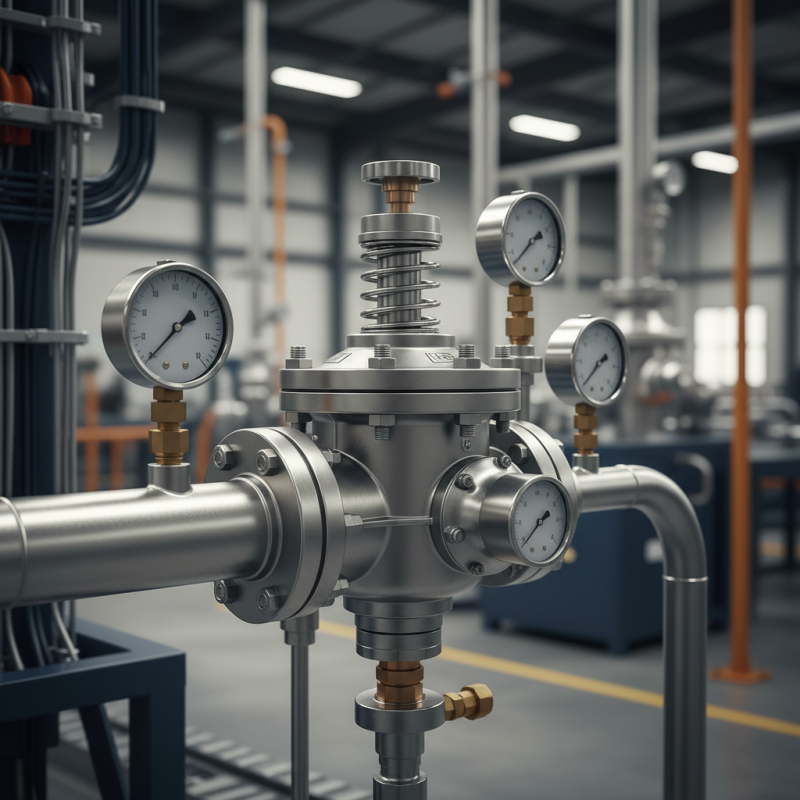
A pressure reducing regulator is a crucial component in fluid systems. It regulates high inlet pressure to a stable, lower outlet pressure. Should the outlet pressure exceed designated levels, the regulator helps maintain system integrity. This is vital in many industries, from manufacturing to healthcare.
According to industry reports, nearly 30% of system failures originate from pressure discrepancies. This indicates a significant risk in pressure management. Proper operation of these regulators can reduce maintenance costs by up to 20%. However, not all regulators perform equally under stress. Some may fail to react quickly, resulting in pressure spikes. These vulnerabilities highlight the need for regular inspection and maintenance.
Workers in various sectors rely on these devices daily. They play a role in gas pipelines, water systems, and air compressors. A study revealed that operators often overlook calibration checks. This negligence can lead to safety hazards. Proper training can enhance the effectiveness of pressure reducing regulators. However, there is often a gap in understanding among operators. This lack of knowledge can lead to underperformance, stressing the importance of ongoing education in safe practices.
A pressure reducing regulator plays a critical role in managing fluid systems. It reduces the high input pressure to a lower, controlled output pressure. This makes it essential in various industrial applications, from gas delivery systems to hydraulic machinery. Proper functionality ensures equipment safety and efficiency.
The functionality of a pressure reducing regulator hinges on its design. It typically uses a spring-loaded diaphragm. When high pressure enters the regulator, it compresses the diaphragm, allowing the output pressure to stabilize. This mechanism ensures that even if input pressure fluctuates, the output remains consistent. According to industry reports, maintaining pressure within safe limits can enhance the lifespan of machinery by up to 30%.
Tips: Regular maintenance of your pressure reducing regulator is crucial. Check for leaks or blockages that may affect performance. Additionally, consider using gauges to monitor pressure outputs accurately. It’s often overlooked, but these simple steps can prevent costly downtimes.
A pressure reducing regulator (PRR) controls the pressure of gases or liquids in various systems. Its primary purpose is to maintain a stable downstream pressure despite fluctuations in supply pressure. The key components of a PRR include a diaphragm, spring, and valve seat. Each part plays a crucial role in ensuring efficient pressure regulation.
The diaphragm is a flexible barrier. It responds to changes in pressure, adjusting the valve's opening accordingly. When the downstream pressure drops, the diaphragm moves, allowing more fluid to pass through the valve. This mechanism maintains a consistent pressure. The spring provides the necessary resistance. It ensures that the diaphragm returns to its original position when pressure stabilizes.
Data from industry reports indicate that about 30% of pressure regulators malfunction due to worn-out components. Regular maintenance can prevent these failures. A thorough inspection of the valve seat for wear is essential. Small leaks can occur, leading to inefficiencies. Attention to these details can significantly enhance system reliability. Even minor adjustments can yield better performance in pressure control.
Installing a pressure reducing regulator can seem daunting, but it doesn't have to be. Start by gathering your tools: a wrench, Teflon tape, and a cutting tool. Before beginning, ensure the water supply is turned off. Always check for existing pressure in the system. A pressure gauge can help with this step. If pressures are too high, the regulator will not function correctly.
Next, carefully remove the old regulator if applicable. Clean the area where the new regulator will sit. Apply Teflon tape to the threads of the new regulator to ensure a tight seal. Position the regulator securely. Fasten it with your wrench, but avoid overtightening, as that can cause damage.
After installation, turn the water supply back on slowly. Observe the regulator for any leaks. Adjust the pressure according to your needs. Don’t forget to test multiple times. If anything seems off, it may be wise to re-evaluate the installation process. Take your time to reflect on each step to ensure the task is completed accurately. This will lead to a smooth operation in the long run.
| Dimension | Data |
|---|---|
| Type | Direct Acting |
| Application | Water Supply Systems |
| Input Pressure Range | 10 to 150 psi |
| Output Pressure Range | 3 to 60 psi |
| Material | Brass |
| Installation Location | Indoor |
| Adjustable Pressure Setting | Yes |
| Size | 1/2 inch to 2 inch |
| Weight | 2 to 4 lbs |
Pressure reducing regulators (PRRs) play a critical role in various industries. They ensure a consistent and safe pressure level in gas and liquid supply systems. Commonly, PRRs are used in oil and gas, food processing, and medicinal applications. In oil and gas, they stabilize flow amidst fluctuating pressures. This helps prevent system failures or accidents.
In food processing, PRRs help maintain the quality of products. By controlling pressure, they ensure that ingredients mix properly. However, not all setups are perfect. Improper installations can lead to leaks. Also, inadequate maintenance may result in malfunctioning regulators. Regular checks are essential to avoid these issues.
In healthcare, PRRs regulate oxygen and other gases for patients. Precision is vital here; the wrong pressure can be dangerous. Yet, there are times when the calibration can be off. This emphasizes the importance of ongoing supervision. Engineers must focus on training and proper procedures to guarantee safety. Each industry has unique needs, and understanding this can improve efficiency and safety measures.
We are here to help you with all your queries and concerns, just write to us using the below form and we will get back to you as soon as we can.