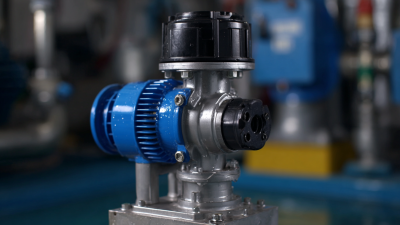
In understanding how a pump for pumping out water operates, expert Jane Thompson offers valuable insights. She states, "The efficiency of a pump greatly depends on its design and purpose." This highlights the complexity behind what seems like a simple device.
Pumps serve critical functions in many industries. From draining flooded basements to irrigation in agriculture, their roles are diverse. Each type of pump can vary significantly in design and application. Some pumps are portable, while others are fixed, catering to specific needs.
However, selecting the right pump for pumping out water is not straightforward. Factors like water source, volume, and required pressure come into play. Users often overlook these details, leading to inefficiencies. Understanding the mechanics and intended use of a pump can save time and resources. Therefore, ongoing education about these tools is essential to avoid common pitfalls.
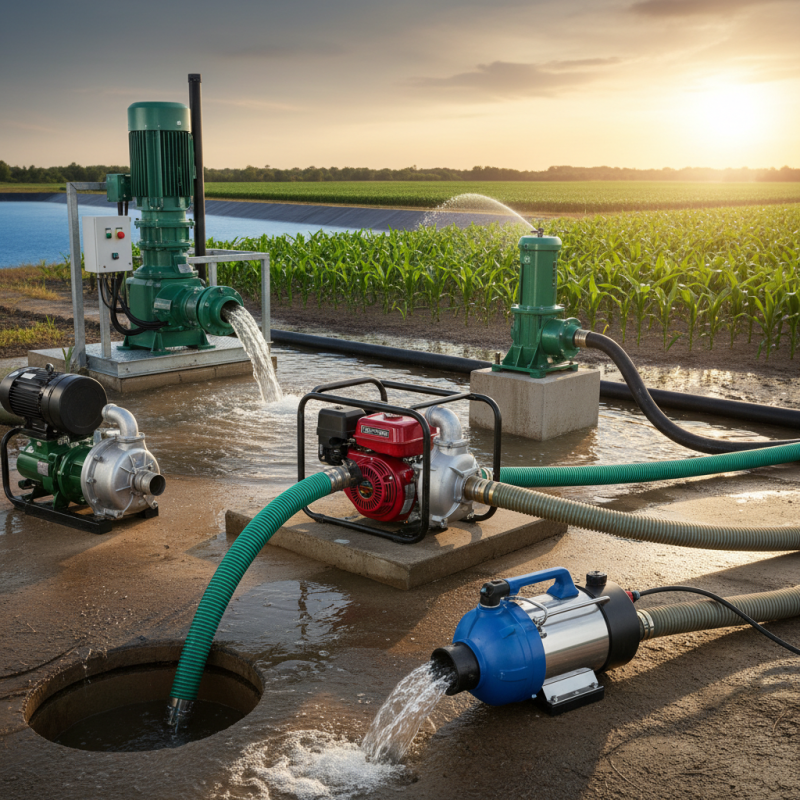
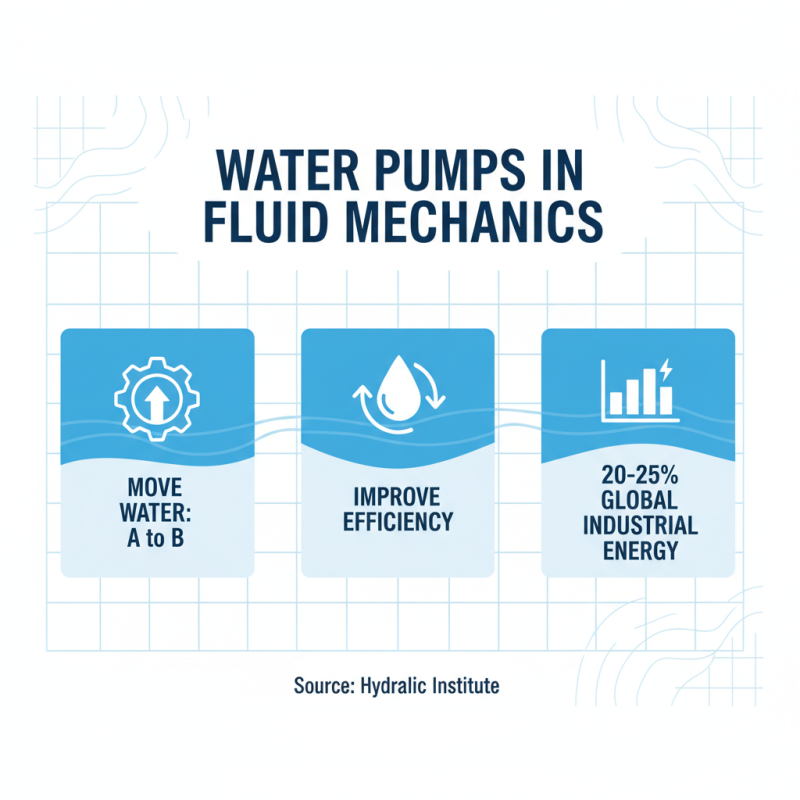
Water pumps play a crucial role in fluid mechanics. They are devices designed to move water from one place to another. Their primary purpose is to facilitate the transfer of fluids to improve efficiency in various applications. According to the Hydraulic Institute, water pumps account for about 20-25% of global energy consumption in industrial applications. This statistic underscores the importance of choosing the right pump for specific tasks.
In practice, water pumps vary widely in design and capability. Centrifugal pumps are common in irrigation and drainage, while positive displacement pumps excel in high-pressure applications. Different industries rely on these pumps extensively. For instance, the agricultural sector uses approximately 70% of freshwater resources, largely driven by effective pumping systems. However, inefficiencies persist; many older pumps operate at just 50-60% efficiency. Regular maintenance and upgrades are essential for optimal performance.
Not every pump suits every application. Factors like fluid viscosity, temperature, and required pressure impact performance. Some environments create added challenges, such as debris in water sources, which can hinder pump function. Engineers recommend periodic assessments to ensure systems operate efficiently. Bridging the gap between theoretical performance and real-world effectiveness remains a continual challenge in the field of fluid mechanics.
Water pumps play a crucial role in various applications, from agriculture to construction. Understanding the different types of water pumps is essential for making the right choice for your needs. Submersible pumps are designed to operate underwater. They are efficient for deep wells and flooded areas. These pumps can handle large volumes of water, making them suitable for drainage tasks. Data indicates that submersible pumps can deliver flow rates exceeding 1,500 gallons per hour, depending on model specifications.
Centrifugal pumps are another popular choice. They work by converting rotational energy into kinetic energy. Each pump model varies in design and efficiency. According to industry reports, centrifugal pumps have an overall efficiency rating of about 70-90%. This makes them ideal for irrigation and other high-pressure applications. However, they also come with limitations, such as being less effective in handling solids or debris in the water.
Other types of pumps, like diaphragm and rotary gear pumps, have specific use cases. Diaphragm pumps excel in chemical processing, while rotary gear pumps are often favored in fuel transfer. Each pump type has its principles of operation and applications, complicating the decision process. Users must weigh the pump’s advantages against their specific requirements. Understanding each pump's limitations can help prevent issues down the road.
Water pumps are essential devices used in various applications, from draining flooded areas to supplying water for irrigation. Understanding how water pumps operate can help users make informed decisions about their needs. At their core, water pumps rely on basic mechanical principles. They move water by creating a pressure difference, which draws water into the pump and pushes it out through a discharge outlet.
The most common types of water pumps include centrifugal pumps and positive displacement pumps. Centrifugal pumps utilize a rotating impeller to create a flow of water. This mechanism relies on centrifugal force, which can efficiently move large volumes of water. In contrast, positive displacement pumps work by trapping a fixed amount of water and forcing it out. Both types have their unique benefits and limitations. For instance, while centrifugal pumps are effective for high-flow applications, they may struggle with viscous fluids.
It’s crucial to remember that not all pumps are suitable for every task. Choosing the wrong type may lead to inefficiencies or even equipment failure. Regular maintenance is also vital to ensure optimal performance. Users should be aware of common issues like clogged filters or worn-out seals. Addressing these problems promptly can extend the life of the pump. Understanding these basic mechanisms can help consumers make better choices when selecting a water pump.
| Pump Type | Mechanism | Common Uses | Advantages | Limitations |
|---|---|---|---|---|
| Centrifugal Pump | Utilizes a rotating impeller to increase fluid velocity | Water supply, irrigation, drainage | Efficient for large volumes, low maintenance | Not effective for high-viscosity fluids |
| Positive Displacement Pump | Moves fluid by trapping a fixed amount and forcing it out | Sewage, chemical transfer, hydraulic systems | Handles thick fluids, maintains constant flow | Can be prone to damage if run dry |
| Submersible Pump | Designed to operate while submerged in fluid | Well water extraction, basement drainage | Efficient in deep wells, quiet operation | Complicated repairs, requires immersion |
| Diaphragm Pump | Uses a diaphragm to create a pumping action | Aquarium systems, waste treatment | Good for corrosive fluids, self-priming | Lower flow rates compared to other types |
| Gear Pump | Uses gears to increase fluid pressure | Fuel and oil transfer | High pressure, continuous flow | Requires lubrication, can be noisy |
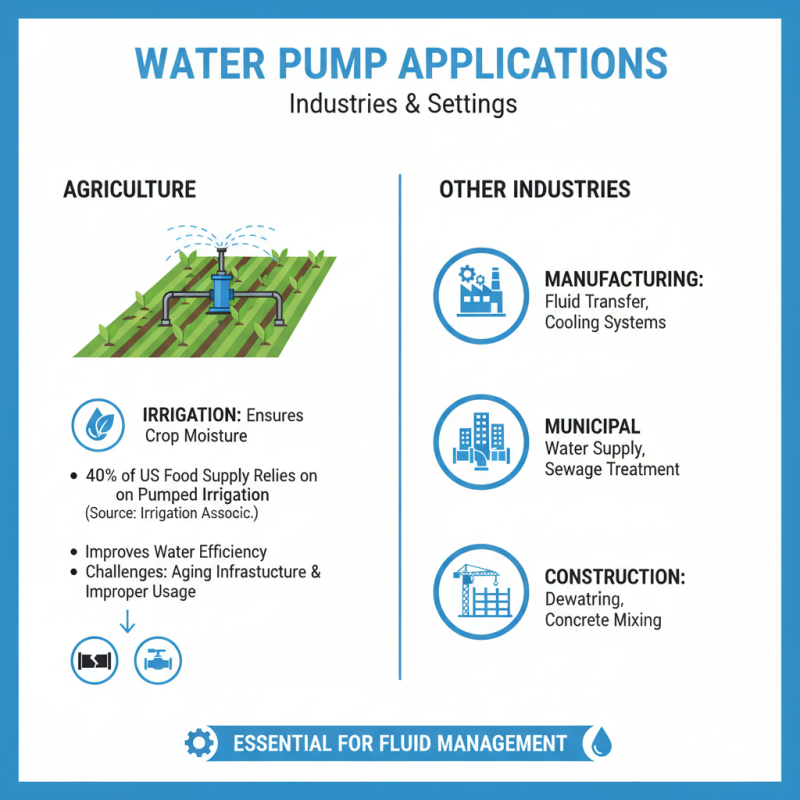
Water pumps play a crucial role in various industries and settings, providing essential services for fluid management. In agriculture, they are used for irrigation, ensuring crops receive adequate moisture. According to the Irrigation Association, about 40% of the U.S. food supply relies on pumped irrigation systems. These systems improve water efficiency, but they can be prone to inefficiencies due to aging infrastructures or improper usage.
In construction, water pumps help manage site drainage. They prevent flooding and allow for safer working conditions. Reports indicate that poor drainage can delay projects by up to 30%. This highlights the need for reliable pump systems and regular maintenance to mitigate such delays. Notably, wastewater management facilities also depend heavily on water pumps. They treat millions of gallons daily, ensuring environmental safety. However, failures in pump systems can lead to significant health hazards and costly repairs.
Industrial processes often use pumps to transport chemicals and maintain fluid levels. This can be vital in maintaining safety standards. However, industries face challenges. Aging networks can lead to leaks, wasting resources. Regular assessments and updates are needed to keep these systems efficient. The integration of smart technology is promising, but execution remains inconsistent across sectors. Proper training and diligence in pump operation are essential for optimal performance.
Maintaining a water pump is crucial for its efficiency and longevity. Regular inspections can help identify issues before they become major problems. Check for unusual noises and vibrations during operation. These could indicate a misaligned component or wear and tear. Keep an eye on the seals and joints. Leaks can lead to serious damage over time if left unaddressed.
Cleaning the pump regularly is vital for optimal performance. Remove debris and sediment that may accumulate in and around the pump. This not only prevents blockages but also enhances water flow. Don’t forget to lubricate moving parts as recommended. Lack of lubrication can lead to increased friction and premature wear. Consider using a checklist for maintenance tasks to ensure nothing is overlooked.
It’s also important to monitor the pump's electrical connections. Loose wires or corrosion can cause malfunctions. Inspect the power source and ensure it meets the pump’s requirements. Reflect on your maintenance routine. Are there areas that need more attention? Consistent evaluation helps maintain the efficiency of the pump. Remember, even small oversights can lead to significant problems.
We are here to help you with all your queries and concerns, just write to us using the below form and we will get back to you as soon as we can.