
In the industrial landscape, Screw vacuum pumps are pivotal for efficient operations. According to a recent market report by Grand View Research, the global screw vacuum pump market is expected to reach USD 2.5 billion by 2027, reflecting a significant upward trend in demand. This growth is attributed to their versatility and reliability in various applications, from food processing to pharmaceuticals.
Dr. James Ellison, a renowned expert in vacuum technology, states, "Screw vacuum pumps are the backbone of modern manufacturing processes." His insights emphasize the importance of these pumps in maintaining production efficiency. The industry demands a product that not only performs reliably but also adheres to stringent regulatory standards.
However, there are challenges. Some buyers report inconsistencies in pump performance and after-sales service quality. It raises questions about supplier reliability. Thus, when sourcing screw vacuum pumps, it is crucial for global buyers to evaluate manufacturers thoroughly. Prioritizing quality and expertise will enhance operational efficiency while mitigating potential pitfalls in the supply chain.
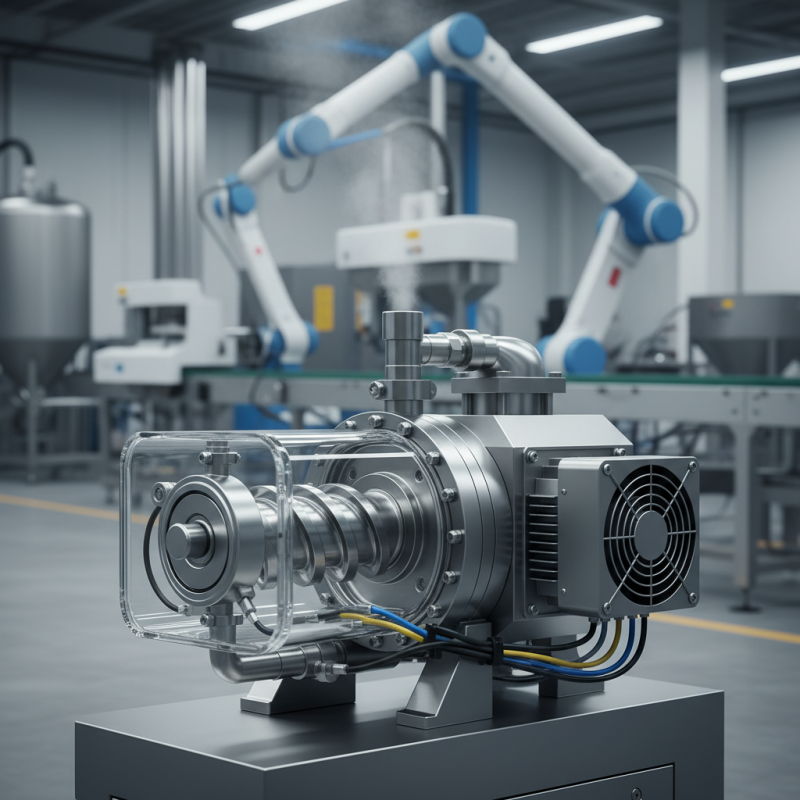
The screw vacuum pump market is evolving rapidly. Businesses prioritize energy efficiency and low maintenance. This shift aligns with global sustainability goals. Many industries rely on reliable vacuum systems to enhance productivity. Thus, the demand for high-quality screw pumps is increasing.
Recent trends indicate a growing preference for compact designs. These models save space without sacrificing performance. Technological advancements are making pumps quieter and more efficient. However, some manufacturers struggle to keep up with these innovations. They may risk stagnation in a competitive market. Buyers are becoming more discerning, seeking transparency and reliability in their purchases.
In addition to technical features, buyers value after-sales support. Companies that provide comprehensive service packages gain an edge. Yet, the market is not without challenges. Some customers report dissatisfaction with durability. This highlights the need for ongoing improvement. Not all pumps meet the evolving standards of quality and performance. Hence, the industry must prioritize innovation and customer feedback to thrive.
The global demand for screw vacuum pumps has seen notable fluctuations in recent years. According to a report by Mordor Intelligence, the screw vacuum pump market is projected to reach $2.5 billion by 2026, driven by increasing industrial applications. This speaks to its integral role across sectors, such as food processing, pharmaceuticals, and chemical manufacturing.
Several factors are influencing this growth. First, the rise of automation in factories demands reliable and efficient vacuum solutions. Furthermore, environmental regulations push companies to adopt more sustainable practices. For instance, the need for energy-efficient equipment is paramount, as highlighted by a report from the International Energy Agency. Their findings show that energy consumption in industrial applications must decrease by 30% to meet climate goals.
However, not all manufacturers are keeping pace. Some may overlook advancements in technology that optimize performance. As industries evolve, the gap between those embracing innovation and those resisting it widens. Buyers face challenges in selecting pumps that offer efficiency without compromising reliability. Ensuring that equipment meets both performance and environmental standards remains a critical concern.
When selecting screw vacuum pumps, understanding their technical specifications is crucial. Performance metrics such as pumping speed, ultimate vacuum, and energy efficiency play significant roles. A reliable metric is the pump's displacement rate, often measured in cubic meters per hour (m³/h). Generally, a higher displacement indicates better performance in various applications. Reports indicate that optimal efficiency can be achieved with a speed ratio maintained above 1.5.
Different factors influence pump performance, including the type of gas being handled and system integration. Sizing and selecting the right pump can lead to up to a 30% improvement in energy consumption. However, buyers should be cautious. Not all specifications reflect real-world performance. Discrepancies often stem from testing conditions that vary significantly from operational scenarios.
Tip: Always request detailed performance data for specific applications. Consider how variations in temperature and pressure might impact results. This ensures the pump meets your operational standards. Performance validation is key. Conducting field tests may reveal limitations not apparent in controlled tests. Remember, understanding performance metrics can prevent costly oversights in procurement.
Screw vacuum pumps have gained traction in various industries due to their efficiency and reliability. As the demand for high-performance pumping solutions grows, global buyers are increasingly focused on the leading manufacturers in the market. According to a recent report by Market Research Future, the screw vacuum pump market is projected to reach approximately $1.4 billion by 2025, reflecting a CAGR of 6.8%. This growth indicates rising applications in sectors like food packaging, pharmaceuticals, and electronics.
When comparing manufacturers, several factors stand out. Efficiency ratings, energy consumption, and maintenance requirements are critical elements to consider. Some manufacturers claim to offer pumps that can operate at 95% efficiency or higher. However, users should be cautious. Not all performance claims are verified in real-world settings. A closer look at operational data and user experiences is essential.
Tips for buyers: Assess after-sales support before making a decision. Check service agreements and response times. Also, consider long-term costs versus initial purchase price. Remember, a top-rated vacuum pump may not always be the best fit for your specific applications. Each facility has unique needs, and what works well in one industry may not be suitable in another. Researching thoroughly will lead to better investment choices.
| Manufacturer | Model | Pumping Speed (m³/h) | Max Vacuum (mbar) | Power Consumption (kW) | Weight (kg) |
|---|---|---|---|---|---|
| Manufacturer A | Model X1 | 400 | 0.5 | 5 | 150 |
| Manufacturer B | Model Y2 | 300 | 0.8 | 4.5 | 120 |
| Manufacturer C | Model Z3 | 500 | 0.4 | 6.5 | 180 |
| Manufacturer D | Model A4 | 250 | 1.0 | 3.0 | 100 |
| Manufacturer E | Model B5 | 600 | 0.3 | 7.0 | 200 |
Screw vacuum pumps are becoming increasingly popular due to their sustainability and efficiency. They are designed for various applications, including industrial, scientific, and medical sectors. These pumps provide reliable performance with minimal energy consumption. By maximizing efficiency, they not only reduce operational costs but also lessen environmental impact.
However, the journey towards more sustainable technology is not without challenges. Manufacturers face issues like materials sourcing and energy use during production. Selecting eco-friendly materials is key for future advancements. Innovations in design are needed to boost efficiency further. It's crucial for industry experts to continue exploring these avenues.
The future of screw vacuum pump technology hinges on collaboration between engineers, researchers, and environmentalists. They must address the ongoing need for reliability while pushing for greater efficiency. This quest for balance will shape a greener future in vacuum technology.
We are here to help you with all your queries and concerns, just write to us using the below form and we will get back to you as soon as we can.