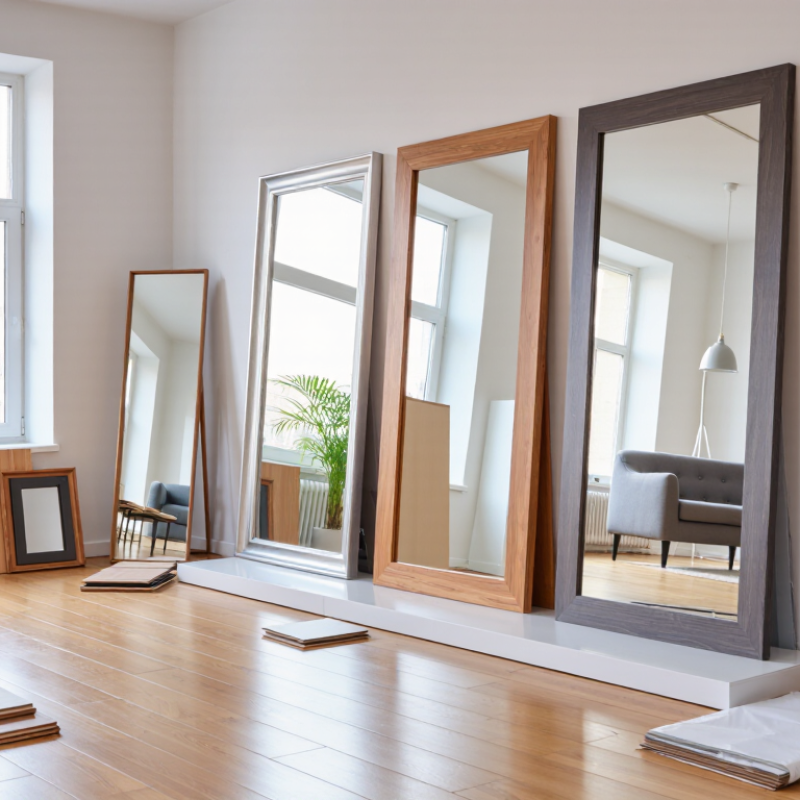
10 Standing Mirror Wall Buying Tips for Global Buyers

For global retailers, importers, and hospitality buyers, a Standing Mirror Wall is more than a reflective surface. It must suit the room, arrive safely, and withstand repeated handling. Small design choices matter. Frame depth affects how close the mirror can sit to a wall, while a broad base may improve stability but occupy valuable floor space. Buyers also need to compare glass clarity, edge finishing, frame materials, packaging, and available sizes.

Market reports offer useful context, but they do not guarantee demand for any one mirror design. Grand View Research’s 2024 Home Decor Market report estimated the global market at USD 696.4 billion in 2023 and projected a 4.0% compound annual growth rate through 2030. Fortune Business Insights’ 2024 global furniture market report valued that market at USD 766.2 billion in 2023. These broad figures signal a substantial interiors market, not a proven sales forecast for standing mirrors. Check your own customer preferences. A design popular in one region may feel too large, too ornate, or simply impractical elsewhere.

The ten buying tips ahead translate those market signals into practical checks. Compare dimensions against real floor plans, inspect finish samples under natural light, and request photographs of protective packaging. Confirm product specifications and shipping details in writing. No single option suits every buyer. A mirror may look perfect in a catalog, yet disappoint after delivery; that risk deserves an honest place in purchasing decisions.

10 Standing Mirror Wall Buying Tips for Global Buyers

Understanding Standing Mirror Types and Their Uses

Standing mirrors serve different needs, so identify their use before comparing frame styles. A cheval mirror pivots on side supports, making it useful when checking an outfit from different angles. Its broad base needs clear floor space. A fixed full-length floor mirror offers a steady view and often suits bedrooms or dressing areas. A leaning mirror can make a room feel taller, but it must rest securely against a suitable wall. Small rooms differ. A compact folding design may be easier to position, though its narrower panels can interrupt the reflection.

Check the mirror’s height against the tallest intended user, and measure the space where it will stand. A few centimeters can change whether a door opens freely. Inspect the base, joints, and tilt hardware; these details affect stability during daily use. Look straight at a grid or doorframe in the reflection to spot visible distortion. That quick check is useful, but it cannot replace careful product inspection. For international orders, confirm packed dimensions and protective packaging, since a large glass panel can be damaged in transit. I once thought a heavier frame always meant a safer mirror. Not necessarily. A well-balanced base and sound assembly matter more than weight alone.

Choosing the Right Size, Shape, and Placement

Choosing a standing mirror begins with the wall and the person using it. Measure from floor to eye level, then check that the full reflection includes shoes without forcing an awkward lean. A 150–170 cm mirror suits many adults, but household height matters more than a standard size. For narrow rooms, a slim rectangle saves visual space; an oval softens a hard-edged hallway. Check door swings and nearby furniture before ordering.

Placement needs real clearance. The National Kitchen & Bath Association’s bath-planning guidance recommends at least 21 inches of clear space in front of a lavatory; use that as a practical reference when positioning a mirror near a vanity, not as a universal rule for every room. Stand at your usual viewing distance and test the angle with a temporary paper outline. A mirror that looks generous online can feel cramped beside a coat rack. It happens.

For a bedroom or dressing area, leave enough room to step back and see your full outfit. Measure the mirror’s footprint, including its feet, and check that it stays stable on the actual floor surface. Uneven tile can make a tall mirror wobble. Confirm the packaged dimensions too: international listings may show inches, centimetres, or both, and frame depth is easy to overlook. A small measuring mistake is annoying. A heavy mirror needs secure positioning.

Checking Glass Quality, Frames, and Safety Features

When assessing a standing mirror, inspect the reflection from several steps away and from both sides. Straight doorframes should not bend or ripple across the glass. Check the edges for chips, cloudy patches, and uneven reflective coating, especially near the corners. Ask the supplier for glass thickness, coating details, and packing photos; specifications matter more than a polished product image. Still, photos cannot reveal every flaw.

Tip: Request a close-up of the glass edge and a sample inspection report, if available. Confirm how the mirror is protected during shipping. A cracked corner can be hard to spot beneath cardboard and foam.

Check that the frame feels rigid and that joints do not shift when gently pressed. Wood, metal, and composite frames vary in weight and moisture tolerance, so consider the destination climate and room conditions. I still find frame finish easy to overlook; inspect seams, screw heads, and corners for rough spots. For safety, confirm whether a tip-over restraint is included and whether its fixings suit the wall construction. A broad, stable base helps, but it is not a substitute for secure anchoring. Also check the assembled mirror’s height, footprint, and weight before ordering, since a narrow hallway can make installation awkward.

Evaluating Suppliers, Certifications, and Customization

For a standing mirror, a supplier’s quote is only the start. Ask for glass thickness, backing material, edge-finishing details, frame dimensions, and written inspection criteria. Request test reports that match the actual mirror design, not a similar product. Where relevant to the destination market, check whether safety-glazing requirements apply. Small details matter. A polished sample can still mislead if production tolerances vary, so compare a pre-production sample with the final inspection record. Ask for evidence.

Customization also needs clear limits. Confirm whether the supplier can adjust height, frame finish, packaging, logo placement, or carton dimensions, then record approved specifications in the purchase order. Request photos of corner protection and carton testing; a mirror may look excellent at the factory and arrive with a chipped edge. The World Bank’s 2023 Logistics Performance Index assessed 139 economies across areas including shipment tracking and timeliness. It offers useful context for comparing shipping environments, but it does not rate individual suppliers. This check is imperfect: a strong logistics score cannot guarantee careful handling. Compare sample lead time, production capacity, defect remedies, and delivery terms before committing to a large order.

10 Standing Mirror Wall Buying Tips for Global Buyers - Evaluating Suppliers, Certifications, and Customization

# Buying tip What to evaluate Evidence or questions to request Practical buyer check
1 Confirm the intended use and market Whether the mirror is freestanding, wall-mounted, or designed to serve both purposes; destination-market rules and installation conditions. Ask which product configuration and test requirements apply to the intended market. Request installation instructions for each approved use. Do not assume a freestanding mirror is safe to hang on a wall. Verify that the mounting hardware and instructions match the chosen installation.
2 Assess the supplier’s production capability Experience with mirror fabrication, frame assembly, finishing, packaging, and repeat production at the required specifications. Request a process overview, product specifications, sample-inspection records, and details on how changes or defects are handled. Compare the production sample with the approved drawings and written specification, not just catalog images.
3 Check quality-management claims carefully Whether quality controls cover incoming materials, dimensions, appearance, assembly, and final inspection. If the supplier claims ISO 9001 certification, request a current certificate and confirm its scope and issuing body. ISO 9001 concerns a quality-management system; it is not product safety certification. Ask for the inspection criteria and defect limits that will be used for your order.
4 Verify glass safety requirements Glass type, thickness, edge treatment, breakage behavior, and whether safety glazing is required for the product’s intended use and destination. For relevant applications, ask for test reports to applicable requirements, such as ANSI Z97.1 or U.S. CPSC 16 CFR Part 1201, or EN 12150 for thermally toughened soda-lime silicate safety glass. Confirm applicability with the importer or compliance specialist. Match the report to the actual glass type, thickness, construction, and product configuration being purchased; a standard name alone is not proof of compliance.
5 Review mirror construction and backing Reflective coating, protective paint or backing, substrate, edge sealing, and resistance to corrosion in the expected environment. Request a written material specification and any relevant corrosion or humidity test results. Ask whether the construction is suitable for the intended room and cleaning routine. Inspect sample edges and backing for damage, exposed areas, discoloration, or inconsistent coating.
6 Define dimensions and tolerances Overall height and width, mirror opening, frame depth, base footprint, weight, and acceptable dimensional variation. Provide a dimensioned drawing and ask the supplier to confirm measuring points, tolerances, and whether dimensions refer to the frame or glass. Check that the packed product fits the planned storage, doorways, elevators, and retail display space.
7 Specify customization in writing Frame material and finish, shape, glass options, hardware, labels, carton artwork, and any requested logo or packaging changes. Request a revision-controlled drawing, finish sample, bill of materials, and approved pre-production sample. Clarify tooling, artwork, and change-approval costs. Record every approved change in the purchase specification so production and inspection use the same version.
8 Evaluate stability and hardware Base stability, joint strength, anti-tip provisions, wall anchors, fasteners, and suitability for the intended floor or wall construction. Ask for assembly instructions, hardware specifications, and any stability or load-test method relevant to the product design. Check that installation guidance identifies the appropriate wall substrate and makes clear when separate anchors are needed.
9 Test packaging for fragile freight Corner and edge protection, internal movement, carton strength, moisture protection, labeling, and pallet configuration. Request packaging drawings and records of the applicable transport or distribution testing. Agree how damage will be documented and reported. Review a packed sample and consider a shipment trial before scaling up, especially for long-distance or mixed-mode transport.
10 Compare total landed cost and delivery terms Unit price, sampling and tooling charges, packaging, freight, insurance, duties, lead time, payment terms, and after-sales arrangements. Request a like-for-like quotation that states the currency, Incoterms® rule and named place, production lead time, quote validity, and included items. Compare total landed cost rather than unit price alone, and confirm order quantities, inspection timing, and claim procedures before payment.

Note: Applicable standards and legal requirements depend on the product design, intended use, and destination market. Confirm current requirements with the relevant regulator, importer, or qualified compliance professional.

Comparing Prices, Shipping Terms, and After-Sales Support

10 Standing Mirror Wall Buying Tips for Global Buyers

A standing mirror wall can look simple in a product photo, yet its delivered cost depends on more than the listed price. Compare quotes for the same height, width, glass thickness, frame finish, and included hardware. Ask whether the price covers custom crating, export packing, and delivery to your address. Small details matter. A mirror that arrives with a chipped corner can erase an apparent saving.

Tips: Request itemized quotes from several suppliers. Check the shipping term, named delivery location, estimated transit time, and who arranges insurance. Confirm whether duties, local handling fees, and final-mile delivery are included or charged separately. Ask for package dimensions and gross weight; a large crate may affect freight costs more than expected. Save the written answers.

After-sales support is part of the purchase, not an optional extra. Ask how to report transit damage, what photos or documents are required, and how quickly the supplier usually responds. Clarify whether replacement glass, frame parts, or refunds are possible, and who pays return freight. Keep the order specification and packing details together. I would not treat a confident promise as a guarantee; written terms are easier to rely on when something goes wrong.

10 Standing Mirror Wall Buying Tips for Global Buyers

A practical checklist allocation for comparing price, shipping, product specifications, packaging, and after-sales support.

Percentages show a suggested allocation of comparison effort, not measured market data. Adjust them to suit your order size, destination, and risk tolerance.

Our dedicated sales and support staff are here to help you identify the ideal pump solution for your needs.

Contact Us