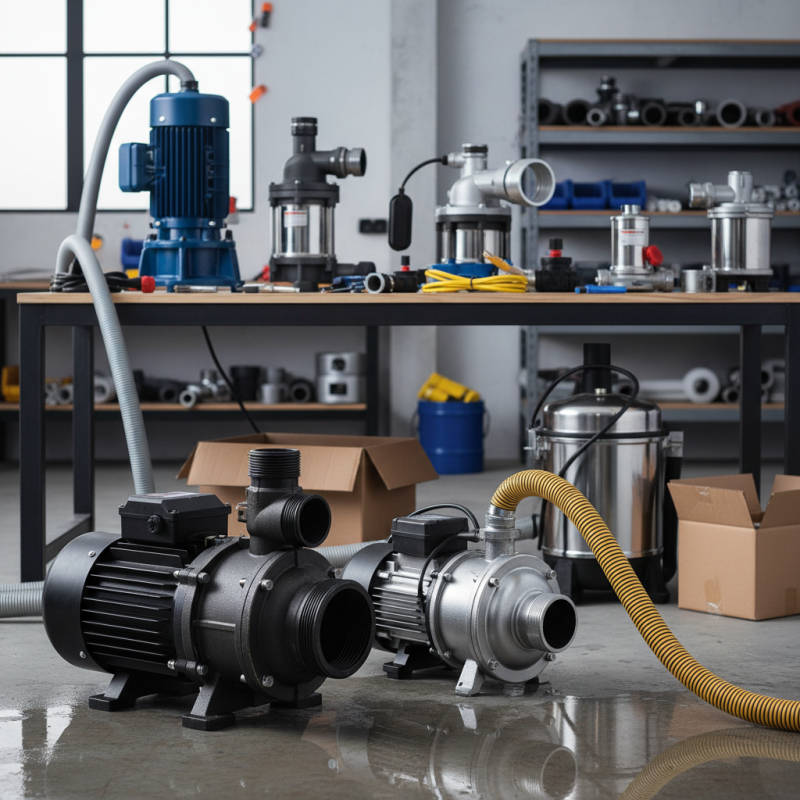
Top Tips for Choosing the Right Drainage Pump for Your Needs
Choosing the right Drainage Pump is crucial for effective water management. A drainage pump helps remove unwanted water from basements or flooded areas. Selecting the wrong model can lead to inefficiency and significant damage.
When looking for the perfect drainage pump, consider your specific needs. Are you dealing with light rainwater or heavy flooding? The power and capacity of the pump must match your situation. Additionally, understanding the pump's materials is important for durability. Not all pumps are created equal; some may fail to perform under certain conditions.
It's also wise to research brands and read user reviews. Some pumps have a reputation for breaking down quickly, which can be costly. By taking the time to evaluate options, you can avoid costly mistakes. The right drainage pump will not only save you money but also provide peace of mind.
Understanding Different Types of Drainage Pumps: Sump, Effluent, and Sewage
Choosing the right drainage pump can significantly impact your home’s efficiency. Understanding the different types available is essential. Sump pumps are designed to remove water from basements. They are effective in preventing flooding and managing groundwater levels. A sump pump works best in areas prone to water accumulation.
Effluent pumps, however, are suited for handling
wastewater. They can move liquid waste from one location to another. These pumps are used in septic systems. If you need to transport solid waste, consider a
sewage pump. This type handles both liquid and solid, ensuring a complete solution.
When selecting a pump, consider your specific needs. Assess the water volume you expect to manage. Understand the distance the pump needs to cover. This knowledge helps narrow your choices. Also, review the pump's features.
Adjustable float switches offer better control. Evaluate installation ease and maintenance requirements. For many, these details are often overlooked, yet they can affect performance. Ensure you’re making an informed choice that aligns with your needs.
Key Specifications to Consider: Flow Rate, Head Height, and Power Rating
Choosing the right drainage pump involves understanding key specifications. First, consider the flow rate. This measures how much water the pump can move in a given time. For instance, a pump with a flow rate of 40 gallons per minute is suitable for very wet areas. If your needs are modest, like a home basement, a lower rate will suffice.
Next, look at head height, which indicates how high the pump can lift water. A pump with a head height of 15 feet is often adequate for household use. Calculate the vertical distance from the water source to where it needs to go. Sometimes, it’s easy to overlook this detail.
Lastly, power rating is crucial. A higher power rating often translates to better performance. However, consider your energy costs. A powerful pump might consume more electricity than necessary. Reflect on your specific circumstances. Don’t rush the decision. Take time to assess each specification carefully. Each project is unique, and finding the perfect pump requires attention to detail.
Evaluating Pump Materials for Durability and Corrosion Resistance
Choosing the right drainage pump involves careful consideration of materials for durability and corrosion resistance. The environment your pump will operate in can significantly affect its lifespan. Pumps exposed to harsh chemicals or water with high mineral content need to be robust.
When evaluating materials, look for high-quality options like stainless steel and thermoplastics. Stainless steel is known for its strength and resistance to rust. However, it can be expensive. Thermoplastic materials are lighter and less prone to corrosion but may not handle extreme temperatures well. Understanding your specific needs will guide your selection.
Let’s consider some tips. Always assess the conditions your pump will face. Will it be submerged constantly? Is there a risk of abrasive particles? These factors can influence material choice. It’s crucial to consult with experts and seek user reviews to gauge performance in real-world scenarios. Remember, investing in a durable pump means fewer replacements later.
Assessing Your Drainage Requirements: Residential vs. Commercial Use Cases
When assessing drainage needs, understanding the differences between residential and commercial applications is crucial. Residential spaces often require smaller, quieter pumps. These units typically handle unwanted water from basements or surface drainage. A 2021 report from the Pump Manufacturer's Association indicates that 70% of residential drainage issues involve sump pumps. These pumps usually have lower capacity and operate intermittently.
In contrast, commercial environments demand more robust solutions. Larger buildings or construction sites often face higher volumes of water. A study by the American Society of Plumbing Engineers found that commercial drainage pumps need to manage up to three times the volume compared to residential pumps. This necessitates pumps that can operate continuously and handle larger debris sizes. Reliable performance is essential here, as downtime can lead to significant financial losses.
Cost efficiency is another factor. Residential systems can be installed for as little as $150, while commercial systems may exceed $1,500. It's important to weigh initial costs against long-term maintenance. Improperly sized pumps can lead to frequent breakdowns, requiring review and possible replacement. Choosing the right pump involves careful consideration of these factors, as failure to do so may result in ongoing issues and added expenses.
Top Tips for Choosing the Right Drainage Pump for Your Needs
| Feature | Residential Use | Commercial Use |
| Pump Type | Submersible or pedestal | Submersible or sewage pumps |
| Flow Rate | Up to 50 GPM | 50 to 200 GPM |
| Horsepower | 1/4 HP to 1 HP | 1 HP to 5 HP |
| Typical Applications | Basements and sump pits | Commercial buildings, construction sites |
| Power Source | Electricity (standard outlet) | Electricity (may require industrial-grade supply) |
| Maintenance | Low to moderate frequency | Higher frequency due to heavy use |
Maintenance Tips for Longevity and Optimal Performance of Drainage Pumps
Drainage pumps play a vital role in managing excess water. Proper maintenance is essential for their longevity and optimal performance. Regular checks can help identify issues before they escalate. Inspect the pump's components at least once a month. Look for wear and tear on the impeller and seals. A small crack can lead to bigger problems down the line.
Cleaning the pump regularly is another crucial step. Debris can accumulate, causing blockages. This might lead to reduced efficiency or even pump failure. Use a soft brush to remove dirt. Make sure the impeller is clear of any debris. Sometimes, it may feel tedious, but this task is necessary. Consider how a simple cleaning can extend the life of your pump.
Also, remember the importance of proper storage. If the pump is not in use, store it in a dry place. The risk of rust increases in humid environments. Ignoring this aspect could diminish the pump's reliability over time. Taking these seemingly minor steps can make a significant difference in how well your pump functions. It's worth evaluating your maintenance habits today.
Performance Comparison of Different Types of Drainage Pumps