7 Tips for Choosing a VMQ Compound Supplier
Choosing a Vmq Compound supplier is not just a price comparison. It is a decision about consistency, technical support, and whether the material suits your application. A compound that performs well in a sample may behave differently across production batches. Ask how the supplier controls formulation changes, tests incoming materials, and documents each lot. Request relevant test data, not only a polished product sheet. Small details matter: a clear batch number, a realistic lead time, and a prompt answer from a technical contact can reveal a great deal.
Polymer scientist James E. Mark’s work offers useful context for evaluating materials, but no source was provided to verify a direct quotation from him. The following is an original editorial maxim, not his verbatim words: “Choose the compound whose performance you can verify, not the promise that sounds best.” Keep that distinction clear. A reliable supplier should explain hardness, cure options, and application limits without claiming one grade fits every need. Ask for samples, then compare them under conditions that reflect your actual process. A neat data sheet is helpful. It is not proof by itself.
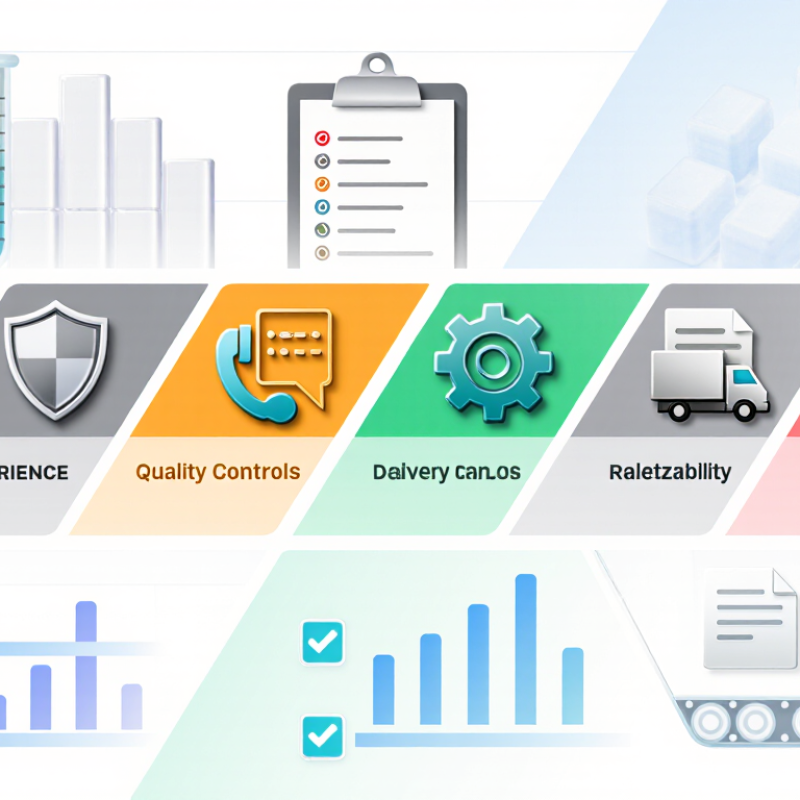
This guide’s seven tips examine supplier experience, quality controls, technical communication, customization, delivery reliability, documentation, and total cost. The checks are practical, but not perfect. A factory visit may reassure you; it cannot guarantee every future batch. Look for evidence, ask follow-up questions, and record what remains uncertain before making a long-term commitment.
Understanding VMQ Silicone Compounds and Their Applications
VMQ silicone compounds are built on methyl vinyl silicone rubber, valued for flexibility across wide temperature ranges. A gasket under a sunlit engine cover may face heat, vibration, oil mist, and repeated compression. A kitchen seal has different needs: odor, color, and relevant contact testing matter more. VMQ is not one universal recipe.
Grand View Research estimated the global silicone market at about US$18.4 billion in 2022, with projected annual growth of 6.1% from 2023 to 2030. This broad market figure includes many silicone products, not VMQ compounds alone. Still, it signals expanding use across industries. Ask suppliers for compound-specific test data, not market claims. Check hardness, tensile strength, tear resistance, and compression set against the actual part conditions. Numbers need context.
For outdoor seals, weathering and UV exposure deserve attention. For electrical components, insulation performance and consistent cure may matter more. Request samples and compare them using the same molding process and test conditions. Small details count. A compound that performs well in a data sheet may behave differently in a thin, sharply edged part. I would also ask how batch variation is monitored; that question is easy to overlook.
VMQ silicone compounds are commonly used across a broad temperature range. These ranges are typical examples, not universal limits; actual performance depends on formulation, exposure conditions, and application. Confirm the compound’s specifications with your supplier.
Defining Your Material, Performance, and Production Requirements
7 Tips for Choosing a VMQ Compound Supplier
Defining Your Material, Performance, and Production Requirements
Start with the part, not a catalog label. Describe where the VMQ component will operate, what it contacts, and how it is made. Specify hardness, color, dimensions, and any required approvals. For a seal, for example, clarify whether it faces repeated compression, outdoor exposure, or temperature swings. “High temperature” is too vague to guide a material choice.
Set measurable performance targets before comparing suppliers. Identify acceptable tensile strength, elongation, compression set, and operating-temperature range based on the part’s actual conditions. Ask how the supplier tests these properties and whether results apply to the proposed compound. Small details matter. A material that performs well in a datasheet may behave differently in a thin molded section. Request samples and test them using representative parts and conditions. One early specification I have seen overlooked was color consistency; it mattered only after production began.
Production needs deserve equal attention. Share expected order volumes, molding process, cure requirements, and tolerance limits. Ask about batch-to-batch controls, traceability, lead times, and how changes are communicated. A pilot run can reveal flash, flow, or demolding issues that a sample sheet cannot. Keep the evaluation practical: record test conditions, compare results against agreed targets, and revise requirements when real part data shows a gap.
Evaluating a Supplier’s Technical Expertise and Customization Options
A reliable VMQ compound supplier should explain how its technical team evaluates hardness, tensile strength, tear resistance, and compression set. Ask which test methods support the data, and whether results apply to your specific compound grade. Clear answers matter. A useful supplier can also discuss processing behavior, such as how a formulation handles mixing or molding temperatures, without promising identical results in every production run.
Tip: Share a real application, not just a target hardness. Include operating temperature, contact conditions, part dimensions, and expected service life. Then ask what can be adjusted, such as cure characteristics, color, or flexibility. A supplier’s response should identify trade-offs. For example, changing one property may affect another. If the answer sounds too easy, ask for evidence.
Tip: Request a sample plan and written test results for the proposed formulation. Compare samples under conditions close to your own process, including cure time and part thickness. Small differences can matter. Ask how revisions are documented and whether the same specification can be maintained across batches. I would not rely on a polished data sheet alone; it may leave practical questions unanswered. A short technical discussion with the supplier’s application team can reveal whether customization is grounded in testing or guesswork.
Verifying Quality Systems, Testing, and Regulatory Compliance
When evaluating a VMQ compound supplier, ask how its quality system controls each batch, not just whether a certificate exists. The ISO Survey 2022 recorded 1,265,216 valid ISO 9001 certificates across 189 economies. That scale shows how widely quality management systems are used; it does not prove a supplier’s silicone compound performs consistently. Ask for the certificate’s scope, audit status, and change-control process.
Paper is not performance.
Request batch-linked test reports, with methods and acceptance limits stated clearly. For example, ASTM D2240 measures hardness, ASTM D412 covers tensile properties, and ASTM D395 addresses compression set. Check whether results reflect your intended cure and service conditions; a neat-looking certificate of analysis may omit those details. I would compare several recent lots, not one sample. Small variation can matter in a sealing part.
Regulatory evidence should match the destination market and end use. Ask for current material declarations, supporting test records, and written notice procedures for formulation changes. Requirements for food-contact, medical, and industrial applications are not interchangeable. Verify each claim against the applicable rules and your own product specification. If a supplier cannot explain a test result in plain language, pause and investigate. That is not proof of poor quality, but it is a useful warning.
Comparing Supply Reliability, Support, and Total Cost of Ownership
When comparing VMQ compound suppliers, treat delivery evidence as seriously as quoted lead time. Ask for recent on-time-in-full results, average lead times, and shipment records for the specific grade you need. Check whether safety stock is reserved, where it is held, and how quickly production can recover after an interruption. Ask to see a sample certificate of analysis and traceability record. Small details matter. The World Bank’s 2023 Logistics Performance Index assesses customs, infrastructure, shipment arrangements, logistics competence, tracking, and timeliness. Use those dimensions to frame supplier questions, but verify performance with the supplier’s own records. USGS estimated 2023 world silicon production at 8.8 million metric tons, including 6.6 million in China. That concentration is worth noting, though silicon-metal output alone cannot predict VMQ compound availability.
Support affects production risk, not just convenience. Test how quickly a technical team responds to questions about hardness, cure behavior, or batch variation. Request written change-notification procedures and support during your own processing trials.
Then calculate total cost of ownership, not just price per kilogram. Include freight, incoming inspection, scrap, line stoppages, storage, and the cost of qualifying a replacement grade. The U.S. Department of Energy’s life-cycle cost guidance similarly considers purchase, operation, maintenance, and replacement costs. A neat spreadsheet can still mislead. I would also compare actual trial results across batches; supplier data sheets do not reveal every shop-floor issue. A cheaper compound may cost more if it needs extra adjustment or creates inconsistent molded parts.