An Automatic Circuit Recloser helps protect distribution networks by detecting faults and restoring service when conditions allow. For utilities, contractors, and equipment buyers, choosing a supplier involves more than comparing prices. Product ratings, operating conditions, protection settings, and support after delivery all matter. A recloser installed on a rural feeder may face different demands from one serving an industrial site.
This guide introduces suppliers to consider in 2026 and the practical questions global buyers should ask. It looks at voltage and current ratings, control options, communication interfaces, testing documentation, warranty terms, and access to replacement parts. Buyers should also confirm that a model suits their local grid requirements and installation environment. Ask for clear technical datasheets and verifiable test records. Details matter.
Supplier claims can sound similar. Compare them against project specifications, not polished brochures alone. Check how the supplier handles commissioning support, troubleshooting, and lead times. These points can affect a project long after purchase. Regional service coverage deserves particular attention, especially where response times are uncertain.
No shortlist fits every network. Even careful comparisons leave gaps, and supplier information may vary in depth. That is worth admitting. The sections ahead offer a structured starting point, not a substitute for engineering review or direct verification. Use them to narrow options and prepare better questions before requesting quotations.
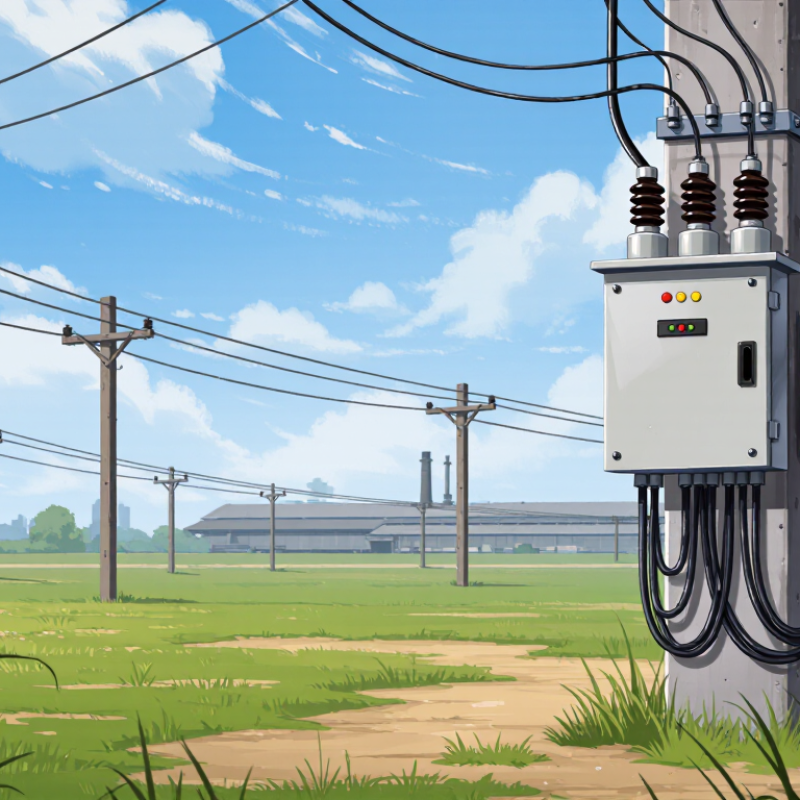
An automatic circuit recloser is a protective switch used on power-distribution feeders. It detects abnormal current, opens its contacts, and briefly interrupts the circuit. After a preset pause, it closes again to test whether the fault has cleared. Many faults are temporary, such as a branch brushing a line during a gust. A lasting fault triggers repeated trips and, eventually, lockout.
The operating sequence depends on current sensors, protective relays, and an interrupting mechanism, often vacuum-based in modern equipment. Settings define pickup levels, timing, and the number of reclosing attempts. Coordination matters: a nearby device should isolate a fault before the upstream recloser disconnects a larger area. Small details count. Engineers check load profiles, fault levels, and neighboring protection settings before commissioning. A caveat: field conditions can differ from design assumptions.
The U.S. Energy Information Administration’s Electric Power Annual 2022 reliability tables report an average SAIDI of 5.6 hours per customer when major events are included. SAIDI measures interruption duration; it does not measure recloser performance alone. It does show why utilities track both outage duration and frequency when assessing feeder reliability. Reclosers can help limit the area and duration of some interruptions, but poor coordination can create new problems. That part deserves a second look.
Automatic reclosers generally fall into single-phase and three-phase designs, with vacuum or gas-insulated interrupting chambers. Single-phase units can isolate a fault on one phase; three-phase units coordinate interruption across all phases. Control may be electronic or hydraulic, though electronic controls offer more flexible protection settings. Details matter.
The assembly typically includes an interrupter, operating mechanism, current sensors, controller, auxiliary power, and communications interfaces. Field engineers should check sensor accuracy, battery condition, cabinet sealing, and trip-coil operation during inspection. A damp control cabinet can undermine otherwise sound equipment. It is an easy detail to overlook.
Performance comparisons should use rated voltage, continuous current, short-circuit breaking current, insulation level, and operating sequence—not price alone. IEC 62271-111:2019 covers AC automatic reclosers up to and including 38 kV, while IEEE C37.60 provides a recognized rating and test framework. These references help buyers compare like with like. A nameplate, however, cannot show whether a device suits a feeder’s actual fault level or coordination plan. Ask suppliers for test documentation and confirm ratings against the site study before selection.
Automatic reclosers help distribution networks manage temporary faults without sending a crew to every affected pole. On overhead rural feeders, a recloser can open when a branch contacts a line, then close again after a short interval. If the fault remains, it opens and isolates that section. A brief interruption. In dense urban networks, placement and protection coordination matter more: a poorly coordinated device can trip alongside upstream equipment and widen the outage.
Their role is growing as networks expand and connect more distributed generation. The International Energy Agency’s 2023 report, Electricity Grids and Secure Energy Transitions, estimates that 80 million kilometres of grids must be added or refurbished by 2040. It also says annual grid investment needs to exceed $600 billion by 2030. These figures describe grid needs, not recloser sales, but they underline the scale of distribution upgrades. For buyers, application checks should include fault-current levels, feeder topology, reclosing settings, communications, and the local environment. Coastal salt, dust, lightning, and remote access can change equipment requirements. A device alone cannot compensate for weak protection studies or poor maintenance. There is no universal setting; field conditions still surprise even experienced teams.
Supplier-neutral comparison of common recloser specifications, network applications, and purchasing checks. Values shown are typical product or network ranges, not specifications guaranteed by every supplier; confirm the exact ratings and applicable standards for each project.
| Evaluation dimension | Typical range or capability | Network application | What buyers should verify |
|---|---|---|---|
| Rated voltage class | Common distribution classes include 15.5 kV, 27 kV, and 38 kV; the appropriate rating depends on system voltage and insulation requirements. | Medium-voltage overhead feeders and substations. | Check maximum system voltage, insulation levels, altitude derating, and local grid requirements. |
| Continuous current | Common equipment ratings include 630 A and 800 A, with other ratings available in some product ranges. | Feeder sections, line switches, and network tie points. | Match the rating to expected load, emergency transfer loading, ambient conditions, and future capacity plans. |
| Short-circuit interrupting capability | Ratings vary by model and voltage class; 12.5 kA and 16 kA are examples found in distribution equipment, while some applications require higher ratings. | Fault isolation on feeders with different available fault-current levels. | Use the utility’s fault study to confirm symmetrical interrupting current, making capacity, and required operating sequence. |
| Interruption and insulation technology | Common designs use vacuum interrupters; outdoor insulation may use polymeric or porcelain housings. | Outdoor distribution installations exposed to weather and contamination. | Review environmental ratings, creepage distance, sealing, maintenance requirements, and suitability for the site. |
| Protection and reclosing control | Electronic controls commonly provide configurable overcurrent protection, fault records, and automatic reclosing sequences. | Overhead lines where temporary faults can be cleared by opening and reclosing. | Confirm protection functions, coordination settings, battery or auxiliary-power arrangements, and event-recording features. |
| Distribution automation communications | Depending on the control and configuration, interfaces may support protocols such as DNP3 or IEC 60870-5-104; IEC 61850 support is product-specific. | SCADA-enabled feeders, remote switching, and network automation schemes. | Verify supported protocol versions, physical interfaces, cybersecurity requirements, and interoperability with the utility control system. |
| Rural and long-feeder networks | Selection depends on feeder fault levels, load, protection coordination, and the utility’s desired reclose policy. | Long overhead lines serving rural or remote areas. | Assess communications coverage, local control options, environmental conditions, and service access. |
| Renewable and distributed generation connections | Protection settings and control logic must account for the network design and the behavior of connected generation. | Distribution feeders with solar, wind, storage, or other distributed energy resources. | Review interconnection studies, bidirectional power-flow needs, protection coordination, and applicable grid codes. |
| Standards and type testing | IEC 62271-111 and IEEE C37.60 are relevant standards for automatic circuit reclosers, depending on the project and market. | Utility procurement, equipment qualification, and cross-border projects. | Request applicable type-test reports and confirm the specified standard, edition, ratings, and local acceptance requirements. |
| Supplier support and lifecycle service | Support scope varies by supplier and region; it may include commissioning guidance, spare parts, training, and warranty service. | All installations, especially remote networks and multi-year rollout programs. | Compare documented warranty terms, local service availability, spare-parts lead times, training, and technical-response arrangements. |
Note: This supplier-neutral table summarizes common selection considerations, not a ranked list of manufacturers. Final equipment selection should be based on the project’s system studies, procurement specification, and verified product documentation.
Selecting an automatic recloser supplier starts with the actual network conditions. Define system voltage, fault levels, insulation requirements, climate exposure, and expected operating cycles. Ask for type-test evidence against IEC 62271-111 or IEEE C37.60, where applicable. Check whether tests cover the proposed configuration, not merely a similar unit. Test reports matter.
The International Energy Agency’s 2023 report, Electricity Grids and Secure Energy Transitions, says more than 80 million kilometres of grids must be added or refurbished by 2040. It also estimates annual grid investment needs will exceed $600 billion by 2030, up from about $300 billion today. That expansion makes delivery capacity and quality controls worth checking. Request factory inspection records, traceability for key components, and realistic lead times.
After-sales support matters in the field. Confirm spare-part availability, commissioning assistance, training, and response arrangements across the project’s service life. Ask for references from installations with comparable voltage and environmental conditions. A supplier’s performance figures should be backed by stated test methods and operating assumptions. Brochures rarely show the difficult details. One point buyers can overlook is software or control compatibility with existing protection systems; verify interfaces early, and document any unresolved integration risks.
Qualifying an automatic circuit recloser supplier means checking field evidence, not just comparing brochures. The IEA’s 2023 Electricity Grids and Secure Energy Transitions report estimates that over 80 million kilometres of grids may need to be added or refurbished by 2040. That scale makes dependable equipment and service support important. Ask suppliers for type-test reports against relevant IEC or IEEE standards, covering interruption performance, insulation, control functions, and environmental limits. Confirm the tested configuration matches the offered unit, including its control cabinet and sensors.
Look beyond the factory. Review quality-control records, component traceability, warranty terms, spare-parts availability, and commissioning support in the destination country. Request references for installations with similar voltage levels and operating conditions. A supplier’s response to technical questions can reveal more than a polished catalogue. Still, no document fully proves how a crew will handle a difficult site; this deserves a real conversation.
Tips: Ask for a sample test report and check model numbers against the quotation. Request a clear lead-time schedule and named service contacts. Paper is patient. Verify one reference directly, and note any gaps rather than assuming they are harmless.
We are here to help you with all your queries and concerns, just write to us using the below form and we will get back to you as soon as we can.