China has become a major sourcing hub for furniture components and retail storage solutions. Its manufacturers serve retailers, contractors, wholesalers, and custom furniture brands worldwide. This guide introduces China’s top 10 Shelf Panel manufacturers for global buyers seeking dependable production partners.
The selection focuses on practical buying factors, not attractive factory photos alone. We consider material options, panel thickness, edge finishing, drilling accuracy, surface durability, packaging, and production capacity. We also examine export experience, quality-control procedures, communication, and support for custom specifications. Samples, factory audits, and clear technical drawings remain essential before placing a large order. A supplier may offer excellent prices yet struggle with color consistency or shipment coordination.
Real sourcing experience often reveals small details. A well-protected panel should arrive without crushed corners, moisture marks, or loose edging. That matters.
We also consider common materials, including MDF, particleboard, plywood, solid wood, and laminated boards. Each option suits different loads, environments, and budgets. Buyers should confirm formaldehyde emissions, applicable testing documents, and packaging standards for their destination market. Requirements can vary by country and project type.
No ranking is permanent. Manufacturing strengths, lead times, equipment, and service teams can change over time. A factory can look reliable on paper and still miss a delivery detail. Therefore, this overview should support careful comparison rather than replace direct verification. With precise drawings, approved samples, written specifications, and realistic expectations, global buyers can identify a Shelf Panel partner that supports consistent quality and long-term cooperation.
China’s shelf panel industry is part of a much larger wood-based manufacturing system. China National Furniture Association reported furniture industry revenue of about RMB 655.7 billion in 2023. The sector declined year on year, yet its production base remains extensive. China’s wood-based panel output also exceeded 300 million cubic metres, according to national forestry industry statistics.
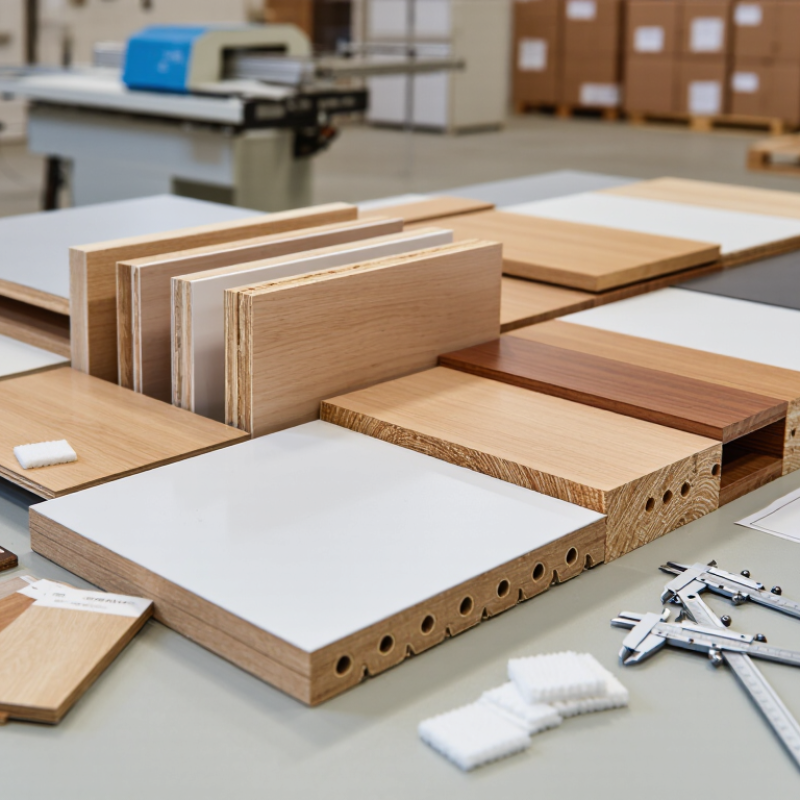
That scale supports many panel formats, including particleboard, medium-density fibreboard, plywood, and laminated boards. Export buyers usually assess more than appearance. They check board density, moisture resistance, edge durability, surface flatness, and formaldehyde emissions. A practical factory review should compare laboratory reports with random production samples. Small differences can affect screw holding and shelf deflection.
Production is not perfectly uniform.
China Customs data showed furniture and parts exports above USD 70 billion in 2023. Shelf panels benefit from this mature export network, including established packaging and container-loading practices. However, lower cost does not always mean better value. Some panels look smooth but contain weak cores or inconsistent thickness. Buyers should request batch records, tolerances, test methods, and photographs of pallet protection. Independent inspection remains useful, especially for large orders. The industry is capable, but its quality picture still requires careful verification.
When evaluating shelf panel manufacturers for global buyers, start with measurable quality rather than attractive catalog images. Check the panel’s material grade, moisture resistance, load capacity, thickness tolerance, and surface durability. A reliable supplier should provide recent test reports and clear production specifications. Ask for samples before placing a large order. Small defects become expensive across thousands of panels.
Tips: Compare samples under the same lighting. Check flatness with a straightedge. Press the edges gently. Inspect drilling accuracy, edge sealing, and packaging strength. Request batch traceability and written inspection records. Short answers may hide weak controls.
Production experience also matters. Ask how the factory manages raw material storage, cutting accuracy, bonding pressure, and final inspection. An on-site or video audit can reveal practical details, such as crowded storage areas or damaged corners. Confirm export experience, delivery planning, replacement procedures, and communication during quality disputes. Certifications can support trust, but they should not replace physical inspection. I have seen polished documents fail to explain basic production limits. That is an uncomfortable warning.
A dependable manufacturer should discuss weaknesses openly. For example, a panel may perform well indoors but require protection in humid environments. Clarify expected service conditions, installation methods, packaging design, and acceptable tolerances. Cost matters, but unstable quality creates hidden labor, delays, and customer complaints. Choose evidence over promises.
China’s top ten shelf panel manufacturers differ in materials, equipment, and export experience. These profiles focus on practical strengths, not advertising claims. Top is not absolute. Buyers should verify current capacity before signing contracts.
The first manufacturer specializes in laminated particleboard for home storage projects. Its edge-banding lines support consistent dimensions and clean corners. The second produces moisture-resistant MDF panels for kitchens and utility rooms. The third focuses on plywood shelves, using layered veneers for improved screw holding. The fourth serves commercial furniture buyers with automated cutting and drilling. It offers useful customization, but complex orders may extend lead times.
The fifth manufacturer develops lightweight honeycomb panels for retail displays and office storage. The sixth supplies melamine-faced boards with many surface textures, including wood grain and matte finishes. The seventh emphasizes low-formaldehyde production and provides laboratory test reports. The eighth manufactures thick panels for warehouses and heavy-duty shelving. Its strength is durability, though the boards may increase shipping weight. The ninth supports small and medium batches with flexible cutting schedules. This suits testing, not always large projects. The tenth combines panel production with hardware preparation, reducing assembly work for overseas buyers.
Reliable evaluation requires checking sample flatness, moisture content, surface bonding, packing quality, and repeat-order consistency. Ask for recent inspection records and compare samples from different batches. A polished catalogue can hide weak communication or unstable tolerances. That detail deserves attention.
| No. | Anonymous Manufacturer Profile | Main Production Base | Core Panel Materials | Common Thickness Range | Surface Finishes | Edge-Banding Options | Moisture-Resistant Options | Formaldehyde Compliance | OEM / Customization | Typical Export Regions | Quality and Compliance Support |
|---|---|---|---|---|---|---|---|---|---|---|---|
| 1 | Profile 01 High-volume producer | East China | Particleboard, MDF, plywood | 12–25 mm | Melamine, laminate, veneer | PVC, ABS, matching melamine | Available | CARB Phase 2 / E1 options | Available | Europe, North America, Southeast Asia | Pre-shipment inspection; material and emission documentation |
| 2 | Profile 02 Retail shelving specialist | South China | MDF, particleboard, laminated plywood | 15–30 mm | Melamine, HPL, painted finish | PVC, ABS | Available | E1 and low-emission specifications | Available | Australia, Middle East, Europe | Color matching, load testing, dimensional inspection |
| 3 | Profile 03 Flat-pack supplier | East China | Particleboard, MDF | 12–22 mm | Melamine, UV-coated board | ABS, PVC | Available | E1 / CARB-compliant material options | Available | North America, Europe, Latin America | Cutting lists, drilling drawings, assembly samples |
| 4 | Profile 04 Plywood panel producer | Central China | Poplar plywood, birch plywood, commercial plywood | 9–30 mm | Natural veneer, laminate, film-faced surface | Exterior-grade options | Available | E1 and project-specific requirements | Available | North America, Europe, Africa | Core composition reports; bonding-grade documentation |
| 5 | Profile 05 Commercial fixture supplier | South China | MDF, particleboard, compact laminate | 16–36 mm | HPL, melamine, PET, painted finish | PVC, ABS, laser edge banding | Available | Retail display and shopfitting customization | Available | Asia-Pacific, Europe, Middle East | Prototype approval, color boards, packaging tests |
| 6 | Profile 06 Decorative board specialist | East China | MDF, particleboard, bamboo board | 15–25 mm | Melamine, woodgrain foil, veneer | PVC, ABS, acrylic edge | Available | Custom decors, sizes, drilling and routing | Available | Europe, Southeast Asia, North America | Surface abrasion, adhesion and color consistency checks |
| 7 | Profile 07 Heavy-duty shelving supplier | North China | Plywood, MDF, steel-supported composite panels | 18–40 mm | HPL, phenolic surface, industrial coating | PVC, ABS, sealed edges | Available | Available | Warehouse, retail, and institutional projects | Load-bearing tests, moisture tests, inspection reports | |
| 8 | Profile 08 Small-batch custom producer | Southwest China | MDF, plywood, solid wood panels | 12–30 mm | Veneer, stain, paint, melamine | Solid wood, PVC, ABS | Available | Low minimum order quantities and prototypes | Available | Europe, Australia, North America | Sample approval, CNC machining, manual finishing inspection |
| 9 | Profile 09 Flat-pack furniture component supplier | East China | Particleboard, MDF, plywood | 12–25 mm | Melamine, foil, laminate | PVC, ABS | Available | Drilling, doweling, cam-lock and CNC processing | Available | Europe, North America, Southeast Asia | Assembly verification, barcode labeling, carton testing |
| 10 | Profile 10 Project-oriented manufacturer | North China | Plywood, MDF, particleboard, compact laminate | 15–35 mm | HPL, melamine, veneer, painted finish | ABS, PVC, sealed and rounded edges | Available | Project drawings, technical samples and batch production | Available | Middle East, Europe, Africa, Southeast Asia | Factory quality plans, pre-shipment inspection, export packing |
China’s leading shelf panel manufacturers supply solutions for retail, warehouse, office, and home storage projects. Global buyers can choose laminated MDF, particleboard, plywood, solid wood, or metal-reinforced panels. MDF offers smooth surfaces and clean CNC routing. Particleboard keeps budgets controlled. Plywood provides better strength and screw holding. Solid wood creates a warmer appearance, but it may expand with humidity. Metal-reinforced panels suit heavier loads. Choose materials by weight, moisture, and installation conditions. Not by appearance alone.
Manufacturers commonly provide custom lengths, widths, thicknesses, edge banding, drilling, grooves, colors, and surface textures. Buyers should send drawings with hole spacing, load requirements, and packaging expectations. Matte laminates hide fingerprints better than glossy finishes. Rounded edges improve handling and reduce chipped corners. Small details matter. Ask for samples before approving mass production. A sample can look excellent, while a full shipment reveals color variation or uneven edging. This is where careful inspection becomes essential. Request moisture data, formaldehyde test results, material specifications, and tolerance records. Independent pre-shipment inspection adds reliability, especially for large orders. Customization can reduce installation work, but excessive options may increase cost and lead time. A practical specification is often better than a perfect-looking one.
China’s shelf panel sector serves furniture, retail, and interior projects worldwide. Grand View Research valued the global wood-based panel market at about USD 188 billion in 2023, with steady annual growth. This demand rewards suppliers with stable export systems, not only low prices.
Serious manufacturers should show production capacity, loading photos, test reports, and recent export records. Buyers should check panel thickness, moisture content, edge strength, flatness, and screw-holding performance. ISO 9001 certification supports process control, but it does not guarantee every shipment. A certificate can become a paper shield. Independent inspection remains valuable. Factory audits should review calibration records, batch labels, packaging, and corrective actions.
Tips
Request three recent production samples from different batches. Measure thickness at several points. Compare the results with the agreed tolerance. Also confirm pallet dimensions, container loading plans, fumigation documents where required, and destination-country labeling rules. The International Organization for Standardization reported more than 1.2 million ISO 9001 certificates worldwide in its latest survey, showing broad adoption but not automatic product quality. Buyers should also ask about formaldehyde testing, especially for indoor applications. EN 717-1, ASTM E1333, or equivalent methods can provide useful evidence. Still, standards vary across markets. That detail is easy to miss. A practical sourcing decision should balance price, repeatability, lead time, inspection access, and after-sales response.
We are here to help you with all your queries and concerns, just write to us using the below form and we will get back to you as soon as we can.