
In today's fast-paced industrial landscape, efficiency matters. A reliable Coiling and Packing Machine can streamline operations like never before. These machines play a crucial role in packaging goods, saving time and reducing manual effort. For businesses, choosing the right equipment can lead to significant productivity gains.
Several models stand out in the market, each with unique features. Some excel in speed, while others offer versatility. Investing in the right Coiling and Packing Machine can transform your packaging process. However, it’s essential to consider the specific needs of your operation. What works for one business might not be ideal for another.
Still, challenges exist. The variety of machines can overwhelm buyers. Features can be confusing. Companies must weigh their options carefully. A poorly chosen machine can lead to inefficiencies. Thoughtful reflection on these details can lead to better decisions, ensuring you make the best choice for your needs.
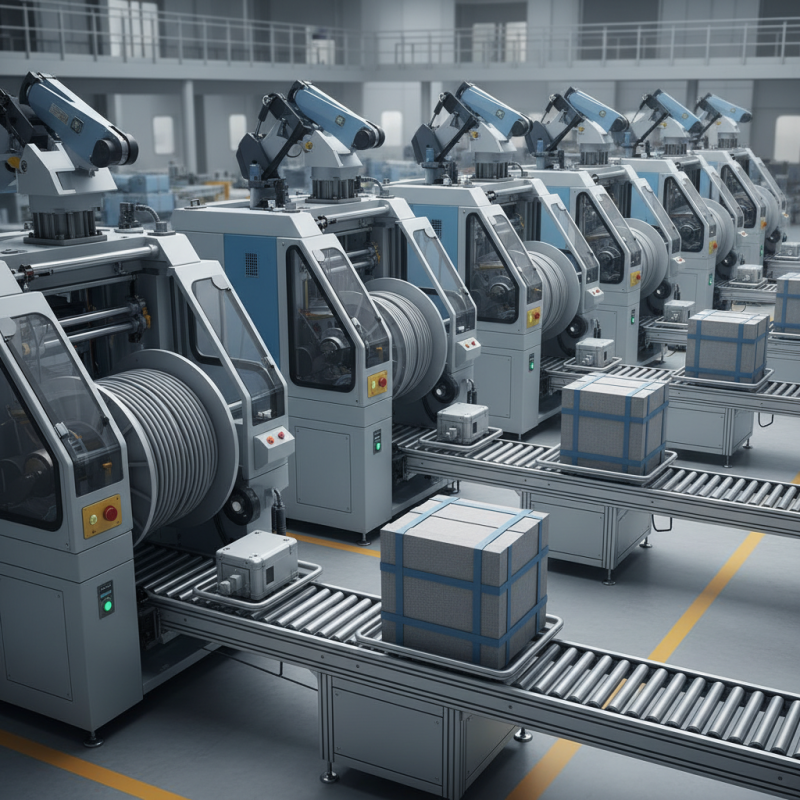
Coiling and packing machines are vital in the packaging industry. They enhance efficiency and reduce labor costs. These machines can handle a variety of materials, including textiles, films, and more. Their ability to produce uniform coils leads to significant time savings. Yet, not all machines are suitable for every product.
The technology behind these machines varies widely. Some are automated, while others require manual adjustments. This can lead to inconsistent performance. It's essential to match the machine with your specific needs. Poorly aligned machines may cause damage to materials. Regular maintenance is needed to ensure optimal performance.
Investing in the right coiling and packing solution can be challenging. Many factors influence the decision, like throughput and space constraints. It's important to review performance data before purchasing. A machine that excels in one area may falter in another. Testing in actual production conditions is also advisable. This ensures that the chosen solution meets all requirements.
When selecting coiling and packing machines, several features can enhance efficiency. First, consider the speed of operation. Machines that can run quickly boost productivity. However, too much speed may affect quality. Balancing speed and precision is crucial.
Another key feature is adaptability. Machines should handle various packaging sizes. Some products require different coil sizes, and flexibility is essential. Machines that can switch easily save time and reduce waste. It’s worth thinking about how often you change product sizes.
Tips: Regular maintenance can prevent breakdowns. A well-maintained machine lasts longer and performs better. Additionally, operator training is essential. Employees should understand how to use the machine effectively.
Look at the automation level as well. Fully automated machines reduce labor costs. Yet, they can be complex. Some users prefer semi-automated options for ease of use. Ultimately, the right choice depends on your specific needs and operational goals.
In the fast-evolving realm of packaging, choosing the right coiling and packing machines can greatly influence efficiency. A recent industry report indicates that efficient packaging can reduce operational costs by up to 30%. Therefore, understanding the capabilities of various machines is crucial.
Many machines vary in runtime, performance, and ease of use. Some excel at speed but may compromise on accuracy. Others balance both but can be more expensive. This disparity can lead to challenges in operations. Choose machines based on your specific requirements, not just their popularity or cost.
Tip: Always analyze the overall efficiency rather than just the speed of a machine. Efficiency means fewer errors and lower waste. Moreover, evaluate the machine's adaptability to new materials, especially as packaging needs evolve.
Emphasizing efficiency in packing also raises concerns. Some machines may require frequent maintenance, which can disrupt productivity. Operators must be trained well to minimize mistakes and downtime. Investing in comprehensive training programs can yield long-term benefits.
| Machine Model | Coiling Speed (m/min) | Packing Type | Max Coil Diameter (mm) | Weight (kg) | Power Consumption (kW) |
|---|---|---|---|---|---|
| Model A | 50 | Shrink Wrap | 300 | 200 | 5 |
| Model B | 70 | Box Packing | 250 | 180 | 6 |
| Model C | 60 | Stretch Film | 280 | 220 | 7 |
| Model D | 55 | Blister Pack | 230 | 150 | 4.5 |
| Model E | 65 | Flexible Packaging | 300 | 250 | 8 |
| Model F | 75 | Pallet Wrap | 350 | 300 | 10 |
| Model G | 45 | Cartoning | 200 | 170 | 5.5 |
| Model H | 80 | Vacuum Pack | 400 | 350 | 9 |
| Model I | 90 | Twist Wrap | 450 | 400 | 12 |
| Model J | 85 | Film Packaging | 350 | 320 | 11 |
Advanced coiling and packing technology brings notable benefits to businesses. Efficiency is a key factor. These machines reduce packing time significantly. They also minimize errors, ensuring products are packed accurately. This leads to fewer returns and complaints. Companies can improve customer satisfaction with reliable packaging.
Tips: Always evaluate the machine’s speed and capacity. Choose a model that suits your production volume. Remember, a machine's initial cost may be offset by long-term savings.
Automation is another advantage. Advanced machines require minimal human intervention. This frees up staff for other important tasks. However, it’s essential to provide adequate training to operators. Without proper knowledge, automation can lead to issues.
Tips: Take time to train employees. Regular maintenance of machines is crucial too. Neglect can lead to breakdowns, causing delays in production. The right technology can transform your packing process for the better.
This chart illustrates the efficiency ratings of the top 10 coiling and packing machines, showcasing the advantages of utilizing advanced coiling and packing technologies in packaging processes. A higher efficiency rating indicates better performance in packaging tasks.
The future of coiling and packing machines is evolving. Innovations are enhancing efficiency and performance. Automation is at the forefront, simplifying packaging processes. Machines can now adapt to different product sizes quickly. This flexibility reduces downtime and boosts productivity.
Meanwhile, artificial intelligence is making waves. Smart systems can monitor performance in real time. They also analyze data to predict maintenance needs. This proactive approach can minimize disruptions. However, the implementation of AI requires careful planning. Not everyone is equipped for this technological shift.
Sustainability is another key trend. Eco-friendly materials are becoming the norm. Packaging machines are also designed with energy efficiency in mind. However, the transition may come with challenges. Businesses must balance cost with these innovations. Finding the right solution is not always straightforward. Exploring new technologies takes time and resources. Progress may be slow, but the potential is immense.
We are here to help you with all your queries and concerns, just write to us using the below form and we will get back to you as soon as we can.