China Top DC Chargers Manufacturers and Suppliers?
China has become a major sourcing hub for Dc Chargers used in electric vehicles, fleets, workplaces, and public charging networks. Its manufacturers offer compact wall units, high-power cabinet systems, and customized charging solutions. However, product variety can make supplier selection difficult.
This guide examines leading Chinese DC charger manufacturers and suppliers through practical purchasing criteria. These include output power, charging efficiency, connector compatibility, thermal management, enclosure protection, software integration, and after-sales support. Factory experience matters. So does evidence. Reliable suppliers should provide test reports, quality certifications, production details, and clear warranty terms. Buyers should also confirm whether a supplier can support installation, spare parts, firmware updates, and local technical requirements.
A polished brochure is not enough.
Real evaluation may involve reviewing sample units, checking cable durability, and observing load testing under demanding conditions. A charger that performs well in a showroom may respond differently outdoors, especially in cold, heat, dust, or heavy rain. Supplier communication also reveals practical strengths. Do engineers answer technical questions clearly? Are delivery dates realistic? Can the company explain protection functions without vague promises?
No supplier is perfect.
Some manufacturers may offer excellent pricing but limited overseas service. Others may provide advanced software while requiring higher maintenance budgets. This overview aims to present a balanced starting point for distributors, project developers, fleet operators, and commercial buyers. Careful verification remains essential before signing a purchase agreement.
What Are DC Chargers and How Do They Work?
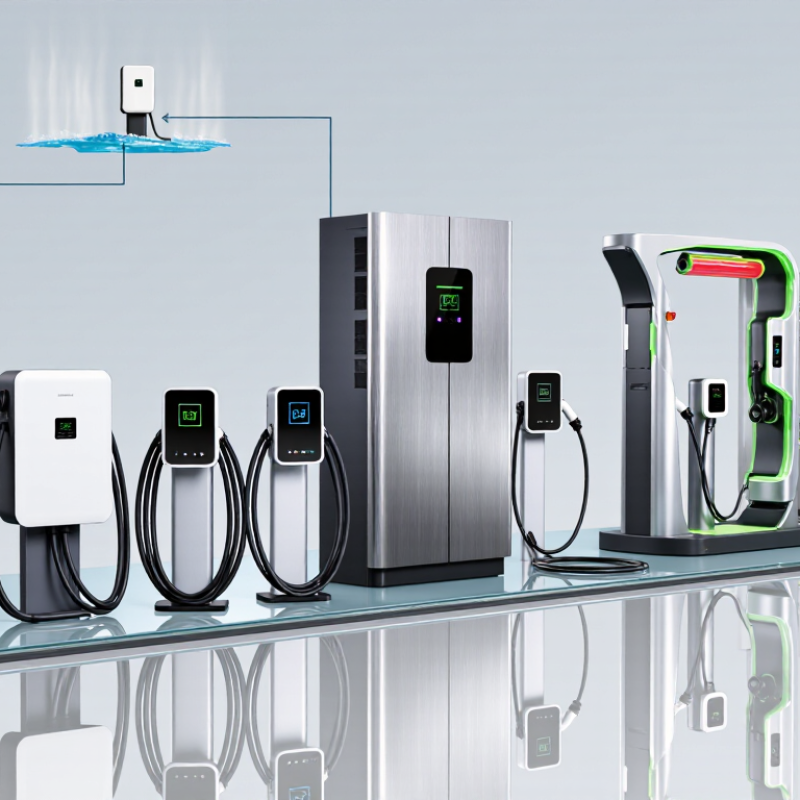
A DC charger sends direct current to an electric vehicle’s battery. It does not rely mainly on the vehicle’s onboard AC charger. Inside the unit, power modules rectify grid electricity, manage voltage, and communicate with the battery management system. Charging then starts only after voltage, temperature, and safety checks agree.
Typical public DC chargers deliver 50 to 350 kW, although actual speed depends on the vehicle and battery condition. A cold battery may charge slowly. Near 80% state of charge, power usually falls to protect battery life. The IEA’s Global EV Outlook 2024 reports more than four million public charging points worldwide at the end of 2023. About 1.3 million new points were added during that year. This growth shows strong demand, but it also exposes weak grid planning and uneven site maintenance. Faster is not always better.
Tips: Check the charger’s rated power, connector type, cooling system, and payment reliability. Ask for test records, protection settings, and efficiency data. A practical site review should measure cable heat, voltage stability, and emergency shutdown response. Published efficiency figures can look impressive, yet real performance changes with weather and load. That detail is easy to miss.
How to Evaluate China’s Leading DC Charger Manufacturers
Evaluating China’s leading DC charger manufacturers requires more than comparing power ratings.
The IEA’s Global EV Outlook 2024 reports that China hosts over half of the world’s public charging points. China’s charging alliance recorded about 3.58 million public chargers by the end of 2024, including approximately 1.25 million DC units. These figures show scale, not automatic quality.
Check the manufacturer’s operating evidence. Ask for test records covering thermal protection, insulation, surge resistance, and connector durability. A 60 kW cabinet should maintain stable output during repeated charging, not only during a short laboratory test. Review compliance with GB/T, IEC 61851, and market-specific certification requirements. For overseas projects, confirm grid frequency, payment systems, communication protocols, and local safety approvals. A polished datasheet is not proof.
Factory experience matters on site. Request installation references with climate, voltage, and traffic conditions similar to yours. Inspect cable cooling, filter replacement access, emergency-stop visibility, and remote fault logs. The charger should report useful details, such as voltage deviation and module temperature, within seconds. Warranty terms must identify response times and spare-parts availability. I would also test software updates before signing. This step is often neglected. Price remains important, but the cheapest unit can become expensive after repeated downtime. Public reports provide direction, yet independent testing and a witnessed site trial offer stronger evidence. Even then, no evaluation is perfect; procurement teams should record assumptions and revisit them after six months of operation.
Top Chinese DC Charger Suppliers by Product Capabilities
China Top DC Chargers Manufacturers and Suppliers?
Top Chinese DC Charger Suppliers by Product Capabilities
China’s DC charging market is broad, but supplier capability varies sharply. The IEA’s Global EV Outlook 2024 reported more than four million public charging points worldwide at the end of 2023. China held the largest share, supported by rapid highway and urban deployment. Buyers should examine output stability, not only advertised power. A 60 kW charger may deliver less during heat, peak demand, or poor ventilation. Practical testing matters.
Suppliers with strong product capabilities usually offer modular power cabinets, liquid-cooled cables, and remote monitoring. These features support easier maintenance at busy depots. Compliance testing, ingress protection, emergency controls, and payment integration also deserve close review. The China Electric Vehicle Charging Infrastructure Promotion Alliance reported continued growth in public charging infrastructure during 2023. However, installation numbers alone cannot prove reliability. I would request one-year fault records, efficiency curves, and spare-parts availability. Some suppliers provide impressive prototypes but limited field evidence. That gap needs attention.
Tips: Match charger power with vehicle routes, grid capacity, and daily parking time. Request independent test reports and sample data from similar climates. Check cable weight, screen readability, connector temperature, and service response time. A cheaper quotation can hide civil-work, software, or maintenance costs. Procurement teams should compare total operating cost over five years, not just the purchase price.
Key Certifications and Quality Standards for DC Chargers
China Top DC Chargers Manufacturers and Suppliers: Key Certifications and Quality Standards
The IEA’s Global EV Outlook 2024 reports over four million public charging points worldwide by the end of 2023. More than 1.3 million were added that year. This growth increases the need for verified DC charger safety, not just higher output ratings.
A reliable supplier should show compliance with IEC 61851-23 for DC charging systems and IEC 61851-24 for digital communication. IEC 62196 defines connector safety and interoperability. ISO 15118 may support advanced vehicle communication, including automated charging functions.
These standards do not replace testing. Ask for reports from accredited laboratories, production traceability, and clear serial-number records. In North America, UL 2202 is commonly referenced for EV charging equipment. In Europe, CE marking requires conformity with applicable safety and electromagnetic compatibility rules. CE is not a quality award.
Look closely at real operating details.
Check insulation monitoring, emergency shutdown, residual-current protection, thermal derating, enclosure protection, and cable temperature control.
A charger rated at 180 kW may deliver less power in a hot cabinet or weak grid. That is normal, but suppliers should disclose the conditions. Field commissioning records matter too.
Paperwork can look complete while firmware testing remains unclear. This is where buyers should remain cautious. A better supplier explains limits, maintenance intervals, fault logs, and local certification requirements without vague promises.
How to Choose the Right China-Based DC Charger Supplier
How to Choose the Right China-Based DC Charger Supplier
Choosing a China-based DC charger supplier takes more than comparing quoted prices. The International Energy Agency’s Global EV Outlook 2024 reports that public charging points worldwide approached four million in 2023, while fast-charger numbers grew by 55%. That rapid expansion makes dependable equipment and service support essential. Ask suppliers for independent test reports covering output stability, thermal performance, and protection against dust and moisture. Check that stated ratings match the unit’s actual operating range, not only its peak figure. Small detail. It matters.
Review the supplier’s manufacturing process, component traceability, and quality-control records. Request references from installations with similar climates and usage patterns. A charger beside a busy highway faces different demands from one in a sheltered depot. Confirm which communication protocols and payment integrations are supported, and ask how software updates and spare parts are handled. IEC 61851 requirements provide a useful technical reference for conductive charging systems; conformity documents should be current and verifiable. The IEA data describes market growth, not product quality, so it cannot replace factory audits or sample testing. A sample may look flawless and still reveal little about long-term reliability.
Before signing, clarify warranty coverage, response times, commissioning responsibilities, and the availability of local technicians. Ask for a written service plan with realistic parts lead times. If possible, inspect a production line and test a unit under sustained load. I would not rely on a polished presentation alone; even a capable supplier can have gaps in documentation. Compare those gaps openly, then make the decision against your site’s power capacity, expected traffic, and maintenance resources.