What Are the Top Electric Valve Types in 2026?

In 2026, electric valves are chosen for more than simple on-off control. They help manage water, air, steam, fuel, and process fluids across buildings, factories, and treatment systems. Yet the right choice depends on the medium, pressure, temperature, flow rate, and control requirements. A valve that works well on a cooling-water line may be a poor fit for hot, abrasive service.

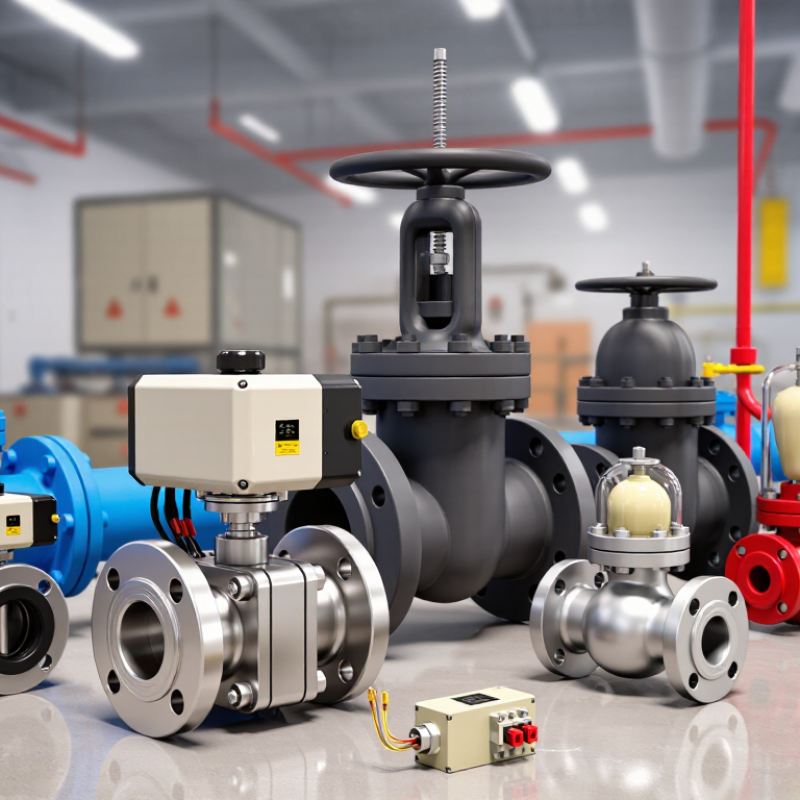
This guide compares the leading Electric Valve types, including ball, butterfly, gate, globe, diaphragm, and pinch valves. Each design has a distinct operating profile. A motorized ball valve can provide a quick shutoff; a globe valve offers finer flow regulation; and a butterfly valve can suit large pipes where space matters. Small details count. A sticky actuator, an unsuitable seal, or an incorrectly sized connection can undermine an otherwise sound selection.

There is no universal winner. That matters. Rankings can make selection seem simpler than it is, and product names do not reveal every performance limit. Check manufacturers’ specifications, actuator duty ratings, fail-safe options, materials, and maintenance needs before comparing models. For critical applications, qualified engineering review can help confirm suitability. The sections ahead explain where each type tends to perform well, what trade-offs to expect, and which questions to ask before purchase. Some choices will still involve compromise. That is normal.
What Are the Top Electric Valve Types in 2026?

Electric Valve Duties: On/Off Switching and 4–20 mA Modulating Control

Electric valves generally perform one of two duties: on/off switching or modulating control. An on/off valve moves between open and closed positions, making it suitable for isolating a line or starting a flow. Its actuator should match the valve’s torque needs and expected cycling frequency. A valve that moves too slowly can disrupt a process; one that cycles constantly may wear sooner than expected. Simple, but not effortless.

Modulating valves adjust their opening to regulate flow, pressure, or temperature. A common control signal is 4–20 mA: 4 mA represents the low end of the configured range, while 20 mA represents the high end. The actuator converts that signal into valve position. Confirm the signal direction, range, and position feedback during commissioning; wiring assumptions can cause an apparently healthy valve to move the wrong way.

The right choice depends on the process, not just the signal. A control valve needs suitable flow characteristics and enough authority across its operating range. On/off service may need tight shutoff, while modulating service benefits from stable positioning and minimal hunting. A clean 4–20 mA reading does not prove the valve is controlling accurately. Check the actual stem or actuator position under operating conditions. In practice, tuning can still be imperfect, especially when sensors lag or the process changes quickly.

Electric Ball Valves: 90° Quarter-Turn Operation and ISO 5211 Mounting

An electric ball valve opens or closes with a 90-degree turn of its internal ball. The short movement can make on-off control quick and easy to monitor. In a plant room, an actuator may rotate the stem while a control signal confirms the valve’s position. It is a practical arrangement. Still, the actuator’s speed and positioning accuracy depend on its design and controls.

ISO 5211 mounting provides a standardized interface between many part-turn actuators and valves. It defines mounting dimensions and drive connections, helping technicians assess whether components can be assembled. But the standard alone does not guarantee a direct fit. Check the flange pattern, stem dimensions, and required torque before installation. A mismatch may need an adapter, adding parts and service time.

Ball valves are often chosen for shutoff, not precise throttling. Partly open operation can increase wear or create unstable flow, depending on the valve and process. Consider fluid, pressure, temperature, seat material, and operating frequency. A compact actuator may fit neatly above a pipe, yet still be undersized for a stiff valve or frequent cycling. The mounting looks simple; the application deserves a closer look.

Electric Butterfly Valves: 90° Rotation for Compact, Large-Bore Isolation

Electric butterfly valves use a quarter-turn motion: the actuator turns a disc about 90 degrees to open or close the flow path. This simple movement suits large-bore pipelines where space around the valve is limited. A compact body can also reduce support and installation demands, though actual requirements depend on pipe size and operating conditions.

In a water or HVAC line, the disc swings clear enough to allow flow, then rotates across the bore for isolation. The movement is quick. But quick does not always mean effortless. Differential pressure, fluid temperature, and seal material all affect the torque needed and the valve’s shutoff performance. Actuator sizing should account for these factors, not just the nominal pipe diameter. A field check of available voltage and control signals helps prevent commissioning delays.

Butterfly valves can create more flow resistance than a full-bore valve because the disc remains in the stream. That detail is easy to overlook. For clean water service, it may be acceptable; for abrasive or viscous fluids, disc wear and seal compatibility deserve closer review. Operators should also confirm whether the installation needs tight isolation or only routine flow control. One choice may not serve both duties equally well.

Electric Globe Valves: Linear Throttling Under IEC 60534 Control-Valve Practice

What Are the Top Electric Valve Types in 2026?

Electric Globe Valves: Linear Throttling Under IEC 60534 Control-Valve Practice

Electric globe valves regulate flow by moving a plug along the stem, changing the opening between plug and seat. An electric actuator converts a control signal into this linear movement. Under IEC 60534 practice, valve sizing and flow characteristics matter: an incorrectly sized valve may hunt near its setpoint or respond sluggishly. A pipe diameter alone is not enough to select one.

For steady throttling, check the process fluid, pressure drop, temperature, and expected flow range. Trim geometry affects how flow changes as the valve travels. Position feedback helps the controller compare commanded movement with actual stem position. During commissioning, observe the response at low and high demand; a stable reading at one point can hide problems elsewhere. Real installations are less tidy than calculations, and actuator speed or linkage friction may complicate tuning. Electric actuators also do not automatically provide spring-return action during power loss.

Tips: Confirm the control signal and actuator travel before installation. Trend valve position alongside flow and pressure. If the valve keeps correcting itself, review sizing, tuning, and mechanical friction before increasing control sensitivity.

Electric Gate Valves: Multi-Turn Isolation and IP66/IP67 Ratings Under IEC 60529

In 2026, electric gate valves remain a practical choice for firm, full-bore isolation, not frequent throttling. Their actuators turn the stem through multiple revolutions, lifting the wedge clear of the flow path. That deliberate movement can help limit abrupt pressure changes, but it cannot replace a system-specific surge assessment. During commissioning, technicians should check travel limits, stem-nut condition, and torque margin. Small details matter. ISO 5210:2017 specifies multi-turn actuator attachment interfaces, helping engineers verify mechanical compatibility before installation.

Enclosure ratings deserve equal attention in outdoor or washdown locations. The International Electrotechnical Commission’s IEC 60529:2013 defines IP6X as dust-tight protection, IPX6 as resistance to powerful water jets, and IPX7 as protection during temporary immersion, commonly tested at one metre for 30 minutes. These are distinct tests. An IP67 rating alone does not confirm IPX6 jet resistance; an IP66/IP67 marking indicates assessment against both levels. Check that the stated rating covers the assembled actuator, cable entries, and accessories, not merely its enclosure. Real sites are messy, and a clean test setup cannot predict every installation weakness. Verify the manufacturer’s test documentation and mounting conditions before specifying the valve.

What Are the Top Electric Valve Types in 2026? - Electric Gate Valves: Multi-Turn Isolation and IP66/IP67 Ratings Under IEC 60529

Gate valve type Gate design and motion Typical service Electric actuation IP66 / IP67 enclosure meaning Selection note
Solid-wedge gate valve A solid wedge travels linearly between the seats; a multi-turn actuator drives the stem to open or close. General-purpose on/off isolation in compatible liquid, gas, and utility services. Use an actuator sized for the valve’s required thrust or torque, travel, and operating conditions. IP66: dust-tight and protected against powerful water jets. IP67: dust-tight and protected against temporary immersion under the specified test conditions. A common isolation design; not intended for routine throttling. Suitability depends on pressure, temperature, fluid, and installation.
Flexible-wedge gate valve A one-piece wedge with a flexible section can accommodate some seat and body movement while moving linearly. Isolation duties where thermal changes or piping conditions make wedge flexibility useful. Multi-turn operation; actuator output and seating limits should follow the valve manufacturer’s requirements. An IP rating applies to the tested enclosure, such as the actuator housing; it does not rate the valve’s pressure boundary. Check the specified materials and service limits. The enclosure rating alone does not establish chemical or corrosion resistance.
Split-wedge gate valve Two wedge halves seat against the valve body; the gate moves linearly under multi-turn operation. Selected isolation services where the split-wedge arrangement is specified for the application. Electric actuation must match stem configuration, required travel, and valve operating loads. IP66 and IP67 are separate enclosure protection classifications under IEC 60529, not guarantees of suitability for every outdoor environment. Confirm the intended pressure, temperature, and media range rather than selecting by gate style alone.
Knife gate valve A thin, blade-like gate moves linearly through the flow path; designs vary by seat and body construction. Commonly selected for certain slurry, pulp, or solids-handling duties, subject to the design and process conditions. Often uses a multi-turn electric actuator; required force can be affected by solids, differential pressure, and packing. The IP code describes protection against ingress into the rated enclosure; it does not describe the valve’s ability to handle process solids. Verify solids characteristics, shutoff expectations, seat type, and pressure limits for the specific design.
Parallel-slide gate valve Parallel sealing elements move linearly to open or close the passage; construction details vary by design. Used in specified isolation applications, including some high-temperature or power-service designs. Select the actuator for the particular stem, travel, operating load, and required control arrangement. An IP67 claim covers temporary immersion only under the applicable IEC 60529 test conditions; it does not mean continuous submersion is permitted. Check the valve’s design standard and process rating; enclosure ingress protection is a separate specification.
Practical selection check: Gate valves are generally selected for open/closed isolation rather than continuous throttling. Confirm valve pressure and temperature ratings, materials, flow direction where specified, actuator thrust or torque, stem travel, power supply, controls, and the enclosure’s documented IEC 60529 rating. IP66 and IP67 describe different water-ingress tests; neither rating by itself confirms resistance to corrosion, hazardous atmospheres, or process-fluid exposure.

Our dedicated sales and support staff are here to help you identify the ideal pump solution for your needs.

Contact Us