
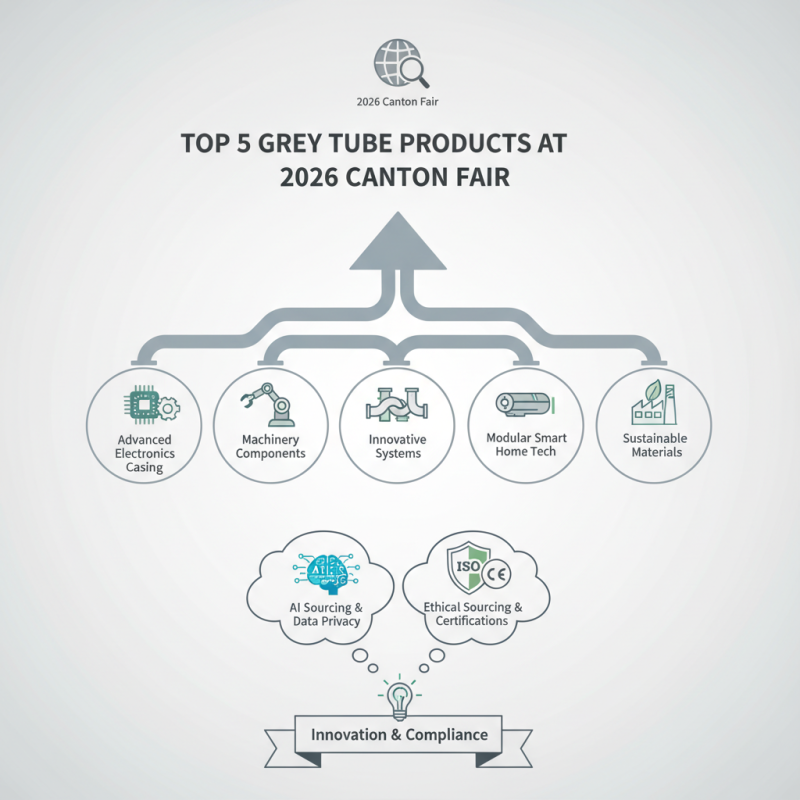
The upcoming 2026 Canton Fair is an unprecedented opportunity for businesses interested in sourcing grey tube products. Leading industry expert, Dr. Samuel Zhang, emphasizes, "Innovative designs in grey tube manufacturing are reshaping market standards." As the fair introduces AI tools for streamlined navigation and supplier selection, it’s vital to keep an eye on emerging trends and technologies.
The first phase of the fair, from April 15 to April 19, highlights advanced manufacturing. Notably, grey tubes are gaining traction in various sectors, such as electronics and machinery. Attendees can explore cutting-edge products that redefine functionality and aesthetics.
However, the industry must reflect on sustainability and compliance. While sourcing, verifying certifications like ISO or CE is essential. The introduction of AI tools helps buyers make informed decisions but raises questions around data privacy and vendor reliability. Embracing innovation is crucial, yet sourcing ethically should remain a top priority at such significant events.
When sourcing grey tube products, several essential features stand out. Material quality is crucial. Ensure that the tubes are made from durable materials, which will withstand various stresses. Check for resistance to corrosion and wear. This can significantly impact longevity.
Another important aspect is size and dimensions. Always confirm the specifications before making a purchase. The right size ensures compatibility with other components. It also prevents delays in production. Remember, a small mismatch can lead to significant issues down the line.
Tip: Keep a checklist. Write down the vital features you need in grey tubes. This helps you stay focused. Don't hesitate to ask suppliers for samples before committing.
Consider the manufacturing process too. Understanding how tubes are made offers insights into their reliability. Different techniques can affect strength and flexibility. Reflect on this while assessing potential suppliers.
Tip: Communicate clearly about your needs. A good supplier will understand and adapt to those requirements. Be cautious of overly cheap options; evaluate long-term value over short-term savings.
| Product Type | Diameter (mm) | Material | Length (m) | Application |
|---|---|---|---|---|
| Grey PVC Pipe | 50 | PVC | 5 | Water Supply |
| Grey Steel Tube | 100 | Steel | 6 | Structural |
| Grey Aluminum Pipe | 75 | Aluminum | 3 | Corrosion Resistance |
| Grey HDPE Pipe | 32 | HDPE | 10 | Gas Distribution |
| Grey Fiberglass Tube | 25 | Fiberglass | 4 | Insulation |
As the 2026 Canton Fair approaches, sourcing grey tube products will be a smart move. Many manufacturers are showcasing innovative solutions in this category. Look for those who prioritize quality and sustainability in their offerings. Sustainable practices are becoming essential in today’s market.
When attending the fair, explore different booths. Pay close attention to the materials used in products. Some manufacturers might cut corners, compromising on quality. Inquire about their sourcing and testing processes for assurance. Many exhibitors have compelling stories behind their products. These narratives can provide insight into their brand values.
Tips: Take notes on standout features of each product. This can help in making informed decisions later. Networking with other buyers can also provide additional perspectives. Consider setting clear criteria for selection before visiting. This can streamline your sourcing process.
Grey tubes are gaining popularity across many sectors. These versatile products have unique applications that can enhance efficiency. For example, in the construction industry, grey tubes are used for piping and electrical conduits. They provide durability and ease of installation, making them a preferred choice among contractors. Their lightweight nature makes transportation easy. However, some users report challenges in adapting to different materials.
In the automotive sector, grey tubes serve as protective casings for wiring and other components. This helps in minimizing damage from environmental factors. However, different manufacturers have varying standards. Ensuring quality consistency remains a bit tricky. Despite these challenges, many still appreciate the cost-effectiveness of grey tubes.
In packaging, grey tubes offer an eco-friendly option. They are biodegradable and can be made from recycled materials. Yet, the market still struggles with consumer awareness. Many are unaware of the benefits grey tubes provide. Continued efforts in education could improve adoption rates.
This chart illustrates the estimated demand for various innovative grey tube applications across different industries. The data indicates the product relevance in sectors like construction, automotive, and consumer goods.
Sustainability is becoming crucial in grey tube product manufacturing. A recent report indicates that over 70% of consumers prioritize eco-friendly products. This shift forces manufacturers to rethink their sourcing strategies. Recycled materials are now a prominent choice. These materials reduce waste and the carbon footprint.
Statistics reveal that using recycled aluminum can save up to 95% of energy compared to new aluminum production. Sustainable practices are not just a trend; they are essential for future growth. The demand for such products is rising, especially in furniture and building sectors. However, some companies still hesitate to fully embrace these changes. This gap may hinder their competitiveness.
The grey tube industry also faces challenges. The transition to sustainable materials might lead to increased costs initially. Manufacturers are cautioned against underestimating the importance of sustainable messaging. Neglecting this can lead to lost market share. Brands must innovate while staying committed to sustainability. Adaptation is key, and the Canton Fair will showcase those leading this change.
Attending the Canton Fair in 2026 can be a great opportunity to source grey tube products. However, successful negotiation is key. Knowing how to communicate effectively can make a difference.
Start by researching your suppliers. Understand their background and product range. This knowledge will help you ask the right questions. Be prepared to discuss prices openly. Transparency is crucial. Remember, not every deal will be perfect. You may face challenges or misunderstandings. Reflect on these moments. They can teach you valuable lessons.
Don’t forget to build a relationship with your suppliers. A friendly approach can pave the way for better deals. Use simple expressions to convey your interest. "I like this!" or "Is this your best price?" can work wonders. Flexibility is also important. If the price is higher than expected, consider alternate options. Show willingness to negotiate. This will foster goodwill.
We are here to help you with all your queries and concerns, just write to us using the below form and we will get back to you as soon as we can.