
The upcoming 2026 Canton Fair will feature the latest advancements in the Microwave Coaxial Switch industry. As the demand for high-frequency communication continues to rise, industry innovation is critical. Experts estimate that the global microwave switch market will grow at a CAGR of 5.2% by 2027. “This fair is the perfect platform to showcase groundbreaking microwave technologies,” says Dr. Emily Chang, a leading expert in microwave engineering.
This year, attendees can explore cutting-edge products that enhance performance and efficiency. The integration of AI for vendor screening is a game-changer. It allows buyers to quickly find suppliers with necessary certifications such as ISO or CE. However, there might be challenges in fully implementing these advanced features. Not every exhibitor will adapt seamlessly.
As the fair approaches, expectations are high. Industry professionals strive for innovations that resolve existing limitations. Microwave Coaxial Switches play a vital role in telecommunications. Their development can significantly impact signal integrity and reliability. Participants will have the opportunity to witness the latest offerings in this ever-evolving field.
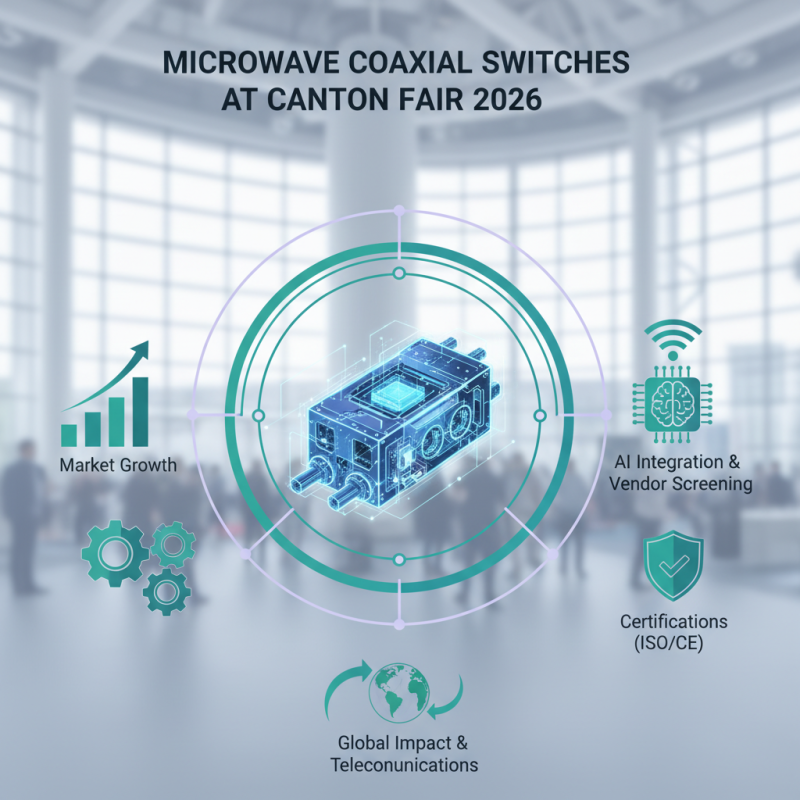
The Canton Fair 2026 highlights significant advancements in microwave coaxial switch technology. These innovations reflect the industry's push for precision and reliability. Recent reports show that the global market for microwave switches is projected to grow by 10% annually. This growth indicates a strong demand for efficient communication systems and advanced testing equipment.
One notable trend is the development of solid-state coaxial switches. They provide better performance and durability compared to traditional models. Many experts agree these solutions can reduce signal loss by up to 50%. Such improvements enhance signal clarity in various applications, including telecommunications and satellite communications. However, challenges remain. Some designs still struggle with heat dissipation and require careful thermal management.
Another exciting innovation is the integration of smart control features. These allow for remote operation and monitoring. Industry surveys show that 30% of users find this capability vital for modern applications. Still, user feedback highlights a need for more user-friendly interfaces. Many technicians find current software complex. Balancing sophistication and simplicity will be crucial for future designs. The Canton Fair showcases these advancements, reflecting a dynamically evolving industry ready for the next wave of technology.
The Canton Fair in 2026 is set to showcase cutting-edge innovations. Coaxial switches will take center stage. Key manufacturers will be present, demonstrating their latest products. With the increasing demand for high-frequency applications, these devices are vital. Their performance directly impacts signal quality.
Coaxial switch technology is evolving. Many companies are focusing on enhancing durability and efficiency. However, it’s crucial to evaluate their reliability. Not all switches are built the same. Some might claim high performance but falter under pressure.
Tips: Look beyond marketing claims. Analyze the product specifications carefully. Engage with manufacturers to ask concerning questions. Don't hesitate to request demos. This hands-on experience is invaluable. Remember, quality often reflects in details. Check for certification and quality assurance marks. Make informed decisions based on thorough research.
The Canton Fair 2026 showcased a variety of microwave coaxial switches. These devices are crucial in radio frequency applications. They help manage signal paths and maintain signal integrity. One key aspect to consider is the frequency range. Different switches cater to various applications, from low frequencies to very high ones. This variability directly affects performance.
Insertion loss is another important factor. It measures how much signal is lost when passing through the switch. Ideally, this value should be minimal. However, many coaxial switches fall short. Some models struggle with consistent performance across their specified frequency range. This inconsistency can lead to signal degradation, especially in high-frequency scenarios.
Evaluation of these switches requires careful testing. Performance may differ under varied conditions. Sometimes, the physical layout impacts the insertion loss. A cramped design can introduce unintended consequences. Consumers must weigh these factors when choosing a microwave coaxial switch. Only informed decisions lead to better outcomes in applications.
Microwave coaxial switches play a crucial role in modern communication systems. Their reliability and durability are paramount for ensuring seamless signal transmission. According to industry reports, nearly 30% of microwave switch failures stem from inadequate design. This emphasizes the need for robust testing in various operating conditions. A recent study observed that switching devices with superior materials demonstrated a lifespan increase of up to 50% compared to their lower-quality counterparts.
When evaluating coaxial switch designs, it's essential to consider several factors. Failure rates can vary dramatically based on the construction and materials used. Factors like thermal stability, oxidation resistance, and frequency handling significantly affect performance. Moreover, regular maintenance can often prevent premature failures. Neglecting routine checks may lead to significant downtimes and costly repairs.
Tips: Always assess the environmental conditions where the switch will be used. Make sure to analyze the switch’s specifications thoroughly. Avoid assumptions about durability without data. Engaging in reflective practices can improve your understanding of what works best. Remember, even the best designs can fail without proper evaluation.
The microwave coaxial switch market is evolving rapidly. Advancements in technology are pushing for better performance and durability. Companies are focusing on high-frequency applications. This is paramount for 5G and beyond. New materials are being tested to enhance signal integrity. Designers seek lightweight yet robust options. The demand for miniaturization is growing, too.
Additionally, automation is becoming critical. Smart features are emerging, allowing remote control and monitoring. However, implementing these innovations brings challenges. Quality control must keep pace with speed. Also, user interfaces need improvement for accessibility. Many products are still complicated to use. Having user-friendly designs can bridge this gap.
Sustainability has gained importance recently. Manufacturers are exploring eco-friendly materials. This shift can lower the carbon footprint of production. Still, potential trade-offs exist. Balancing sustainability and performance may complicate decisions. As the industry evolves, staying adaptable is vital. Embracing change while addressing practical concerns will define future trends.
| Rank | Model | Frequency Range (GHz) | Insertion Loss (dB) | Isolation (dB) | Switching Type | Control Voltage (V) |
|---|---|---|---|---|---|---|
| 1 | MCS-100 | 1-18 | 0.5 | 70 | Electromechanical | 5 |
| 2 | MCS-200 | 2-20 | 0.7 | 65 | Solid State | 12 |
| 3 | MCS-300 | 0.1-6 | 0.4 | 80 | Electromechanical | 9 |
| 4 | MCS-400 | 1-40 | 0.6 | 75 | Solid State | 15 |
| 5 | MCS-500 | 0.5-18 | 0.3 | 72 | Electromechanical | 10 |
| 6 | MCS-600 | 1-26 | 0.8 | 67 | Solid State | 8 |
| 7 | MCS-700 | 1-30 | 0.5 | 70 | Electromechanical | 6 |
| 8 | MCS-800 | 2-40 | 0.4 | 73 | Solid State | 12 |
| 9 | MCS-900 | 0.1-10 | 0.6 | 68 | Electromechanical | 11 |
| 10 | MCS-1000 | 2-18 | 0.5 | 75 | Solid State | 9 |
We are here to help you with all your queries and concerns, just write to us using the below form and we will get back to you as soon as we can.