
China Top Modern Walk In Wardrobe Suppliers?

Choosing among China’s top modern walk-in wardrobe suppliers requires more than comparing online photos and factory prices. A dependable supplier should understand room measurements, storage habits, material performance, and installation limits. The best modern walk-in wardrobe designs combine clean lines with practical details, such as adjustable shelves, soft-close drawers, concealed lighting, and durable hanging rails.

Real project experience matters. A supplier may show an attractive showroom, yet its production quality can vary between batches. That assumption can fail. Buyers should request material samples, edge-banding details, hardware specifications, and a complete production schedule. Moisture-resistant boards, accurate CNC cutting, and consistent color matching are especially important for wardrobes installed in humid rooms. Small gaps become obvious under bright LED strips.

Look for suppliers that provide clear technical drawings, documented quality checks, and responsive after-sales support. Factory audits, sample approvals, and third-party inspections can reduce avoidable risks. Certifications may support credibility, but they should be verified for the actual products and destination market. A low quotation is not always economical when packaging, installation, replacement parts, or delayed delivery are excluded.

There is no perfect supplier. Each company may be strong in customization, volume production, design support, or export experience. This guide examines those differences carefully, helping buyers compare China-based wardrobe manufacturers with practical evidence instead of polished promises. The goal is simple: create a stylish, durable storage system that fits the room, budget, and daily routine.
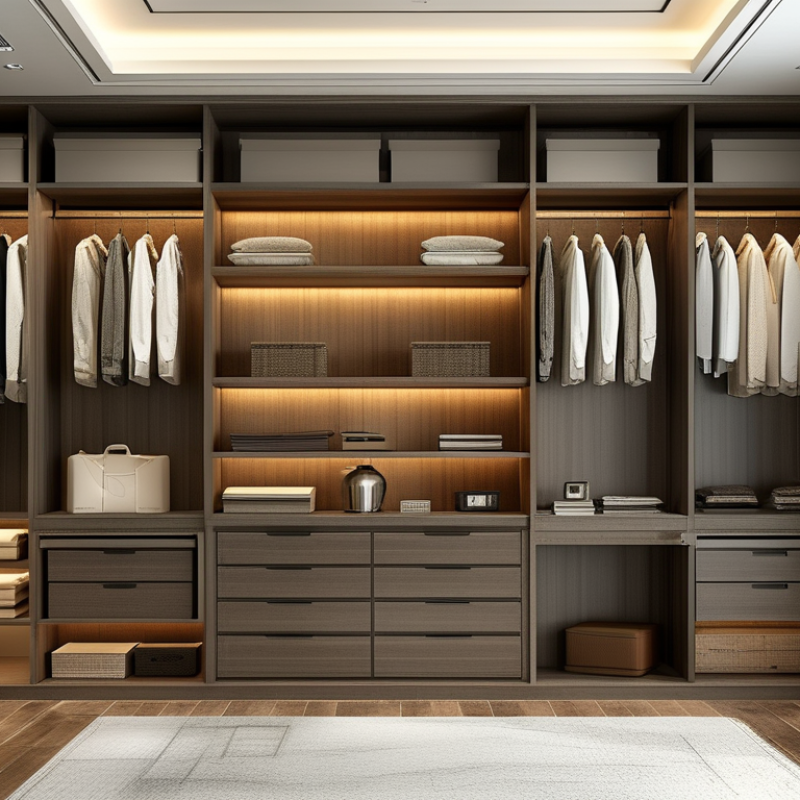
China Top Modern Walk In Wardrobe Suppliers?

What Defines a Top Modern Walk-In Wardrobe Supplier in China?

What Defines a Top Modern Walk-In Wardrobe Supplier in China?

A top supplier offers more than attractive doors and glossy showroom images. According to CSIL’s World Furniture Outlook 2024, China remains the world’s largest furniture producer, contributing roughly one-third of global output. This scale creates opportunities, but it does not guarantee dependable workmanship. Experienced buyers should inspect panel flatness, edge sealing, hardware cycles, and installation tolerances. A reliable factory should provide material specifications, test records, production samples, and clear quality checkpoints. Photos are not enough.

modern walk-in wardrobes require precise coordination between design and manufacturing. Look for suppliers using measured room drawings, 3D layouts, CNC cutting, and documented pre-shipment inspections. Moisture-resistant boards, low-emission adhesives, and certified hardware matter in bedrooms with limited ventilation. ISO 9001 can indicate process control, but certification alone cannot prove wardrobe quality. Ask for recent audit reports and a sample corner joint. That small detail often reveals more than a large showroom. I have found that unclear revision control causes expensive mistakes. Suppliers should record every change, including shelf spacing, lighting channels, and door swing direction.

Tips: Request a full-size sample. Check the hinge movement yourself. Confirm packaging, installation training, replacement parts, and response times before signing. Also compare the supplier’s promised lead time with production capacity, not sales optimism. Houzz’s 2024 home renovation research shows storage remains a practical renovation priority, yet user needs differ widely. A strong supplier listens carefully, challenges unrealistic dimensions, and documents the final solution.

Leading Chinese Suppliers of Modern Walk-In Wardrobes

China’s leading modern walk-in wardrobe suppliers combine practical design with flexible manufacturing. Many experienced factories offer customized layouts, measured drawings, and material samples before production. Their collections often include slim aluminum frames, matte panels, glass doors, soft-close drawers, and integrated lighting. A reliable supplier should explain board density, edge sealing, hardware durability, and formaldehyde testing clearly. Vague answers deserve caution.

Factory experience matters. Ask for recent project photos, production videos, and a sample room inspection. I have found that detailed shop drawings prevent costly misunderstandings about ceiling height, corner clearance, and drawer spacing. Suppliers with professional engineers can adjust designs for apartments, villas, and hospitality projects. They should also provide a documented quality process, including incoming material checks, assembly inspection, and pre-shipment review. Still, a perfect sample may hide inconsistent color batches. This is an easy detail to miss.

Tips: Request a full quotation with dimensions, materials, packaging, installation guidance, and replacement terms. Confirm lead times in writing. Check whether the supplier can support small trial orders before larger production. Visit the factory when possible, or hire an independent inspection company. Compare construction details, not only attractive catalog images. A cheaper wardrobe can become expensive after fitting problems, delayed parts, or weak hinges appear. Some suppliers communicate quickly but document poorly, so keep every revision organized.

Materials, Designs, and Customization Options

China’s modern walk-in wardrobe suppliers now combine factory scale with detailed customization.

Statista’s 2024 Furniture market outlook estimated global furniture revenue at about US$766 billion. That scale encourages faster material sourcing and more flexible production.

Common carcass materials include engineered wood, plywood, aluminum, and laminated panels.

Plywood usually offers better screw holding and moisture resistance than standard particleboard. Low-VOC finishes matter in bedrooms. Ask for emission test results, not vague “eco” claims.

The Environmental Protection Agency links lower indoor VOC exposure with improved indoor air quality, although wardrobe testing is often inconsistent.

Design options include frameless modules, smoked glass doors, warm LED strips, pull-down rails, drawers, and adjustable shoe shelves.

Good suppliers provide CAD drawings, load testing, edge-banding samples, and installation instructions. Custom widths are useful for sloping ceilings and narrow corners. Confirm tolerance levels before production.

A three-millimeter error can become obvious across a six-meter wall.

Customization should cover colors, handles, internal heights, lighting sensors, and packaging protection.

Suppliers with ISO 9001-style quality systems may offer stronger process control, but certification alone proves little. Request recent inspection records, material declarations, and a sample unit.

Samples can still hide production weaknesses. That is where careful buyers sometimes learn the expensive lesson.

Manufacturing Standards, Quality Control, and Certifications

China’s top modern walk-in wardrobe suppliers should be judged by manufacturing discipline, not showroom appearance.

Reliable factories use controlled panel moisture, accurate CNC cutting, and consistent edge sealing. Door gaps should remain even after repeated opening. Shelves also need load and stability checks.

Quality control should cover every production stage. Inspectors can verify board dimensions, surface defects, hardware movement, and packaging strength. Formaldehyde and VOC testing is important for indoor furniture.

A supplier may provide ISO 9001 for quality management, ISO 14001 for environmental management, or FSC certification for responsible wood sourcing. Check the certificate scope, issuing body, and expiry date. A certificate alone proves little.

Tips:

Request a recent inspection report, material sample, and production video. Ask for written tolerances, carton drop-test results, and corrective-action records. No certificate replaces careful verification. Even experienced factories can miss a scratched panel or misaligned hinge. That is worth remembering. A pre-shipment inspection can compare finished wardrobes against approved drawings, colors, and hardware lists. Keep those records. They make quality disputes clearer and encourage measurable improvement.

How to Compare and Select the Right Supplier

Choosing a modern walk-in wardrobe supplier requires more than browsing polished showroom photos. Compare cabinet materials, edge finishing, hardware strength, and installation accuracy. Ask for a physical sample, not only digital drawings. A 2-millimeter color difference can become obvious across a large wardrobe wall.

Review the supplier’s production experience and quality controls. Request factory photos, inspection records, material test reports, and clear tolerance standards. Check whether panels resist moisture, whether hinges support repeated use, and whether drawer runners open smoothly after heavy loading.

Verify production capacity against your project schedule. A low price may hide thin panels, limited after-sales support, or expensive replacement parts.

Clarify minimum order quantities, packaging methods, delivery terms, warranty coverage, and installation responsibilities in writing.

Communication deserves careful testing. Send one detailed drawing and measure the response time, technical questions, and suggested improvements. Reliable suppliers identify problems before production begins.

Ask how they handle uneven walls, ceiling gaps, lighting channels, and late design changes. I have seen attractive quotations fail because measurements were incomplete. That mistake is easy to repeat.

A small pilot order can reveal cutting accuracy, surface consistency, labeling, and packing quality before full production. Compare total project risk, not just the unit price. Choose the supplier that can explain its process clearly and accept reasonable accountability.

Our dedicated sales and support staff are here to help you identify the ideal pump solution for your needs.

Contact Us