

-

97 Auto Road, County of Vermilion River, AB T0B 0L0
-

-

97 Auto Road, County of Vermilion River, AB T0B 0L0

China’s PE gas pipe market includes manufacturers with different strengths, production scales, and quality systems. A useful comparison looks beyond polished brochures. It examines resin traceability, extrusion controls, pipe markings, pressure-test records, and technical support. Details matter.
Quality-management expert W. Edwards Deming said, “Quality is everyone’s responsibility.” That principle applies to PE Gas Pipes, where reliable performance depends on more than the finished pipe. Material selection, temperature control during extrusion, dimensional checks, and careful handling all shape the final product. A neat pipe surface is reassuring, but it cannot replace documented test results or consistent quality procedures.
This guide explores leading manufacturers in China and the evidence buyers can use to assess them. It considers product range, manufacturing capability, certifications, export experience, and communication after delivery. The phrase “top manufacturers” should not imply that one company suits every project. A large supplier may offer broad capacity, while a smaller producer may provide closer technical coordination. Neither detail alone settles the decision.
Ask for current product documentation. Compare test methods, not just headline figures. Where information is unclear, request clarification before ordering. That is not always convenient. It is still prudent. A careful review can help buyers identify suppliers whose PE Gas Pipes and service practices match the project’s operating conditions.
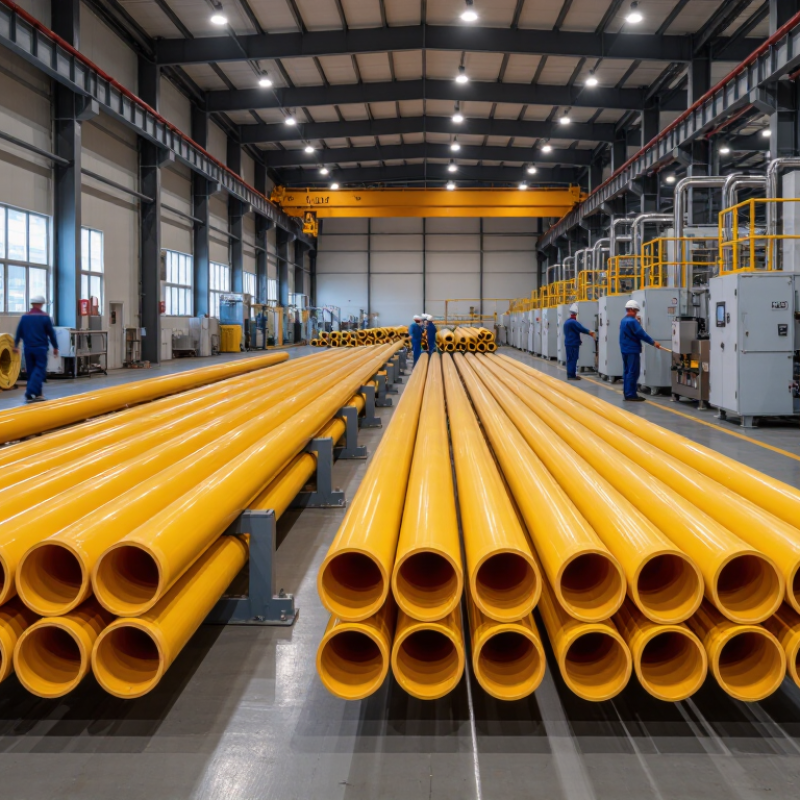
A PE gas pipe is made from polyethylene, a tough thermoplastic designed to carry fuel gas through buried distribution networks. Its flexibility helps installers guide pipe around gentle bends, reducing the need for some joints. The material also resists corrosion from soil and moisture, unlike many metal pipes. Smooth inner walls support steady gas flow. It is lightweight, too.
That matters on site. A crew can move pipe sections more easily, while heat-fused joints can create a continuous, leak-resistant connection when prepared and inspected correctly. PE pipe is commonly used for underground service lines and mains, but it is not suitable for every location. Above-ground exposure, operating pressure, temperature, and local requirements all affect the specification. Details matter.
Reliable performance depends on more than the material. Installers must use pipe with the correct pressure rating, compatible fittings, and approved joining procedures. Inspection and pressure testing help identify problems before a line enters service. Even a small scratch or poorly made joint deserves attention. PE pipe can be durable, but it is not maintenance-free, and installation quality is easy to underestimate.
This table summarizes polyethylene (PE) gas pipe characteristics and objective criteria for assessing manufacturers. It does not rank or identify individual companies.
| Dimension | Fact-based information | Why it matters |
|---|---|---|
| What a PE gas pipe is | A pipe made from polyethylene resin and designed for gas distribution systems. PE pipes are commonly joined by heat fusion, using procedures and fittings suitable for the pipe system. | The material and joining method help form a continuous pipeline system when installation is carried out correctly. |
| Common material grades | PE80 and PE100 are material classifications used in gas-pipe standards. The specified grade must match the applicable design, product standard, and project requirements. | A grade designation alone does not establish suitability; the complete pipe specification and approved design conditions must be checked. |
| Dimensions and SDR | Pipes are specified by outside diameter and wall thickness. SDR is the ratio of nominal outside diameter to nominal wall thickness; a lower SDR indicates a thicker wall relative to the outside diameter. | The required dimensions and SDR should be selected from the applicable design code and project calculations, not from a general-purpose chart alone. |
| Applicable standards | Relevant standards include China’s GB/T 15558.1 for PE piping systems for the supply of gaseous fuels, ISO 4437, and EN 1555. ASTM D2513 is another standard used for thermoplastic gas-pressure pipe and fittings in its applicable markets. | Confirm the current edition and the standard required by the destination market, utility, and project specification; standards are not automatically interchangeable. |
| Typical application | PE gas pipes are widely used in buried gas distribution networks, subject to local regulations and system design. They are not a substitute for pipe materials approved for every gas service, pressure, or installation condition. | Application limits, operating pressure, temperature, location, and installation method must be checked against codes and the responsible gas utility’s requirements. |
| Reasons for use | PE is corrosion-resistant in many soil environments, relatively lightweight compared with many metallic pipe systems, and suitable for fusion joining when compatible pipes, fittings, equipment, and procedures are used. | These properties can support practical handling and durable buried installations, but performance depends on design, material quality, and workmanship. |
| Production quality checks | Assess documented resin traceability, dimensional inspection, appearance checks, required material and performance tests, batch identification, and inspection records against the applicable product standard. | Consistent records and traceability help buyers verify that supplied pipes correspond to the specified product and production batch. |
| Manufacturer evaluation | Compare documented compliance for the target market, product range, quality-management controls, test capability, traceability, technical support, and the ability to provide relevant certificates and inspection documents. | These verifiable criteria are more useful than an unsupported “top manufacturer” ranking when selecting a supplier. |
| Installation and safety | Installation, fusion joining, inspection, testing, and commissioning should follow the applicable codes, approved procedures, and utility requirements, and be performed by qualified personnel where required. | A compliant pipe alone cannot ensure pipeline safety; correct system design and installation are essential. |