In the rapidly evolving world of industrial solutions, the water pump sector is crucial for various applications, spanning agricultural, municipal, and industrial needs. With an increasing demand for efficiency and sustainability, understanding the landscape of top suppliers is imperative for businesses seeking reliable and innovative solutions. According to John Everly, a leading expert in the supplier water pump industry, "The growth of pump technology is significantly driven by the need for smarter water management systems that can adapt to the challenges posed by climate change and urbanization."
As we move toward 2025, identifying key players in the supplier water pump market becomes essential. These suppliers not only provide the necessary equipment but also contribute to the development of cutting-edge technologies that enhance performance and reliability. With insights from industry experts, this article delves into the top water pump suppliers you need to know, highlighting their contributions and the future trends shaping this critical segment. Understanding their offerings will empower businesses to make informed decisions and invest in solutions that are sustainable and efficient.

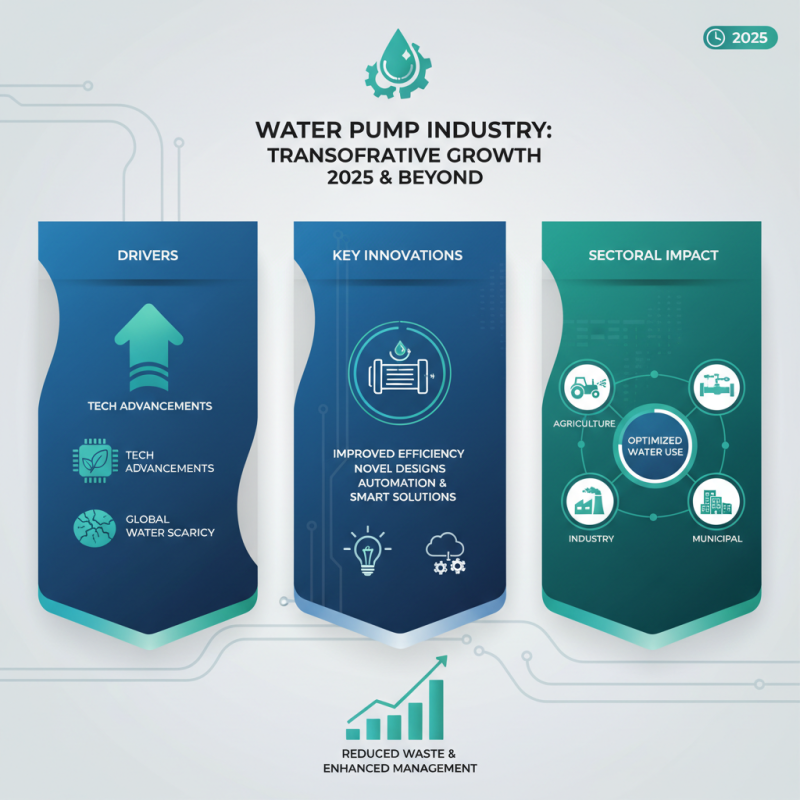
The water pump industry in 2025 is poised for transformative growth, driven by advancements in technology and increasing global water scarcity concerns. Improved efficiency and innovation in pump designs are becoming standard as manufacturers adapt to the demands of various sectors, including agriculture, industrial, and municipal applications. Enhanced automation and smart pumping solutions are streamlining operations, allowing for better monitoring and management of water resources, thereby reducing waste and optimizing usage.
Moreover, environmental sustainability is at the forefront of industry initiatives. Companies are increasingly focusing on eco-friendly materials and energy-efficient systems that align with global sustainability goals. This shift is not only critical for meeting regulatory standards but also appeals to a growing number of eco-conscious consumers. As the industry evolves, collaboration between stakeholders, research institutions, and government bodies is essential to ensure the development of innovative solutions that can address the urgent challenges of water management and distribution in 2025 and beyond.
When selecting water pumps, several key features can significantly influence performance and suitability for specific applications. One of the most critical aspects to consider is the pump type, which can vary from centrifugal to positive displacement pumps. According to industry research, centrifugal pumps account for approximately 75% of the total pump market due to their efficiency in handling large volumes of fluid at relatively low pressures. Understanding the specific requirements of your project will help narrow down the options.
Another essential factor is the material used in the construction of the pump. Pumps can be made from various materials, including stainless steel, cast iron, or thermoplastic, each offering unique advantages in terms of durability and corrosion resistance. A report by the Global Pump Market shows that materials that withstand chemical interactions and temperature fluctuations are increasingly in demand, particularly in industrial applications.
Tip: Always consider the total cost of ownership (TCO) rather than just the initial purchasing price. This includes maintenance costs, energy consumption, and potential downtime. Investing in a reliable pump with better energy efficiency can lead to significant savings over time.
Furthermore, the pump's flow rate and head capacity are critical parameters that dictate its performance in different scenarios. It's crucial to assess your operational needs and ensure that the pump selected can handle the required flow rates efficiently. Remember, choosing a pump that operates well within its optimal range can lead to increased lifespan and reduced maintenance costs.
Tip: Consult performance curves provided by manufacturers to understand better how the pump will perform under varying conditions and select features that align with your specific usage scenarios.
This chart illustrates the average features to consider when selecting water pumps. The metrics include Flow Rate, Energy Efficiency, Durability, Noise Level, and Price. Each feature is essential in evaluating the best options available in the market.
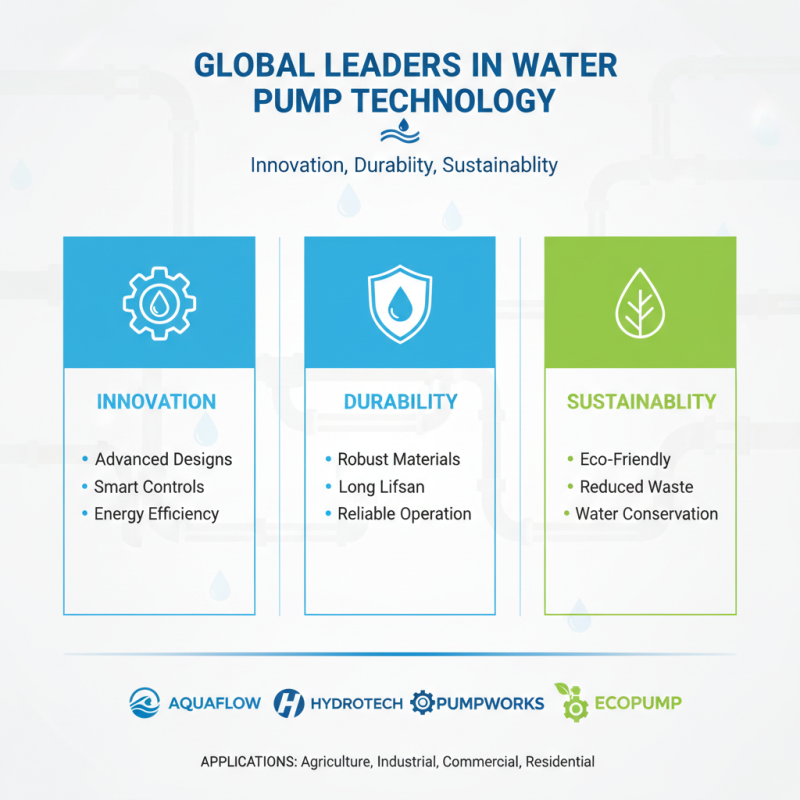
As the demand for efficient water management grows, several manufacturers stand out in the realm of water pump technology. These leading global suppliers are recognized for their innovation, durability, and commitment to sustainability. Their extensive range of products caters to various applications, from agriculture to industrial operations, ensuring that users have access to reliable systems that meet their specific needs.
When selecting a water pump supplier, it's crucial to consider their technological advancements and service offerings. Look for manufacturers that incorporate smart technology into their products, enhancing operational efficiency and providing users with real-time data. Additionally, assess their customer support and maintenance options, as these factors can significantly impact the longevity and performance of the pumps.
Tips: Always review user testimonials and case studies to gauge the reliability of potential suppliers. Another valuable tip is to prioritize suppliers that emphasize sustainable practices in their manufacturing processes, as this can contribute to environmental conservation while maintaining top-notch performance levels.
The future of water pumps is being significantly shaped by innovative trends that focus on efficiency, sustainability, and technological advancements. One of the most noteworthy developments is the integration of smart technology into water pump systems. These advanced systems utilize IoT (Internet of Things) connectivity to enable real-time monitoring and management. This not only allows for improved operational efficiency but also facilitates predictive maintenance, reducing downtime and lowering operational costs for users.
Another crucial trend transforming the water pump industry is the emphasis on sustainability. As the global community becomes increasingly aware of climate change and resource management, manufacturers are innovating by developing pumps that consume less energy and use environmentally friendly materials. Enhanced materials and designs contribute to a significant reduction in water wastage and energy consumption, promoting a more sustainable approach to water management. Moreover, solar-powered pumps are gaining traction, especially in remote areas, significantly reducing reliance on traditional energy sources and contributing to a greener future.
| Supplier Region | Market Share (%) | Innovation Focus | Sustainable Practices |
|---|---|---|---|
| North America | 25% | Smart Technology Integration | Recycling of Components |
| Europe | 30% | Energy Efficiency | Use of Eco-Friendly Materials |
| Asia-Pacific | 20% | Automation and IoT | Sustainable Manufacturing Processes |
| Latin America | 15% | Digital Water Solutions | Water Conservation Initiatives |
| Middle East & Africa | 10% | Advanced Materials | Reduced Energy Consumption |
Sustainability has become a crucial focus for water pump suppliers as they navigate an increasingly eco-conscious market. According to a recent report by the Global Water Pump Market Analysis, more than 60% of industry leaders are investing heavily in sustainable practices. These practices range from adopting energy-efficient technologies that reduce operation costs and carbon footprints to integrating materials that enhance recyclability. With the water pump sector projected to reach $52 billion by 2025, sustainability initiatives are not just beneficial for the environment but also critical for market competitiveness.
Moreover, a study conducted by the International Energy Agency indicates that energy-efficient water pumps could reduce energy consumption by up to 30%, leading to both monetary savings and a significant decrease in greenhouse gas emissions. As a result, many suppliers are developing pumps that meet or exceed global energy efficiency standards. This shift is further supported by regulatory pressure and an increase in consumer demand for eco-friendly products. By prioritizing sustainability in their production processes, leading water pump suppliers are not only mitigating environmental impacts but also positioning themselves as forward-thinking leaders in an evolving industry.
We are here to help you with all your queries and concerns, just write to us using the below form and we will get back to you as soon as we can.