Top 10 Tips for Choosing the Right Water Pumps for Your Needs
When it comes to ensuring efficient water management, selecting the right water and pumps is crucial for both residential and commercial applications. With a myriad of options available on the market, making an informed decision can seem overwhelming. Whether you're looking to irrigate your garden, supply water to your home, or manage wastewater, understanding the specific needs of your project is the first step in choosing the ideal pump system.
In this guide, we will explore the top 10 tips for selecting the perfect water and pumps tailored to your requirements. From assessing flow rates and pressure requirements to considering the pump's energy efficiency and durability, each factor plays a significant role in the overall effectiveness of your water system. By equipping yourself with the right knowledge, you can ensure that your chosen pump not only meets your immediate needs but also enhances the longevity and reliability of your water management solutions.

Understanding Your Water Pump Requirements
When selecting a water pump, it is crucial to first understand your specific requirements. Assess the volume of water you need to move, which is typically measured in gallons per minute (GPM) or liters per second (L/s). This information will guide you in determining the pump's capacity. Additionally, consider the total head or the vertical distance the water will need to be lifted, as this influences the type of pump needed and its overall efficiency. Each application—from irrigation to draining water from basements—will have different demands, so it's essential to tailor your choice accordingly.
Another important factor is the water source and quality. Pumps are designed to handle various types of water, such as clean, dirty, or even wastewater. Understanding the characteristics of the water you're working with will help in selecting a pump that can handle those specific conditions without the risk of damage. Furthermore, think about the environment in which the pump will operate. Factors such as temperature, humidity, and exposure to elements can affect performance and longevity. By thoroughly evaluating these requirements, you can ensure that the chosen pump will meet your needs efficiently and reliably.
Top 10 Tips for Choosing the Right Water Pumps for Your Needs
This bar chart illustrates the key requirements for selecting the right water pump. The parameters include flow rate, head pressure, power consumption, efficiency, weight, material quality, maintenance frequency, cost, noise level, and warranty period. Evaluating these factors will help ensure that you choose the best water pump for your specific needs.
Types of Water Pumps and Their Applications
When it comes to selecting the right water pump, understanding the various types and their specific applications is crucial. Water pumps primarily fall into several categories: centrifugal, positive displacement, submersible, and diaphragm pumps. According to a recent industry report, centrifugal pumps dominate the market, accounting for approximately 65% of total pump sales due to their efficiency and reliability in moving large volumes of water. These pumps are commonly used in municipal water systems, irrigation, and various industrial processes.
On the other hand, submersible pumps serve unique applications such as dewatering and sewage management. They are designed to operate while submerged in the fluid, making them ideal for drainage in construction sites and wastewater treatment facilities. Data indicates that the submersible pump market is projected to grow at a CAGR of 4.5% from 2023 to 2030, driven by increasing demand for reliable wastewater management systems.
Positive displacement pumps, known for their ability to handle thick fluids, find uses in applications ranging from oil transfer to food processing, reflecting the diverse requirements across industries. Understanding these distinctions can help individuals and businesses select the most suitable pump for their particular needs.
Key Features to Consider in Water Pumps
When selecting the right water pump for your needs, it’s crucial to focus on the key features that determine performance and suitability. First and foremost, consider the flow rate and pressure requirements. The flow rate, usually measured in gallons per minute or liters per second, dictates how much water the pump can move at any given time. Matching the pump’s output with your specific application—whether for irrigation, draining, or supplying water—is essential for efficiency. Additionally, the pressure ratings will affect the pump's ability to move water to the desired height or distance, particularly in applications like sprinkler systems or multi-level building supplies.
Another important feature to examine is the pump’s construction materials. Different environments demand different materials; for example, materials resistant to corrosion are vital for pumps used in chemical applications or saline environments. The size and portability of the pump also play a role, especially if it needs to be moved frequently. Consider whether a submersible or surface pump is more appropriate for your situation, as each has distinct advantages regarding installation and operation. Lastly, pay attention to maintenance needs and the pump’s energy efficiency, as these factors can significantly influence long-term operational costs and convenience. Making informed decisions based on these key features will lead to a more effective and reliable pumping solution.
Evaluating Power Sources for Your Water Pump
When selecting a water pump, evaluating the power sources available for your needs is crucial. Water pumps can be powered by electricity, gasoline, diesel, or even solar energy, each offering distinct advantages and disadvantages based on the specific applications and environments in which they will be used. Electric pumps are typically favored for home and garden use due to their ease of operation and low maintenance requirements, while gasoline or diesel-powered pumps might be more suitable for remote locations or construction sites where electrical access is limited.
Furthermore, considering the efficiency and reliability of the power source is essential. Solar-powered pumps are an eco-friendly option, reducing carbon footprints and operating costs, but they may require a higher initial investment and consistent sunlight to function effectively. On the other hand, traditional fuel-powered pumps provide flexibility and mobility, making them ideal for emergencies or temporary setups, despite their ongoing fuel expenses and environmental impacts. By carefully assessing the available power sources, users can ensure they select a pump that not only meets their water flow requirements but also aligns with their operational preferences and budget constraints.
Top 10 Tips for Choosing the Right Water Pumps for Your Needs - Evaluating Power Sources for Your Water Pump
| Tip No. |
Power Source |
Efficiency Rating |
Best Suited Application |
Estimated Cost |
| 1 |
Electric |
85% |
Residential Water Supply |
$200 |
| 2 |
Gasoline |
75% |
Construction Sites |
$300 |
| 3 |
Diesel |
80% |
Irrigation |
$400 |
| 4 |
Solar |
90% |
Remote Locations |
$500 |
| 5 |
Hand Pumps |
N/A |
Emergencies |
$50 |
| 6 |
Submersible |
88% |
Wells |
$250 |
| 7 |
Jet Pumps |
82% |
Shallow Wells |
$180 |
| 8 |
Peripheral Pumps |
78% |
Fountains |
$150 |
| 9 |
Positive Displacement |
85% |
Industrial Use |
$600 |
| 10 |
Vacuum Pumps |
92% |
Commercial Applications |
$700 |
Maintenance and Longevity of Your Water Pump
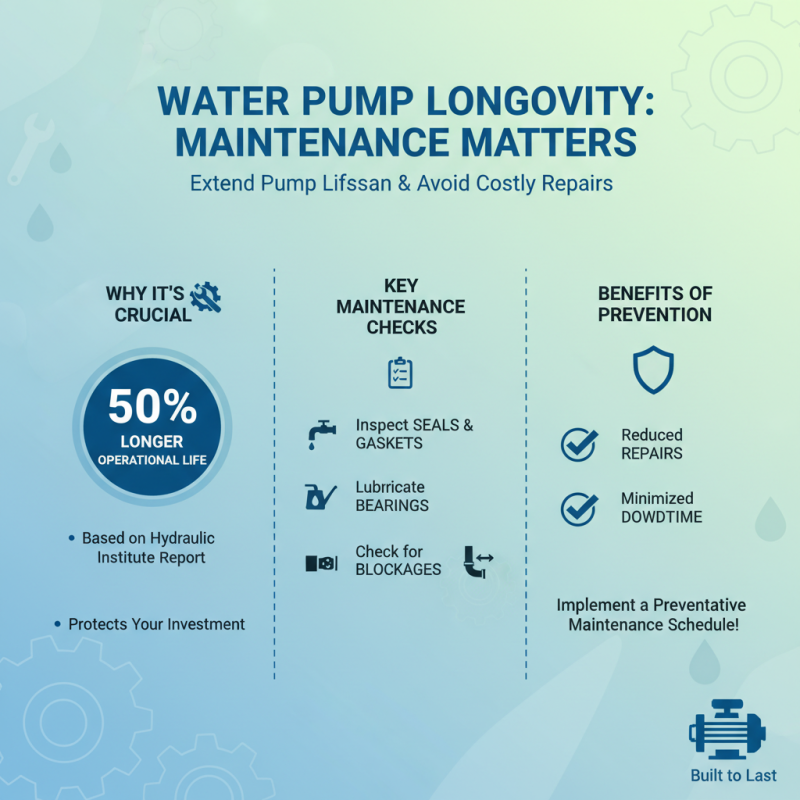
When selecting a water pump, it's equally crucial to consider its maintenance and longevity. Proper maintenance can significantly extend the lifespan of a pump, which is often a substantial investment for any application. According to a report by the Hydraulic Institute, routine maintenance can increase the operational life of a pump by up to 50%. Regular checks should include inspecting seals and gaskets for wear, ensuring proper lubrication of bearings, and checking for any blockages in the intake and discharge. By implementing a preventive maintenance schedule, users can avoid costly repairs and unplanned downtime.
Furthermore, the longevity of a water pump can be influenced by its working environment. Factors such as temperature fluctuations, exposure to harsh chemicals, and even vibration can affect a pump's performance. The American Society of Mechanical Engineers (ASME) emphasizes the importance of selecting pumps that are suited for specific operating conditions. For instance, using pumps designed for high-efficiency operation in environments with corrosive materials will not only enhance performance but also reduce the frequency of failures. Experts recommend using advanced monitoring systems to keep track of performance metrics, which can lead to timely interventions and significantly bolster the overall lifespan of the equipment.