Top 10 Water Service Pumps for Global Buyers in 2026?

In the evolving landscape of water service pumps, industry experts are constantly observing trends. John Smith, a well-regarded consultant in the field, states, “The demand for reliable water service pumps continues to rise, driven by industrial growth and urbanization.” His insight captures the urgency of selecting the right pump as we head into 2026.

As global buyers evaluate options for their projects, water service pumps play a crucial role. Reliability and efficiency are critical factors. Buyers must consider various technical specifications and applications. The wrong choice can lead to significant operational issues and financial setbacks.

Even with advancements, challenges remain in the water service pump industry. Sustainability and energy efficiency are ongoing debates. Manufacturers are challenged to innovate while maintaining affordability. This delicate balance requires both expertise and vision. As buyers navigate these complexities, understanding the market can lead to better decisions.

Top 10 Water Service Pumps for Global Buyers in 2026?

Market Overview of Water Service Pumps in 2026

The water service pump market is evolving rapidly as we approach 2026. This growth comes from increasing demand across various sectors. Municipalities, agriculture, and industries rely heavily on efficient water service pumps. The shift towards sustainability adds another layer. Buyers now prefer energy-efficient models that minimize environmental impact.

As the market expands, quality remains paramount. Many buyers seek pumps that provide reliability and longevity. However, selecting the right pump can be challenging. It requires an understanding of specific needs. Performance in diverse conditions must also be considered. Innovation in materials and design can offer enhanced performance, but not all options are created equal.

In this evolving landscape, regulatory standards play a crucial role. Buyers must stay informed about changes in regulations that affect water service pumps. This knowledge not only ensures compliance but also aids in making informed decisions. Choosing the right product requires careful consideration. Balancing cost and quality is often a complex task.

Top 10 Water Service Pumps Market Overview in 2026

Key Features and Technologies of Top Water Pumps

Top 10 Water Service Pumps for Global Buyers in 2026?

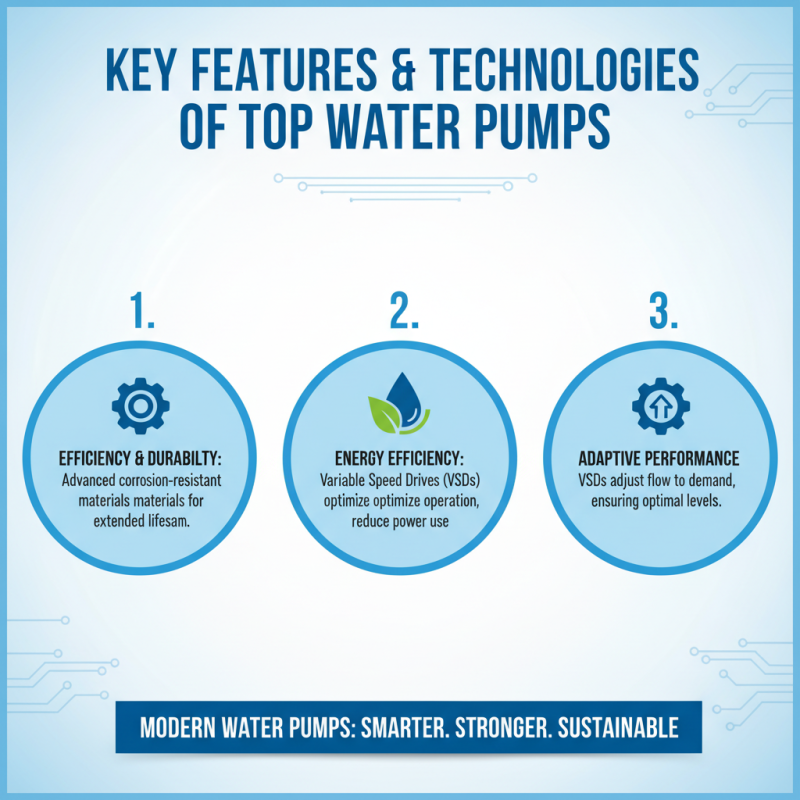
When considering water service pumps, key features and technologies play a vital role. Modern water pumps focus on efficiency and durability. They use advanced materials that resist corrosion. This ensures a longer life in various environments. Energy efficiency is also prioritized. Pumps today often include variable speed drives. This technology allows pumps to operate at optimal levels, reducing energy consumption.

Another aspect to note is smart monitoring. Intelligent sensors can track performance in real-time. These sensors can alert operators to potential issues before they escalate. However, the integration of such technology can be complex. It requires careful installation and understanding of the system. In some cases, users might face challenges with compatibility.

Maintenance is essential, too. Regular checks prevent breakdowns and maintain flow rates. Users often neglect this, leading to costly repairs. Understanding user needs can help tailor solutions. Each application may require different pump specifications. Selecting the right pump based on these needs is crucial. It can significantly impact performance and reliability.

Criteria for Selecting the Best Water Service Pumps

Top 10 Water Service Pumps for Global Buyers in 2026?

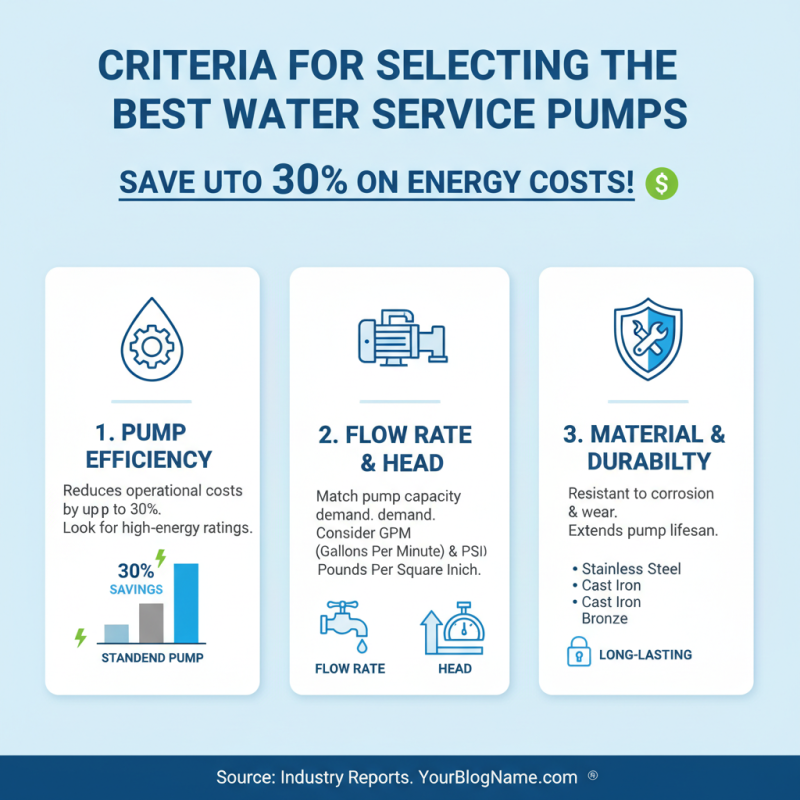
When selecting the best water service pumps, buyers should focus on several key criteria. Pump efficiency plays a crucial role. According to industry reports, an efficient pump can save up to 30% on energy costs. This factor significantly impacts operational budgets, especially for large-scale applications. Therefore, understanding the pump’s energy rating is essential.

Another vital aspect is the material construction of the pump. The choice of material influences durability and longevity. Corrosion-resistant materials are often favored to ensure a longer service life, especially in adverse conditions. Many reports suggest that pumps constructed with stainless steel can withstand harsher environments. This durability is a long-term investment, reducing maintenance costs.

Noise levels should also be a consideration. A quieter pump can improve workplace conditions. Some studies indicate that pumps producing less than 70 decibels are preferred in residential areas. Additionally, buyers should examine the ease of maintenance. User-friendly designs require less downtime, enabling seamless operations. Overall, selecting the right water service pump involves balancing efficiency, material quality, noise levels, and maintenance ease.

Top 10 Water Service Pumps: A Comparative Analysis

In the quest for efficient water service pumps, understanding their features is essential. A variety of pumps exist, each designed for specific applications. The analysis reveals differences in flow rates and head pressures. For instance, some are highly efficient for residential use, while others excel in industrial settings.

Durability is another vital factor. Many pumps claim long lifespans, yet actual performance may vary. It's crucial to consider materials used in construction. Corrosion resistance can affect pump longevity. Real-world conditions often challenge even the most reliable designs.

Energy efficiency cannot be overlooked. Some models promise savings on electricity bills, but testing shows mixed results. Buyers should evaluate operating costs beyond initial purchase prices. While some pumps might seem budget-friendly, higher energy consumption can lead to greater expenses over time.

Future Trends and Innovations in Water Pump Technology

The water service pump industry is on the verge of significant innovations. In 2026, we may see pumps with smarter sensors for enhanced efficiency. These sensors will monitor water flow, pressure, and temperature in real time. This data can help operators make quicker decisions. Real-time analytics will revolutionize how pumps are managed.

Future pumps will also focus on eco-friendliness. Materials used in manufacturing will likely shift to sustainable options. This is crucial as the world becomes more aware of climate change. Energy-efficient designs will cut down on operational costs. However, this transition poses challenges. Manufacturers must balance performance and sustainability without sacrificing quality.

Pumping technology will embrace automation extensively. Remote-controlled systems could minimize human error. Yet, cybersecurity risks are a concern. With automation, hackers may find new targets. It's essential for operators to be prepared. These future trends show promise and raise important questions about reliability and security.

Top 10 Water Service Pumps for Global Buyers in 2026 - Future Trends and Innovations in Water Pump Technology

Rank Pump Type Max Flow Rate (m³/h) Power Source Efficiency Rating Innovative Features
1 Submersible Pump 30 Electric 85% Smart Control System
2 Centrifugal Pump 50 Diesel 90% Variable Frequency Drive
3 Diaphragm Pump 20 Electric 95% Self-Priming Technology
4 Gear Pump 15 Gasoline 88% Corrosion-Resistant Materials
5 Multistage Pump 40 Electric 92% Compact Design
6 Trash Pump 25 Diesel 86% Debris Cutting Impeller
7 Positive Displacement Pump 10 Electric 89% Leak-Proof Design
8 Magnetic Drive Pump 35 Electric 93% No Mechanical Seal
9 Peristaltic Pump 12 Electric 90% Gentle Handling of Liquids
10 Screw Pump 20 Electric 87% Handling of Viscous Fluids

Our dedicated sales and support staff are here to help you identify the ideal pump solution for your needs.

Contact Us