
Choosing the right Wood Drying Equipment in China takes more than comparing prices or advertised capacity. A kiln may look impressive on a factory floor, yet its real value appears in the boards: even color, stable moisture, and fewer checks along the edges. Buyers should examine temperature and humidity controls, airflow design, insulation, loading methods, and after-sales support. Ask for operating data from comparable wood species and board thicknesses. Then verify it against a test run.
“Drying quality is proven in the timber, not in the brochure.” This is an original illustrative statement, not a verified quotation. It is attributed here to a fictional industry expert, engineer Lin Wei, rather than presented as a documented remark from a real person.
A credible supplier should explain how its system manages moisture gradients and responds when conditions change. Look for clear commissioning plans, operator training, maintenance guidance, and practical answers about energy use. Visit a working installation if possible. Watch how air moves through a loaded kiln, and ask operators about uneven batches, downtime, and support response. Small details matter: sensor placement, door seals, and whether the control system records each cycle.
No single manufacturer is best for every mill. Species, climate, production volume, and budget all shape the decision. And specifications can mislead when they lack independent verification. The sections ahead compare Chinese manufacturers through performance, engineering, service, and evidence—so readers can judge not just who makes the equipment, but who can support consistent results.
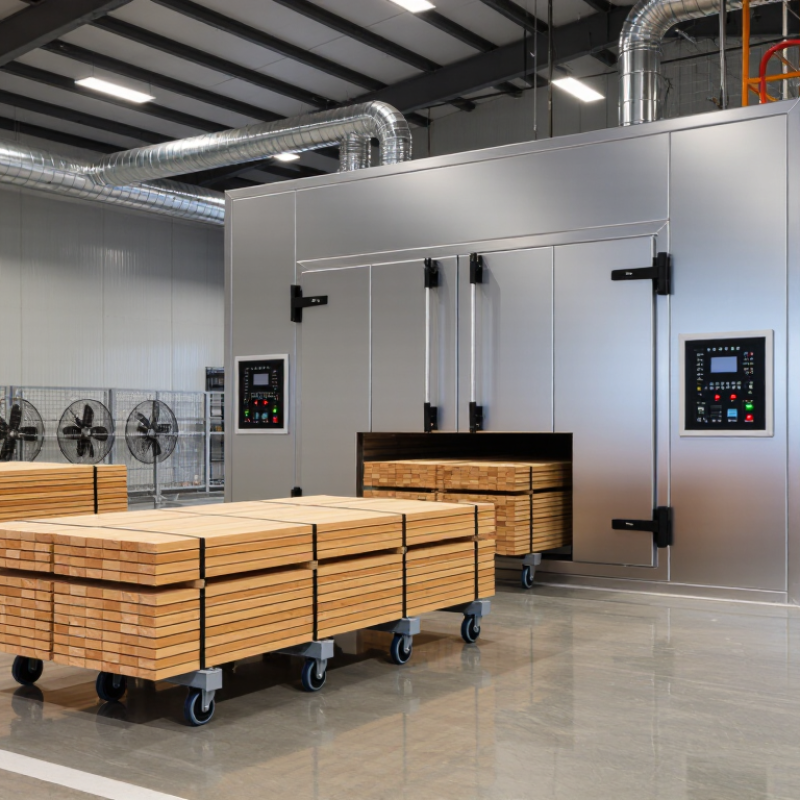
Wood Drying Equipment is a coordinated system, not just a heated room. A typical kiln includes an insulated chamber, fans, vents, a heat source, and controls. Some systems also use moisture sensors and carts for loading boards. Each part has a practical job.
Fans move warm air across the stacked lumber, while vents release moist air from the chamber. Heat encourages water to leave the wood gradually. Operators adjust temperature, airflow, and humidity according to species, board thickness, and intended use. Small loads can behave differently.
That matters. A thick oak plank may dry far more slowly than a thin pine board placed nearby. Moisture readings from sample pieces help operators judge progress, but readings depend on correct sampling and measurement. A preset schedule is a useful starting point, not a promise. I would check the stack and the readings rather than assume every board is drying evenly. Even well-controlled equipment can leave uneven moisture if airflow is blocked or boards are poorly spaced. That detail is easy to overlook.
Wood-drying equipment commonly includes a kiln, fans for air circulation, a heat source, humidity controls, and moisture sensors. The kiln manages heat and airflow to remove moisture gradually; operators monitor the wood’s moisture content to guide the drying schedule.
Ranges are general examples, not universal specifications. Appropriate targets depend on wood species, local climate, and product requirements. MC = moisture content.
Choosing a Chinese wood dryer manufacturer requires more than comparing chamber size and quoted capacity. Ask how the supplier measures final moisture content, and whether results are checked across the load. The USDA Forest Products Laboratory’s Wood Handbook (FPL-GTR-282, 2021) places wood’s fiber saturation point at roughly 25–30% moisture content, with variation by species. Drying below this range needs careful control to limit checking, warping, and uneven shrinkage. Small differences matter.
Request a trial using your actual species, board thickness, and starting moisture level. Compare moisture readings from boards near the door, center, and exhaust end. Ask for energy use per kilogram of water removed, not just installed heater power. That figure helps compare operating costs. A reliable supplier should explain sensor calibration, airflow design, temperature uniformity, and how its controls respond when the load changes. Ask to see recorded test data. Brochure numbers alone are weak evidence.
Also evaluate installation, operator training, spare-parts availability, and response times. Request references from mills processing similar wood, then ask what went wrong during commissioning. This may feel uncomfortable, but it reveals more than polished presentations. One limitation in my own checklist: published capacity figures are rarely measured under identical conditions. So compare documented test runs, not claims alone.
Wood drying equipment made in China covers several distinct systems, from batch kilns to continuous production lines. Conventional steam-heated kilns remain common in furniture and flooring plants. Fans move hot air across stacked boards, while vents remove moisture. Operators adjust temperature and humidity to limit checking, warping, and uneven drying.
Dehumidification kilns recycle heat and can suit smaller workshops or moderate production volumes. Vacuum dryers lower pressure, helping moisture leave thick or valuable timber at lower temperatures. Radio-frequency systems heat wood internally, but require careful control and are usually considered for specialized workloads.
Solar kilns use sunlight and ventilation; results depend heavily on season and site conditions. A damp corner can undo a good schedule.
The USDA Forest Products Laboratory’s Wood Handbook (FPL-GTR-282, 2021) places wood’s fiber saturation point at about 30% moisture content, with species-dependent variation. Below this point, drying can cause shrinkage, so moisture meters and calibrated sensors matter.
Buyers should compare usable chamber capacity, airflow uniformity, control accuracy, and service support—not just rated output. In practice, selecting a dryer is rarely tidy: timber thickness, species, and target moisture can change the best fit.
Choosing wood drying equipment from a Chinese manufacturer is less about a polished catalog than whether the kiln fits your timber, climate, and production rhythm. Ask for capacity, airflow layout, temperature range, moisture-control method, and insulation details. A capable supplier should explain how these choices affect drying schedules and provide test records for comparable wood species and board thicknesses. Numbers should be traceable, not merely impressive.
Quality shows in welds, door seals, sensor placement, and moisture consistency from the edge of a load to its center. Request a loading plan and check readings at several points, not just one convenient spot. Efficiency means more than a short cycle. Look for stable heat, sensible energy use, low re-drying rates, and controls operators can learn. Ask how results change with mixed species or uneven starting moisture. Real production is rarely tidy.
Service matters after installation. Clarify response times, spare-parts availability, operator training, and whether technical support can review operating data remotely. Details matter. Ask for manuals and maintenance schedules before comparing quotations. If possible, observe commissioning or speak with a user handling similar timber. These checks take time, and they may reveal gaps in your own requirements. No single test tells the whole story.
| Equipment Type | Quality and Process Control | Efficiency Considerations | Service and Support to Verify | Typical Fit |
|---|---|---|---|---|
| Conventional kiln Heated-air drying with controlled temperature, humidity, and airflow. | Consistent results depend on sound chamber insulation, airflow distribution, sensors, and a drying schedule suited to the wood species and board dimensions. | Can handle a broad range of loads. Energy use depends on the heat source, kiln design, operating schedule, and how well the chamber is loaded. | Ask about commissioning, operator training, control-system support, spare-part availability, and help adjusting schedules for local species. | Sawmills and wood processors seeking a versatile, established kiln configuration. |
| Dehumidification kiln Uses a heat-pump system to remove moisture from circulating air. | Moisture sensors and reliable control of temperature and humidity support repeatable operation; performance still depends on correct loading and schedule settings. | Heat-pump systems recover heat during dehumidification. Actual energy use and drying time vary with the wood, target moisture content, ambient conditions, and equipment sizing. | Confirm who handles heat-pump maintenance, refrigerant-system service, controls troubleshooting, and warranty support. | Operations prioritizing heat recovery and controlled drying, particularly where the production schedule allows kiln cycles to run at moderate conditions. |
| Vacuum kiln Dries wood under reduced pressure, often with heat supplied through plates or another heating system. | Uniform results require appropriate load arrangement, dependable vacuum sealing, even heat transfer, and controls matched to the wood and product dimensions. | Reduced pressure can enable faster drying for some products, but cycle time and energy use depend on species, thickness, initial moisture, load size, and the specific system. | Check the supplier’s vacuum-system maintenance plan, sealing components, commissioning procedure, operator training, and access to replacement parts. | Specialty or higher-value products where shorter cycles may justify a more specialized system. |
| Solar kiln Uses solar heat, commonly with fans to circulate air. | Results depend on chamber design, airflow, monitoring, and the operator’s ability to manage changing heat and humidity conditions. | Solar energy can reduce purchased heat requirements, but drying time and throughput vary with sunlight, climate, season, and whether supplemental heat is installed. | Ask for design guidance suited to the site climate, fan and control support, operating instructions, and options for supplemental heating. | Smaller-scale operations or sites with suitable solar conditions and flexible production schedules. |
| Comparison note: These are equipment-type comparisons, not rankings of individual Chinese manufacturers. Quality, efficiency, and service vary by supplier and configuration. Compare written specifications, control features, energy assumptions, commissioning scope, warranty terms, spare-parts arrangements, and references for similar wood species and operating conditions. | ||||
Choosing a wood drying equipment supplier starts with the lumber you process, not the largest advertised chamber. Species, board thickness, incoming moisture, and target moisture all affect drying time. A supplier should ask about these details before recommending capacity. If every quote looks identical, ask what assumptions were used.
Look for clear information on airflow, temperature control, insulation, and energy use. Ask how the system handles uneven loads, such as thick boards placed beside thinner stock. Request a sample drying schedule and an explanation of how moisture is measured. A handheld meter is useful, but measurement location and calibration matter. Small details matter.
Service is part of the equipment decision. Check whether technicians can help with installation, operator training, troubleshooting, and replacement parts. Ask for references from businesses drying similar species and board sizes. If possible, inspect a working installation and review its drying records. Sales estimates are not the same as verified performance.
There is no perfect specification sheet. I would compare suppliers using the same load conditions and questions, then note what remains uncertain. A lower purchase price may still mean higher operating costs or longer drying cycles. Get key performance assumptions in writing, and leave room for a trial load before expanding production.
We are here to help you with all your queries and concerns, just write to us using the below form and we will get back to you as soon as we can.