Why Choose a Ready Concrete Mixer for Your Project?
A Ready Concrete Mixer can make a demanding pour more predictable, but the right choice depends on the site, mix, and schedule. Karen Scrivener, a leading cement and concrete researcher, has described concrete as “the most widely used material in the world after water.” Her observation points to its importance, not to a one-size-fits-all solution. A mixer must deliver workable concrete at the required pace, while access roads, turning space, and pour distance all shape what works in practice.
Consider a narrow driveway, a busy urban site, or a foundation pour that cannot pause midway. The mixer’s capacity, discharge method, and travel time can affect labor needs and placement quality. Ask suppliers about batch consistency, delivery timing, and how they handle delays. Check whether the truck can reach the pour location safely. Small details matter. A large vehicle may look efficient on paper, then struggle at a tight entrance.
A Ready Concrete Mixer is most useful when its capabilities match the project’s real conditions. Bigger is not always better. Neither is the cheapest quote. Compare equipment, service reliability, and the supplier’s experience with similar pours. Then confirm the mix specification with the project’s qualified concrete professional. Even careful planning cannot remove every surprise; traffic, weather, and site access can change the day. That deserves honest attention.
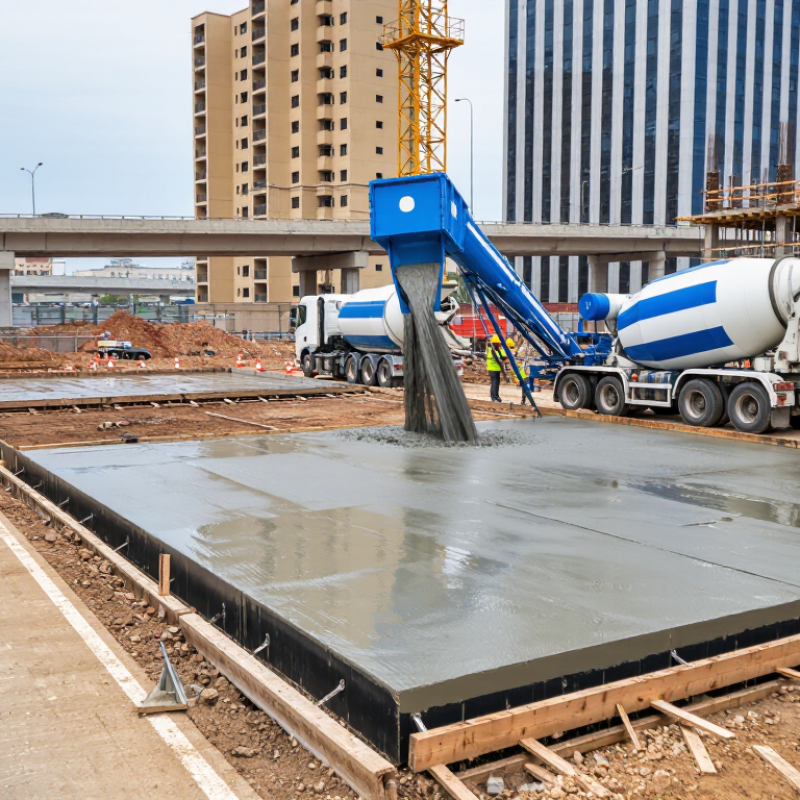
What Ready-Mixed Concrete Is and How Its Ingredients Are Batched
Ready-mixed concrete is proportioned at a plant and delivered while workable. It is not simply cement and water. The Portland Cement Association’s Design and Control of Concrete Mixtures gives typical volume ranges: aggregates make up about 60–75%, water 15–20%, and cement 10–15%. Entrained air may add roughly 5–8%. These are guide ranges, not a universal recipe. A driveway slab and a pump-placed foundation need different mixes. The intended strength, placement method, and exposure all matter.
At the batch plant, scales weigh cement and aggregates, while meters measure water and liquid admixtures. The mix design sets the water-to-cement ratio; operators also adjust batch water for moisture already present in the sand and stone. Small detail. Big effect. ASTM C94/C94M sets requirements for ready-mixed concrete production and delivery. A rotating truck drum keeps the load mixed or agitated on its way to the site. Still, aggregate moisture can change between checks, so the adjustment is not perfectly effortless. That practical limitation deserves attention, especially when a crew needs consistent workability across several loads.
How Plant Batching and Truck Mixing Prepare a Consistent Load
Why Choose a Ready Concrete Mixer for Your Project?
How Plant Batching and Truck Mixing Prepare a Consistent Load
A consistent load starts with measured ingredients. At the batching plant, operators weigh cement, water, and aggregates to match the specified mix. Aggregate moisture can affect the water balance, so staff may adjust the added water after checking conditions. Small changes matter. Too much water can weaken concrete, while too little can make placement difficult.
For truck-mixed concrete, the ingredients are loaded into a rotating drum. The drum turns during the journey, blending the materials and helping keep the mix uniform. The driver follows the supplier’s mixing instructions and monitors delivery time. At the site, the crew should check the concrete before placement and avoid adding water without approval. That step can be tempting when a mix looks stiff. It can also change its performance.
Plant batching improves control, but it cannot make every delivery identical. Weather, travel time, and site delays all matter. A load that arrives later than planned may behave differently, even when it was correctly prepared. Clear communication about access, timing, and placement needs helps the supplier prepare a suitable mix. It is a practical detail, and one that is easy to overlook.
How ASTM C94’s 90-Minute/300-Revolution Rule Affects Delivery
For a ready concrete mixer, delivery timing is more than a scheduling detail. ASTM C94 generally requires discharge within 90 minutes or 300 drum revolutions after water is introduced, whichever comes first, unless the project documents specify otherwise. The limit helps teams manage concrete while it remains workable. It does not guarantee quality by itself.
Those revolutions count drum turns, not miles driven. A truck can reach the site quickly but use many revolutions in traffic or while waiting. Picture a mixer queued beside a narrow gate, its drum turning as a pump finishes another pour. The clock and revolution count keep moving. Check the batch ticket and confirm how the project’s specification applies the limit; requirements can vary.
Good coordination protects the delivery window. Keep the access route clear, have the crew and placement equipment ready, and tell the supplier about likely delays before dispatch. If a truck is held up, record arrival time and discuss options with the responsible concrete professional. Don’t assume extra water is an acceptable fix; it can change the mix and may conflict with the specified requirements. A neat schedule on paper can still fail at the gate. That happens. Planning for the awkward minutes matters as much as planning the drive.
What Typical 8–10 yd³ Mixer-Truck Loads Mean for Pour Planning
A ready-mix truck commonly carries about 8–10 cubic yards, though usable capacity varies by supplier, mix, and delivery conditions. For a slab measuring 20 by 30 feet and 4 inches thick, the calculated volume is roughly 7.4 cubic yards. That leaves little room for uneven ground, thickened edges, or a few missed measurements. That gap matters. Confirm the design volume and truck capacity before scheduling, rather than treating a typical load as a guaranteed amount.
Tips: Measure the forms in several places, then calculate length × width × thickness in feet and divide by 27. Ask the supplier how much concrete the truck can deliver for your mix. Check truck access, chute reach, and placement speed, too. A narrow gate or a long wheelbarrow route can slow the pour.
Plan deliveries around the crew’s actual pace. A 9-yard load can arrive quickly, but placing and finishing it takes coordination. Have enough workers, tools, and formwork ready before the truck arrives. Keep a clear route for each load, and confirm the spacing between deliveries. Weather and site conditions can change the pace; even careful estimates miss a corner or two. Recheck the quantity and timing with the contractor before pouring.
Why Choose a Ready Concrete Mixer for Your Project?
Typical 8–10 yd³ Mixer-Truck Loads: Estimated Slab Coverage
Estimates use 27 cubic feet per cubic yard and assume a uniform slab: coverage = concrete volume ÷ slab thickness. An 8–10 yd³ load covers approximately 648–810 sq ft at 4 inches thick, or 432–540 sq ft at 6 inches thick. These are theoretical estimates; allow for site variations, spillage, and other project needs when planning a pour.
How to Match Mix Specifications, Site Access, and Placement Rate
Match the mix to the drawings and the actual placement conditions. Confirm the required strength, slump, aggregate size, and any exposure or finish requirements with the project specifications. A mix that works for a broad slab may not suit narrow forms or a congested reinforcement cage. Ask the supplier to confirm the mix details before scheduling delivery. Small differences matter.
Then check how a truck will reach the pour. Measure gate width, turning space, overhead clearance, and the distance from the discharge point to the forms. If a pump is needed, confirm its setup area and hose reach. Access matters. A route that looks clear on a plan can feel very different beside a parked vehicle or a soft shoulder.
Set delivery intervals around the crew’s real placement rate, not an optimistic estimate. Consider how quickly workers can spread, consolidate, and finish the concrete, along with the pump’s capacity and likely interruptions. Plans change. A delayed truck or slow finish can leave the crew waiting, while arrivals too close together may create pressure to place concrete faster than the site can manage. Leave a practical buffer, and review the quantity and schedule with the site team before the pour. Estimates are still estimates; weather and access can upset them.