

-

97 Auto Road, County of Vermilion River, AB T0B 0L0
-

-

97 Auto Road, County of Vermilion River, AB T0B 0L0

Concrete remains the world’s most widely used man-made material. The Global Cement and Concrete Association reports that roughly 14 billion cubic metres of concrete are produced annually. This enormous volume places pressure on mixing quality, operating costs, energy use, and delivery schedules. The International Energy Agency estimates that cement production contributes about 7% of global energy-related carbon dioxide emissions. Better mixing decisions therefore matter beyond the jobsite.
A Vertical Concrete Mixer offers a practical approach for contractors handling consistent, controlled batches. Its upright mixing chamber can use gravity to support material movement, while the mixing paddles help distribute cement, aggregates, water, and admixtures. Picture a small construction crew producing workable concrete beside a foundation, without relying on a distant batching plant. This arrangement can reduce transport delays and improve responsiveness on compact projects. However, performance depends on batch size, moisture control, mixer design, and operator experience.
No mixer fits every project. That point matters.
This article examines why a Vertical Concrete Mixer may suit certain applications, including small building sites, precast production, agricultural work, and repair operations. It will compare mixing consistency, power requirements, maintenance access, mobility, and total operating value. The discussion also considers limitations, because vertical designs may not deliver the same output for every material or production scale. Manufacturer claims should be checked against recognised testing methods, site records, and actual lifecycle costs. In practice, a clean mixing chamber, correctly measured water, and timely maintenance often influence results more than appearance alone. Industry reports provide direction, but field evidence remains essential.
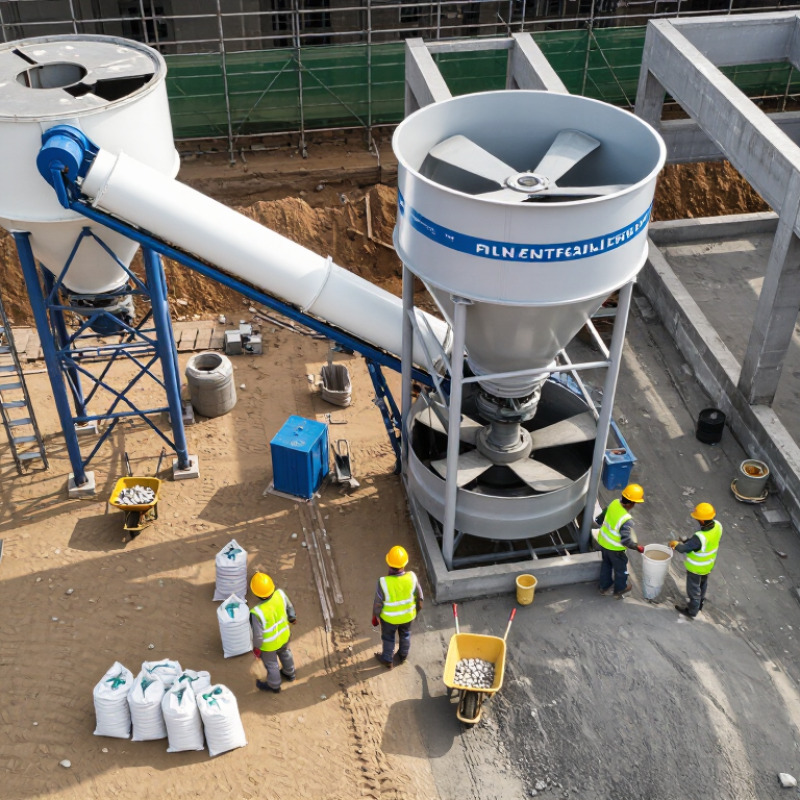
A vertical concrete mixer is a machine with an upright drum and rotating mixing blades. It combines cement, sand, aggregate, and water inside a compact chamber. The blades lift and fold the materials, while gravity helps them move through the mixture. This action creates a consistent blend when the drum is loaded correctly.
Many contractors choose this design for small and medium-sized batches. Its upright structure uses limited floor space on crowded sites. The open top also makes material inspection and cleaning more convenient. An operator can usually observe the mixture and adjust water carefully. Too much water weakens concrete, even when the mix looks smoother.
Good results depend on practical control. Add materials gradually instead of dropping everything into the drum. Keep the mixer level, and follow a tested mixing time for the selected concrete recipe. A common mistake is judging readiness by color alone. Texture and aggregate distribution matter more. The machine is not perfect. Dried cement can remain beneath the blades, causing later contamination. Regular cleaning, blade checks, and measured batches improve reliability. Some mixes still need extra attention, especially when aggregate is damp or unusually large.
| Key Dimension | Typical Vertical Concrete Mixer Data | Why It Matters |
|---|---|---|
| Mixer Definition | A mixer in which one or more vertical shafts rotate mixing tools inside a fixed circular or cylindrical vessel. | The vertical mixing path allows the machine to combine cement, aggregates, water, and admixtures within a compact vessel. |
| Typical Batch Capacity | Approximately 0.05–3.0 m³ per batch, depending on vessel size and mixer design. | This range suits laboratory work, precast production, repair projects, small construction sites, and medium-volume concrete production. |
| Common Mixing Time | About 1–5 minutes per batch after all materials have been loaded. | Actual time depends on the recipe, aggregate size, moisture content, mixer geometry, and required uniformity. |
| Suitable Mix Consistency | Commonly used for dry, semi-dry, plastic, and some stiff concrete mixtures. | The rotating tools can handle mixes with relatively low water content when the correct blade configuration and motor power are selected. |
| Aggregate Size | Often suitable for coarse aggregates up to approximately 20–40 mm, subject to the manufacturer’s design limits. | The maximum aggregate size must be checked against the mixing chamber, clearance, blade design, and discharge opening. |
| Drive Power | Roughly 3–75 kW across small, medium, and larger mixer configurations. | Required power increases with batch capacity, mix stiffness, aggregate size, filling level, and desired mixing speed. |
| Mixing Action | Combined lifting, folding, scraping, and radial circulation of the material around a vertical axis. | Multiple movement patterns help reduce dead zones and improve the distribution of cement paste and aggregates. |
| Space Requirement | Usually requires a relatively small floor footprint compared with equipment providing the same batch volume. | A compact layout is useful where plant space is limited or where the mixer must be installed in an existing production line. |
| Loading Arrangement | Materials may be loaded from the top using buckets, conveyors, hoppers, or manual charging on small units. | Top loading can simplify integration with overhead storage bins and gravity-fed material systems. |
| Discharge Method | Common options include bottom gates, side gates, tilt discharge, or controlled outlet chutes. | The discharge design affects unloading speed, residual material, cleaning access, and compatibility with molds or transport equipment. |
| Typical Applications | Precast products, paving blocks, concrete pipes, dry-mix products, repair concrete, and small-batch site work. | These applications benefit from flexible batch sizes, repeatable mixing, and the ability to process relatively stiff formulations. |
| Cleaning and Maintenance | Requires regular removal of hardened buildup, inspection of blades and liners, and lubrication of moving components. | Frequent cleaning helps preserve effective mixing volume, reduce contamination between batches, and extend wear-part service life. |
| Main Selection Advantage | Compact structure, flexible batch production, and good suitability for stiff or semi-dry concrete mixes. | A vertical mixer is a practical choice when available floor space, product variety, or mix stiffness is more important than very high continuous output. |
Note: Capacity, power, mixing time, aggregate size, and discharge performance vary according to mixer geometry, material formulation, operating conditions, and equipment configuration.